Key Takeaways
- •JobFit AI ranks postings using CV analysis and live web search.
- •Multi‑agent research assistant generates sourced Markdown reports via OpenAI SDK.
- •n8n workflow automates investment research, summarizing public financial data.
- •Qwen 3.6 Plus vision model extracts structured fields from invoices.
- •Claude Opus 4.7 digitizes chart images into Pandas data frames.
Pulse Analysis
The surge of open‑source model APIs and low‑code orchestration tools has shifted AI from experimental labs to everyday business operations. By packaging complete tutorials, codebases, and cloud‑ready endpoints, creators enable professionals to embed intelligent agents directly into hiring pipelines, market intelligence, and financial monitoring without deep ML expertise. This democratization lowers the barrier to entry, allowing small teams to prototype solutions that previously required costly data‑science resources.
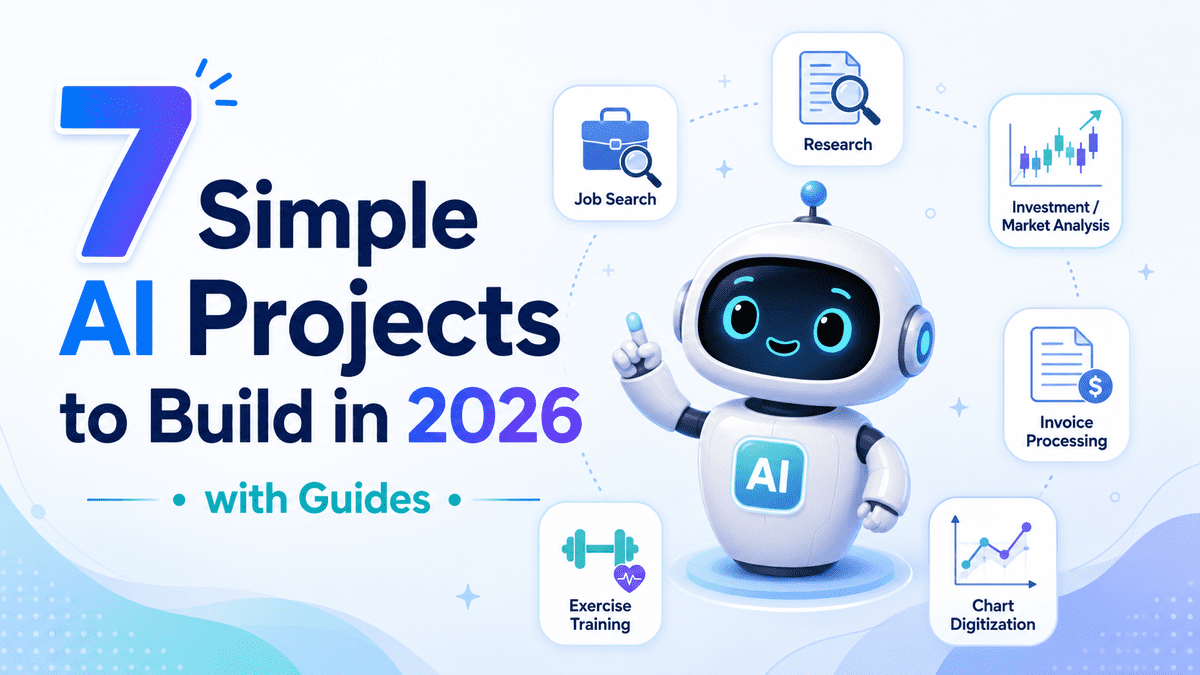
Each of the seven projects tackles a distinct pain point. An AI‑driven job‑search assistant parses resumes, scrapes live listings, and ranks opportunities, accelerating talent acquisition while reducing recruiter fatigue. Multi‑agent research and market‑trend apps automate web crawling, source verification, and report generation, delivering timely insights for strategy teams. Meanwhile, invoice processing and chart digitization pipelines transform unstructured documents into structured datasets, cutting manual entry time and error rates. The exercise trainer with persistent memory showcases how personalized user experiences can evolve across sessions, hinting at future customer‑centric AI services.
Looking ahead, the combination of affordable compute, vision‑capable models like Qwen 3.6 Plus, and memory frameworks such as Supermemory promises a wave of hyper‑customizable agents that learn and adapt on the fly. Businesses that adopt these modular, cost‑effective solutions can expect faster time‑to‑value, scalable automation, and a competitive edge in data‑rich decision making. For developers, the guides serve as a practical curriculum, turning abstract AI concepts into deployable products that can be built in minutes and refined continuously.
7 Real World AI Projects to Build in 2026 (with Guides)
Comments
Want to join the conversation?