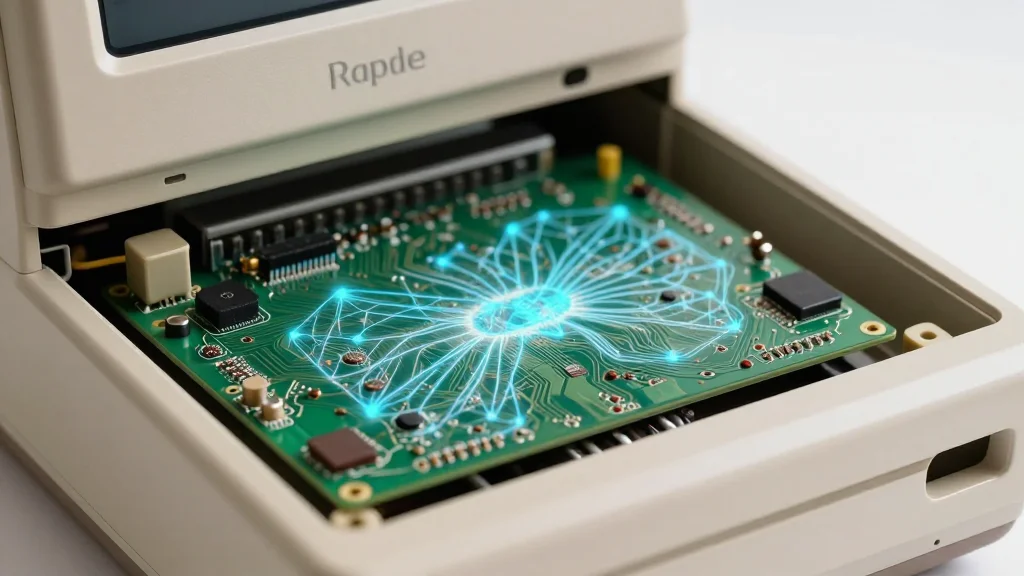
A Communist Apple II and Fourteen Years of Not Knowing What You're Testing

Why It Matters
Reverse engineering provides concrete, verifiable insight into technology, reducing reliance on costly, unproven AI hype and accelerating practical innovation across hardware and software domains.
Key Takeaways
- •Pravetz reproduced Apple II with identical ROM and 6502 CPU
- •ISCAS‑85 benchmarks’ functions were unknown for 14 years
- •Hayes’ reverse‑engineering gave EDA community functional circuit models
- •Reverse engineering offers low‑cost, high‑certainty mitigation versus AI hype
Pulse Analysis
Reverse engineering has long been a catalyst for technology diffusion in resource‑constrained environments. The Bulgarian Pravetz series, a faithful Apple II clone built from publicly available schematics, delivered personal computers to schools across the Eastern Bloc in the 1980s. By adapting the 6502 processor, re‑encoding the keyboard for Cyrillic, and manufacturing at scale, engineers turned a Western design into a national asset, demonstrating how meticulous hardware analysis can bypass import barriers and foster a skilled engineering workforce.
In the software realm, the ISCAS‑85 benchmark suite illustrates a similar knowledge gap. For over a decade researchers ran tests on circuits without knowing their intended behavior, limiting the relevance of their results. The 1999 reverse‑engineering effort by Hayes, Hansen, and Yalcin uncovered the true functions—interrupt controllers, ALUs, multipliers—enabling functional verification, more accurate test generation, and renewed utility of the benchmarks. This breakthrough underscored that even abstract netlists become powerful tools once their purpose is clarified.
Today’s AI market mirrors the forward‑only mindset that the article critiques: massive investment in opaque models marketed as "strategic enablers" despite scant proof of value. Embracing a reverse‑engineering ethos—dissecting existing models, tracing data flows, and validating outcomes—can restore rigor and accountability. Industries that adopt this disciplined approach will likely achieve faster ROI, lower risk, and a clearer path from prototype to production, counterbalancing the current hype‑driven AI spending spree.
A Communist Apple II and Fourteen Years of Not Knowing What You're Testing
Comments
Want to join the conversation?
Loading comments...