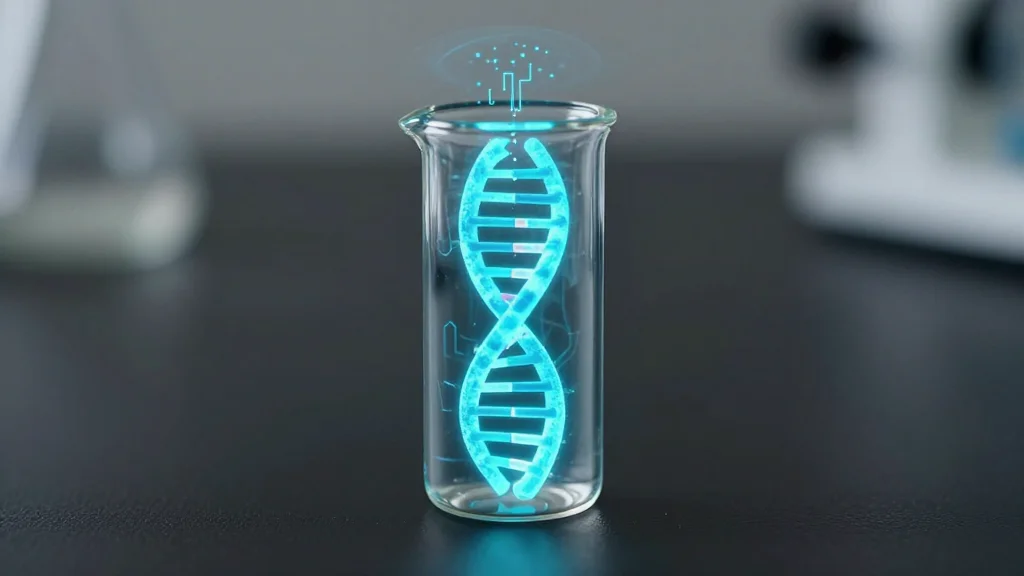
A New AI Model Could Help Scientists Design New Forms of Life
Why It Matters
Evo2 could dramatically speed synthetic biology, enabling rapid design of novel organisms for medicine, energy, and biotech. Its ability to model whole genomes marks a potential paradigm shift from gene editing to genome creation.
Key Takeaways
- •Evo2 trained on trillions of DNA bases across life
- •Model generates genome‑scale sequences millions of letters long
- •Successfully produced Mycoplasma‑inspired genome fragments
- •AI‑designed genomes still require lab synthesis and validation
- •Could accelerate synthetic biology for medicine, energy, biotech
Pulse Analysis
The launch of Evo2 signals a new frontier where artificial intelligence intersects with synthetic genomics. Unlike earlier models that focus on short DNA motifs, Evo2 processes sequences spanning millions of base pairs, allowing it to learn the hierarchical architecture of real genomes. This scale enables the generation of coherent, biologically plausible DNA that mirrors natural genomic organization, a capability essential for designing functional organisms rather than isolated genes.
From a strategic perspective, Evo2 could reshape the R&D pipeline for biotech firms. By automating the initial design phase, companies can iterate genome concepts faster, reducing reliance on costly trial‑and‑error laboratory work. The model’s ability to produce Mycoplasma‑like genomes—a common chassis in synthetic biology—demonstrates its utility for creating minimal, customizable platforms for drug production, biofuel synthesis, or environmental remediation. As AI‑driven design matures, it may also lower barriers for smaller labs to enter the synthetic life arena.
However, the technology remains nascent. Translating AI‑generated sequences into living cells involves synthesis, assembly, and rigorous functional validation, steps where errors can render a design non‑viable. Moreover, ethical and regulatory frameworks must evolve to address the creation of novel life forms. If these challenges are met, Evo2 could usher in a "ChatGPT moment" for biology, accelerating the transition from modifying existing organisms to engineering entirely new biological systems from data.
A New AI Model Could Help Scientists Design New Forms of Life
Comments
Want to join the conversation?
Loading comments...