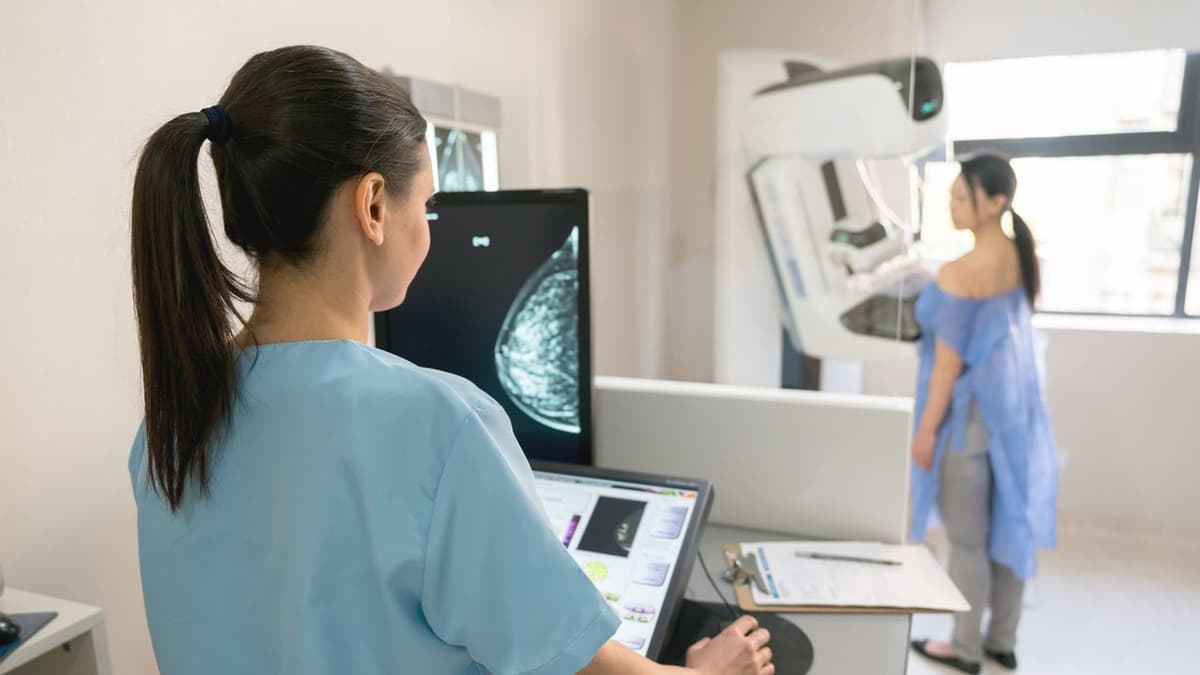
'A Second Set of Eyes': AI-Supported Breast Cancer Screening Spots More Cancers Earlier, Landmark Trial Finds
•February 7, 2026
0
Companies Mentioned

Why It Matters
AI‑enhanced screening boosts early cancer detection and mitigates radiologist shortages, promising better survival rates and broader access to quality care. The trial’s results validate AI as a reliable adjunct in large‑scale public health programs.
Key Takeaways
- •AI-assisted reading detected more clinically relevant cancers
- •Interval cancer rates fell, indicating earlier detection
- •False‑positive rates unchanged despite higher sensitivity
- •Single radiologist reviewed AI‑flagged cases, easing workload
- •Study supports AI deployment in low‑resource screening programs
Pulse Analysis
The integration of artificial intelligence into breast imaging has moved from retrospective experiments to real‑world validation. Earlier studies trained algorithms on labeled datasets, demonstrating impressive sensitivity but lacking evidence of clinical impact. The MASAI trial, published in The Lancet, represents a gold‑standard prospective design that follows screened women for two years, directly measuring interval cancers—a robust surrogate for mortality. By leveraging a model trained on more than 200,000 examinations, the AI system provided risk scores that guided radiologist workflow, proving that algorithmic assistance can enhance detection without compromising specificity.
Beyond diagnostic performance, the trial addresses a growing operational challenge: the global shortage of qualified radiologists. In the AI‑assisted arm, only one radiologist reviewed cases with scores below ten, while the highest‑risk images still received double reading. This hybrid approach preserved safety for the most suspicious findings while freeing expert time for other duties. The unchanged false‑positive rate counters concerns that heightened sensitivity inevitably leads to overdiagnosis, suggesting that AI can refine the signal‑to‑noise ratio in mammography and reduce patient anxiety associated with unnecessary callbacks.
The broader implications extend to underserved regions where radiology expertise is scarce. Researchers plan to pilot AI‑supported bedside ultrasound screening in Ethiopia, aiming to replicate the Swedish success in low‑resource settings. As health systems grapple with rising cancer incidence and workforce constraints, AI‑driven triage offers a scalable solution that can democratize early detection. Continued prospective trials and regulatory alignment will be essential to translate these gains into routine practice worldwide.
'A second set of eyes': AI-supported breast cancer screening spots more cancers earlier, landmark trial finds
0
Comments
Want to join the conversation?
Loading comments...