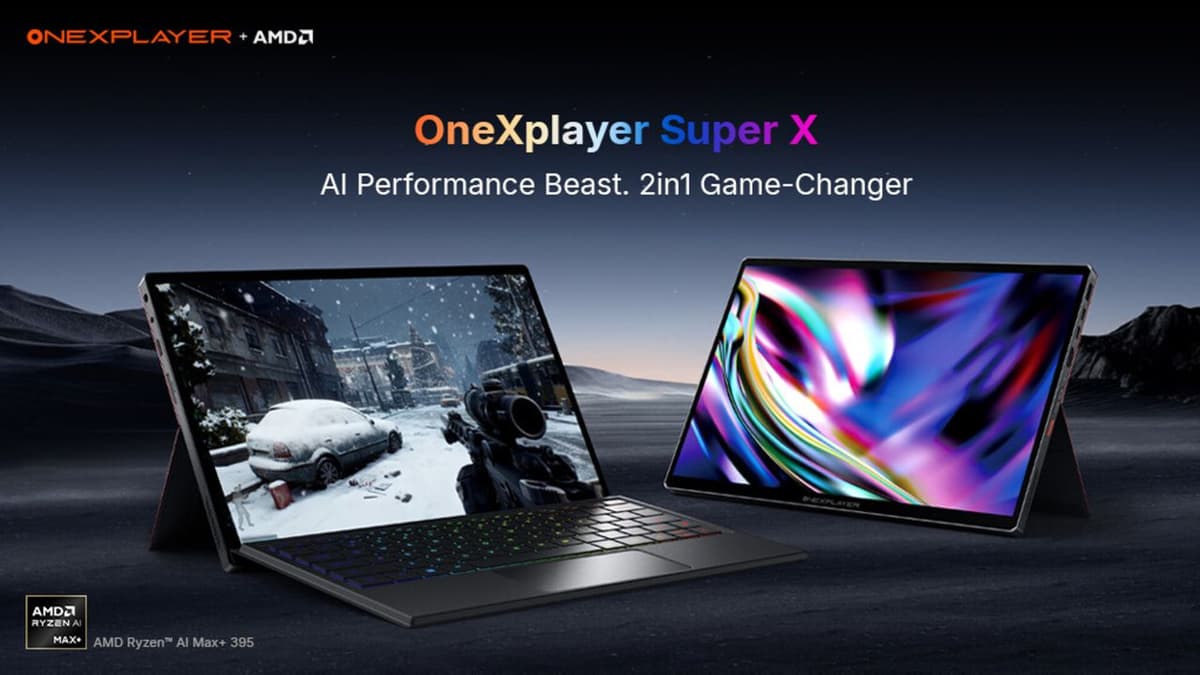
A Water-Cooled AMD AI 14-Inch Tablet with 16 CPU Cores, a 5060-Class GPU, and 128GB RAM Is Exactly What I Need for Christmas — I Don't Think It Will Cost Less than $2000, Though
•December 15, 2025
0
Companies Mentioned


Why It Matters
The Super X brings desktop‑class AI and graphics power to a portable form factor, potentially reshaping workflows for creators and developers who need on‑the‑go compute. Its pricing and crowdfunding model also signal a new premium segment in the high‑performance tablet market.
Key Takeaways
- •Super X merges laptop and tablet designs.
- •Ryzen AI Max+ 395 offers 16 cores.
- •Radeon 8060S GPU rivals desktop RTX 4060.
- •Liquid‑cooling unit boosts TDP to 120 W.
- •Kickstarter pledges average $2,600, indicating high price.
Pulse Analysis
The emergence of high‑performance, portable devices reflects a broader industry shift toward edge computing and on‑device AI. AMD’s Ryzen AI Max+ 395 combines a 16‑core, 32‑thread architecture with a 5.1 GHz boost, positioning the Super X as one of the most powerful tablets available. By pairing this APU with a Radeon 8060S GPU—advertised to rival a desktop RTX 4060—OneXPlayer targets professionals who require real‑time rendering, video editing, or large‑language‑model inference without a traditional workstation.
Beyond raw horsepower, the Super X’s 128 GB RAM capacity, of which up to 96 GB can be dynamically assigned to the GPU, enables local execution of sizable AI models that typically demand cloud resources. The 2880×1800 OLED panel, supporting HDR and a 1,000,000:1 contrast ratio, offers creators a color‑accurate canvas, while the 4,096‑level pressure‑sensitive touchscreen caters to digital artists. The optional Frost Bay liquid‑cooling module raises the thermal design power to 120 W, ensuring sustained performance during intensive tasks such as 3D rendering or prolonged gaming sessions.
Pricing remains a critical factor; the Kickstarter’s average pledge of $2,600 suggests the Super X will sit in a premium niche, competing with high‑end ultrabooks and dedicated mobile workstations. While the crowdfunding model provides early adopters with access to cutting‑edge hardware, it also carries delivery risk. Nonetheless, if OneXPlayer can meet its performance claims, the Super X could set a new benchmark for AI‑ready tablets, prompting established OEMs to accelerate their own high‑spec portable offerings.
A water-cooled AMD AI 14-inch tablet with 16 CPU cores, a 5060-class GPU, and 128GB RAM is exactly what I need for Christmas — I don't think it will cost less than $2000, though
0
Comments
Want to join the conversation?
Loading comments...