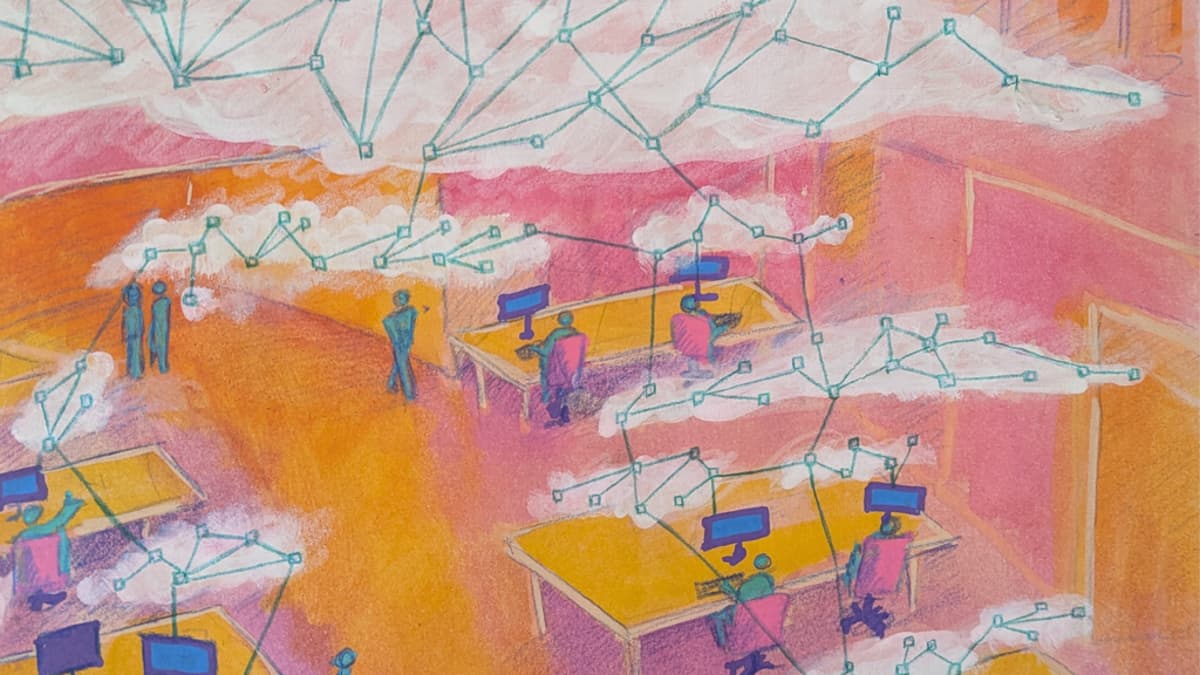
#AAAI2026 Invited Talk: Yolanda Gil on Improving Workflows with AI

Why It Matters
Embedding AI into research collaboration boosts productivity and reproducibility, accelerating discovery for large interdisciplinary teams.
Key Takeaways
- •AI abstracts scientific methods for cross‑disciplinary reuse.
- •Hierarchical planning enables AI to model proven research workflows.
- •AI‑driven language alignment reduces nomenclature conflicts in geoscience.
- •Water‑cooler conversations reveal hidden workflow bottlenecks.
- •Knowledge‑centric AI can shift researcher adoption toward novel methods.
Pulse Analysis
The intersection of artificial intelligence and scientific practice is moving beyond data‑heavy modeling toward workflow orchestration. Yolanda Gil’s AAAI 2026 talk illustrated how AI can act as a meta‑layer, abstracting the procedural knowledge that scientists carry in field notebooks and informal discussions. By observing geoscientists on site, her team identified friction points—preferential use of legacy methods, inconsistent terminology, and opaque decision pathways—and then applied AI techniques such as abstraction and hierarchical planning to codify these processes in a reusable form.
In practice, Gil’s group leveraged AI‑driven language models to harmonize disparate vocabularies across sub‑disciplines like paleoclimatology and sedimentology. The system mapped overlapping concepts, suggested standardized terms, and facilitated consensus without imposing top‑down mandates. Simultaneously, hierarchical planning allowed the AI to represent complex experimental protocols as modular functions, enabling researchers to swap components while preserving methodological rigor. These interventions have already earned geoscience awards, signaling that AI can earn trust when it respects existing scientific conventions while subtly extending them.
The broader implication is a shift toward knowledge‑centric AI that captures tacit expertise and disseminates it across collaborative networks. As research projects grow in scale—exemplified by the 4,000‑person ATLAS collaboration—traditional communication channels become bottlenecks. AI that can surface hidden workflow inefficiencies, standardize language, and suggest proven yet innovative methods offers a pathway to faster, more reproducible outcomes. Gil’s call to action for early‑career researchers underscores a growing career niche: building AI systems that preserve and amplify domain knowledge rather than merely crunching numbers.
#AAAI2026 invited talk: Yolanda Gil on improving workflows with AI
Comments
Want to join the conversation?
Loading comments...