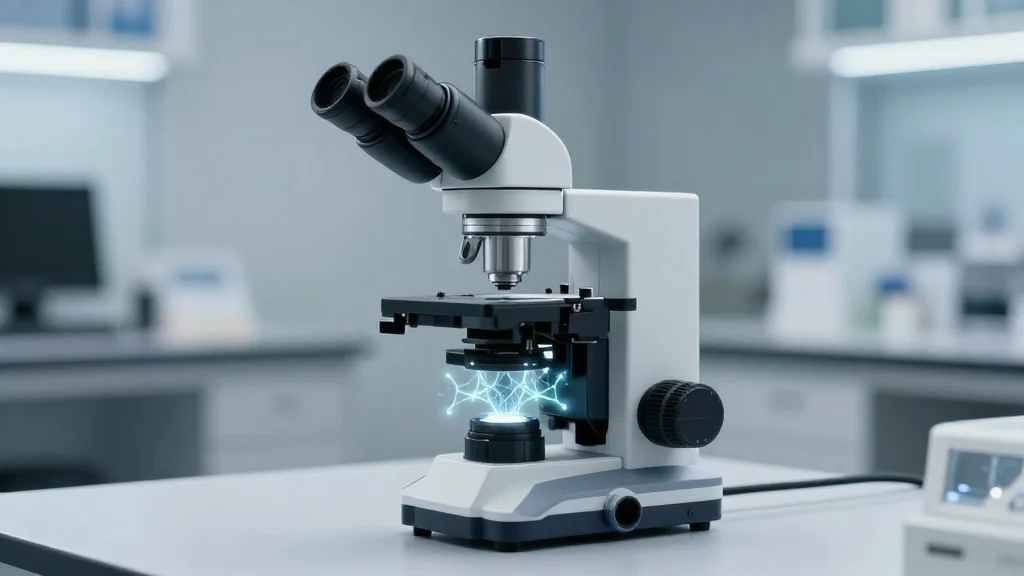
Agentic AI Could Help Electron Microscopes Plan, Adapt and Analyze Experiments
Why It Matters
By automating experiment design and analysis, AI‑enhanced microscopes can dramatically shorten research cycles, giving industry and academia a faster path to breakthrough nanomaterials and biotech insights.
Key Takeaways
- •Agentic AI integrates directly with electron microscopes as co‑scientists
- •Specialized LLM agents handle planning, simulation, and critique tasks
- •Closed‑loop experimentation enables real‑time hypothesis testing
- •Human oversight remains essential for data integrity
Pulse Analysis
The rise of large‑language‑model agents is reshaping laboratory automation, but electron microscopy has lagged behind other analytical tools. Traditional transmission electron microscopes excel at imaging but rely on manual setup, parameter selection, and post‑processing. Multidisciplinary teams often spend weeks aligning experimental designs with computational models, creating bottlenecks that delay material validation. Embedding agentic AI into these instruments promises to convert a passive data collector into an active participant that can interpret sample properties, suggest optimal imaging conditions, and even predict structural outcomes before a single image is captured.
In the proposed “thinking microscope” framework, multiple specialized AI agents collaborate much like a research team. One agent parses material composition data, another simulates electron‑beam interactions, while a third evaluates competing hypotheses about crystal structure. By distributing expertise, the system can run parallel simulations, prioritize the most promising experiments, and dynamically adjust microscope settings in real time. This closed‑loop approach reduces the trial‑and‑error cycle, cuts instrument downtime, and generates richer metadata that feeds back into community‑wide databases, fostering reproducibility and accelerating discovery across energy storage, quantum devices, and cryo‑electron microscopy for structural biology.
The broader implications extend beyond academia. Faster nanoscale characterization can shorten product development timelines for semiconductor manufacturers, battery innovators, and pharmaceutical firms developing protein‑targeted therapies. However, widespread adoption hinges on standardizing secure APIs, open‑access data repositories, and rigorous validation protocols to ensure AI recommendations remain trustworthy. As industry and research institutions co‑invest in these agentic platforms, the next generation of electron microscopes could become indispensable partners in high‑tech R&D, delivering rapid, data‑driven insights that translate into competitive advantage.
Agentic AI could help electron microscopes plan, adapt and analyze experiments
Comments
Want to join the conversation?
Loading comments...