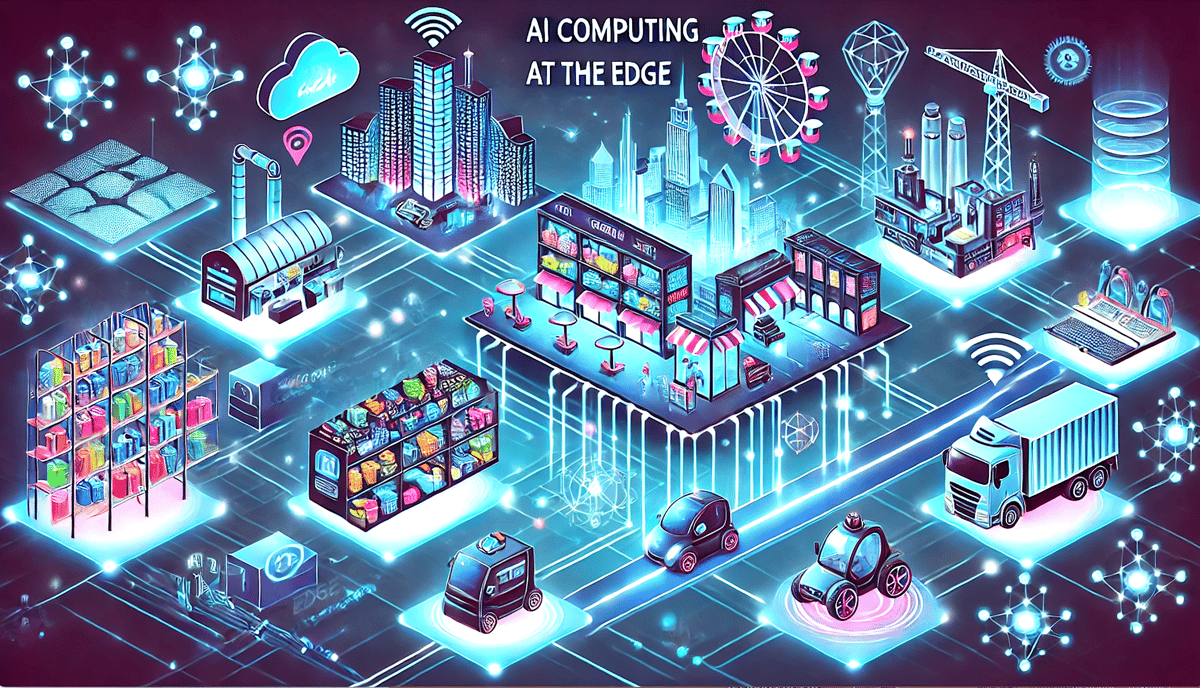
Agentic AI Will Force a Rethink at the Network Edge
Companies Mentioned
Why It Matters
The transition to agentic AI redefines network and compute requirements, making edge‑centric WAN performance a competitive differentiator for enterprises across retail, manufacturing, healthcare, and transportation.
Key Takeaways
- •Agentic AI shifts AI from cloud to edge, needing new WAN design.
- •Edge compute must pair with low‑latency networking for real‑time coordination.
- •Zero‑trust security becomes mandatory for autonomous agents at scale.
- •Visibility into edge WAN performance is critical to avoid operational blind spots.
- •Co‑designing compute and network infrastructure drives competitive advantage.
Pulse Analysis
The rise of agentic AI marks a pivotal evolution in artificial intelligence, moving beyond static models toward autonomous agents that perceive, decide, act, and learn without continuous human input. Industry analysts predict that by 2030, billions of edge‑deployed agents will underpin smart factories, autonomous vehicles, and intelligent retail spaces. This proliferation forces a reexamination of traditional network topologies, as latency‑sensitive decision‑making can no longer tolerate the round‑trip delays of centralized cloud processing. Companies are therefore investing in edge‑first strategies that embed AI capabilities directly where data originates.
Technical implementation hinges on tightly integrated edge compute and networking. High‑performance processors placed at branch sites must be coupled with WAN fabrics capable of sub‑millisecond communication, enabling agents to synchronize insights and coordinate actions in real time. Zero‑trust architectures, cryptographic identities, and hardware‑rooted trust become non‑negotiable to safeguard autonomous decisions that impact physical systems and human safety. Moreover, continuous visibility into network health—through telemetry, AI‑driven analytics, and automated remediation—ensures that edge agents remain resilient even when connectivity degrades, preserving operational continuity across distributed environments.
From a business perspective, the infrastructure choices made today will dictate market leadership in the coming decade. Enterprises that adopt a converged compute‑network model can accelerate time‑to‑value for agentic AI, unlocking efficiencies such as dynamic inventory management, predictive maintenance, and adaptive traffic control. Conversely, organizations that merely extend cloud architectures to the edge risk costly retrofits and competitive lag. Vendors offering integrated solutions—combining edge hardware, SD‑WAN, and zero‑trust security—are poised to capture significant share, while early adopters stand to gain a strategic moat in the autonomous systems arena.
Agentic AI will force a rethink at the network edge
Comments
Want to join the conversation?
Loading comments...