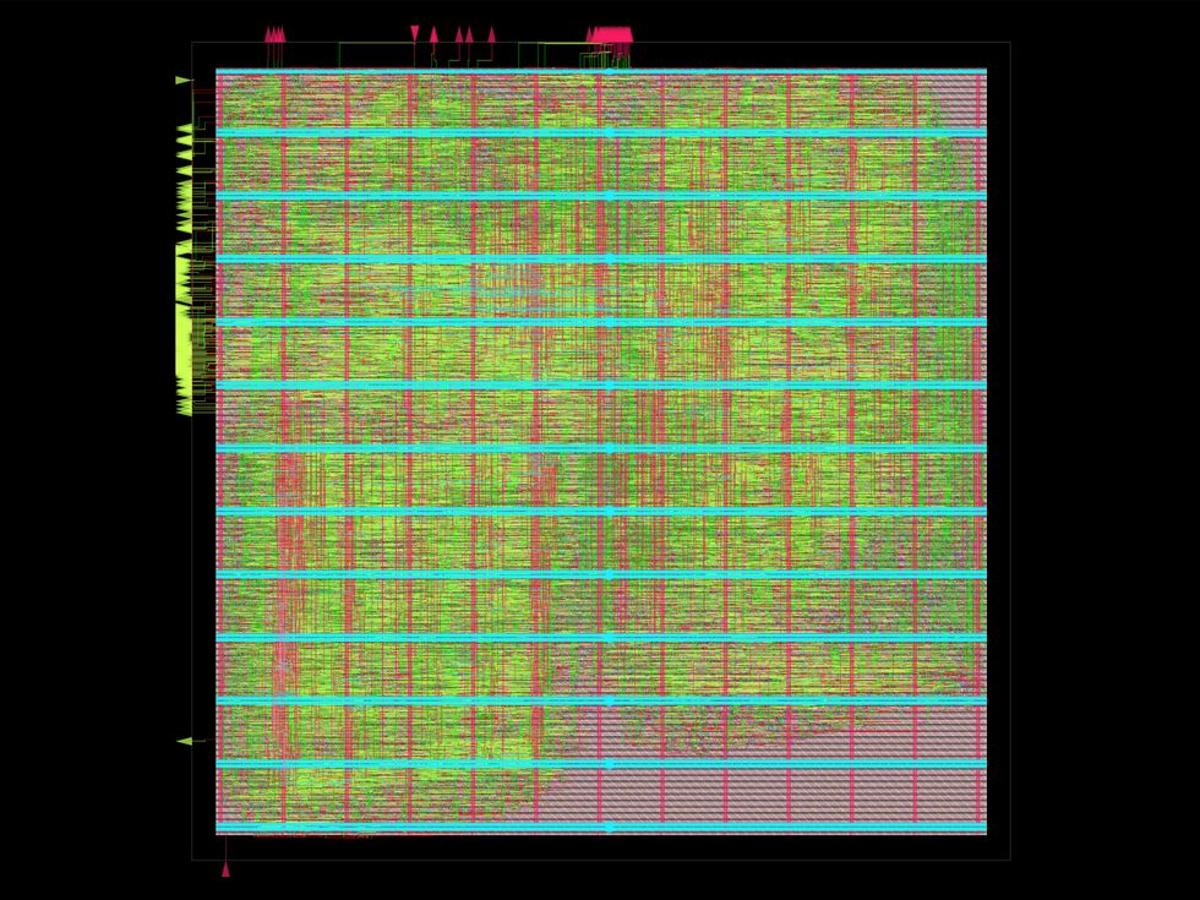
AI Agent Designs a RISC-V CPU Core From Scratch

Why It Matters
The achievement proves that agentic AI can handle end‑to‑end chip design, potentially accelerating development cycles and lowering barriers for smaller teams, while also signaling a shift in how semiconductor companies may allocate engineering resources.
Key Takeaways
- •VerCore CPU designed entirely by an autonomous AI agent.
- •Design Conductor harnesses LLMs to follow full chip design workflow.
- •CPU runs at 1.48 GHz, CoreMark score 3,261, matching 2011 Celeron.
- •Design completed in 12 hours, but not yet fabricated in silicon.
- •Agentic approach may lower entry barriers for small chip design teams.
Pulse Analysis
Artificial intelligence has been inching into semiconductor design for years, from GPT‑2‑generated logic fragments in 2020 to GPT‑4‑assisted 8‑bit processors in 2023. Those early experiments proved that language models could suggest circuit blocks, but they required heavy human oversight and often produced flawed results. Verkor.io’s VerCore marks a watershed moment: an AI‑driven pipeline that claims to take a high‑level specification and output a complete, synthesizable RISC‑V core without intermediate human intervention. By leveraging a harness that coordinates multiple LLM sub‑agents, Design Conductor mimics the step‑by‑step methodology of seasoned chip architects, from RTL generation to timing closure, and delivers a GDSII layout ready for standard EDA suites.
The VerCore core runs at 1.48 GHz and achieved a CoreMark score of 3,261, placing it in the performance tier of Intel’s 2011 Celeron SU2300. Although the chip has only been validated in simulation using the Spike ISA simulator and laid out with the open‑source ASAP7 7 nm design kit, the results demonstrate that current LLMs can produce functional, if modest, processor designs within a single workday. The 12‑hour turnaround highlights both the speed advantage and the computational cost of brute‑force AI exploration; complex timing bugs still required iterative debugging, underscoring that the system trades human intuition for raw compute power.
For the semiconductor industry, Verkor’s claim suggests a future where small startups or even individual engineers could prototype processor cores without the deep talent pools traditionally required. This could democratize access to custom silicon, accelerate time‑to‑market, and reshape staffing models as routine design tasks become automated. However, the technology is not yet a replacement for expert engineers—agents still fall into “rabbit holes” and lack the nuanced judgment that seasoned designers bring. As LLM capabilities continue to improve, the balance will shift, making agentic design tools a strategic asset rather than a wholesale threat to the chip‑design workforce.
AI Agent Designs a RISC-V CPU Core From Scratch
Comments
Want to join the conversation?
Loading comments...