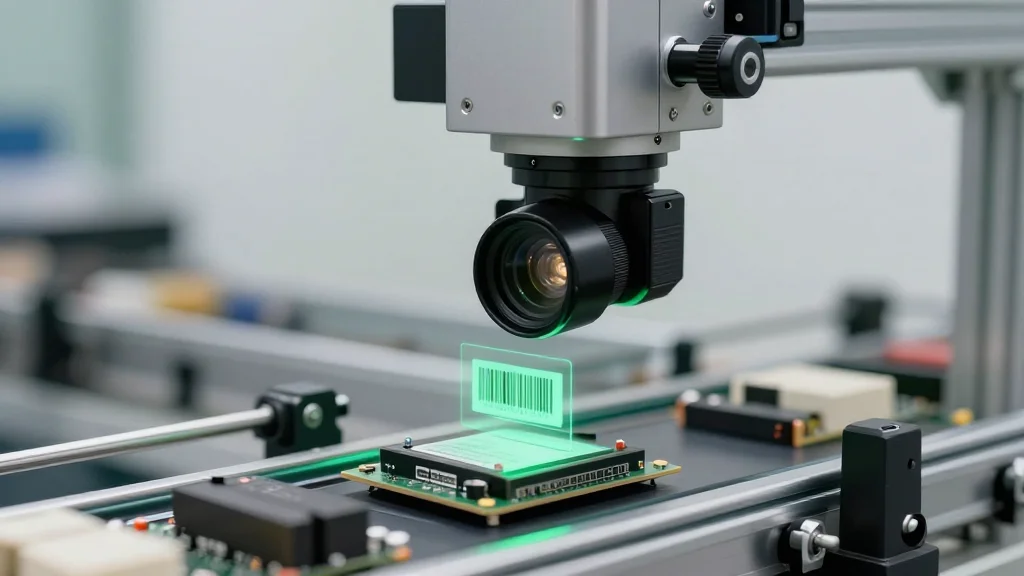
AI Brings Order to Label Diversity
Why It Matters
By removing manual label handling, manufacturers gain faster, error‑free inbound logistics and meet stricter traceability regulations, giving them a competitive edge in high‑mix, low‑volume electronics supply chains.
Key Takeaways
- •COMI's Vision AI Reader automates label capture across languages and codes
- •Handles new label layouts without retraining, ensuring scalability for diverse inventories
- •Uses uEye CP camera for 20 MP images at 20 fps low‑light
- •Boosts goods‑in efficiency by ~30%, cutting manual inspection and errors
- •Enables real‑time ERP integration, delivering 100% traceability for regulated sectors
Pulse Analysis
The electronics supply chain faces an ever‑growing variety of component labels, from multilingual text to 1D and 2D barcodes, often on reflective or damaged packaging. Traditional OCR and barcode scanners struggle with such variability, creating bottlenecks in goods‑in operations. AI‑powered vision systems, like COMI's Vision AI Label Reader, address this gap by training neural networks to recognize patterns without predefined templates, allowing instant adaptation to new label designs and languages. This flexibility mirrors broader trends in computer vision where data‑driven models replace rule‑based approaches, delivering higher accuracy under challenging lighting and surface conditions.
A critical enabler of COMI's solution is the uEye CP industrial camera, which supplies 20‑megapixel, 20‑frame‑per‑second imagery even in low‑light environments thanks to its back‑side‑illuminated sensor. The high‑resolution feed ensures that minute characters and tiny QR codes are captured reliably, while the USB3 Vision interface simplifies integration with existing PLCs and edge computers. Once the image is acquired, the AI pipeline localizes each label, extracts text and codes, and semantically maps the data to ERP fields, pushing it in real time to systems like SAP. This end‑to‑end automation reduces manual labor, cuts error rates, and creates a single source of truth for part numbers, batches, and manufacturers.
The strategic impact extends beyond operational efficiency. Full traceability is becoming a regulatory prerequisite, especially for downstream sectors such as medical devices and automotive safety components. By delivering 100% documented item movement, manufacturers can more easily comply with standards like ISO 13485 or IEC 62304. Moreover, the roadmap toward fully integrated warehouse robots means that label reading will soon be a continuous, on‑the‑fly process rather than a tabletop scan. As AI vision matures, additional capabilities such as defect detection and anomaly spotting will turn the label reader into a comprehensive quality‑control hub, further differentiating early adopters in a competitive market.
AI brings order to label diversity
Comments
Want to join the conversation?
Loading comments...