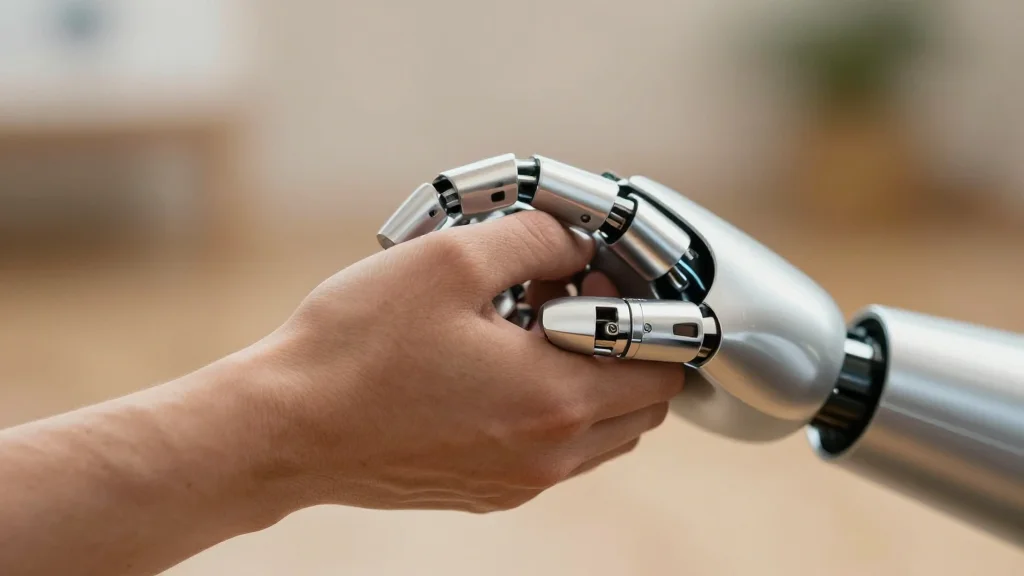
AI Can Read to Our Children. That Doesn’t Mean It Should (Opinion)
Why It Matters
Replacing human interaction with AI risks undermining the neural and social foundations of learning, prompting educators and regulators to reconsider adoption strategies.
Key Takeaways
- •AI reads stories, but lacks genuine emotional bonding.
- •Early brain growth relies on responsive caregiver interactions.
- •UNESCO warns AI must preserve human relationships in schools.
- •Human‑in‑the‑loop design keeps teachers central to learning.
- •Investment in teachers outweighs efficiency‑only AI solutions.
Pulse Analysis
Artificial intelligence has slipped into the nursery, with smart speakers narrating bedtime stories and answering endless child‑driven questions. Developmental neuroscience, however, shows that the first years of life are shaped by "serve‑and‑return" exchanges—responsive, emotionally attuned interactions that wire language, cognition, and social skills. When a parent’s voice falters or a caregiver adjusts tone based on a child’s reaction, the brain registers a relational cue that no synthetic voice can truly replicate. This biological reality underpins the article’s "lullaby crisis" framing, warning that convenience should not eclipse the human scaffolding essential for healthy development.
In classrooms, AI tutoring platforms promise instant feedback, adaptive difficulty, and 24/7 support, appealing to overburdened teachers and budget‑tight districts. Early pilots demonstrate measurable gains in practice efficiency, yet scholars highlight an "empathy gap": algorithms can generate polite explanations but lack the nuanced perception of frustration, curiosity, or cultural context that human teachers instinctively read. UNESCO’s recent guidance echoes this concern, urging education systems to safeguard relational learning as AI scales. The rapid rollout often outpaces policy, leaving schools to experiment without robust safeguards or longitudinal research on child outcomes.
The path forward hinges on design philosophy rather than technology denial. Human‑centered AI should act as a catalyst for interaction—prompting parents to discuss a story’s themes or enabling teachers to allocate more time for mentorship after routine grading is automated. Embedding a human‑in‑the‑loop ensures educators retain decision‑making authority and can intervene when emotional cues arise. Finally, sustained investment in teacher training, early‑childhood programs, and caregiver support preserves the relational core of education, ensuring AI augments rather than replaces the human presence that fuels lifelong learning.
AI Can Read to Our Children. That Doesn’t Mean It Should (Opinion)
Comments
Want to join the conversation?
Loading comments...