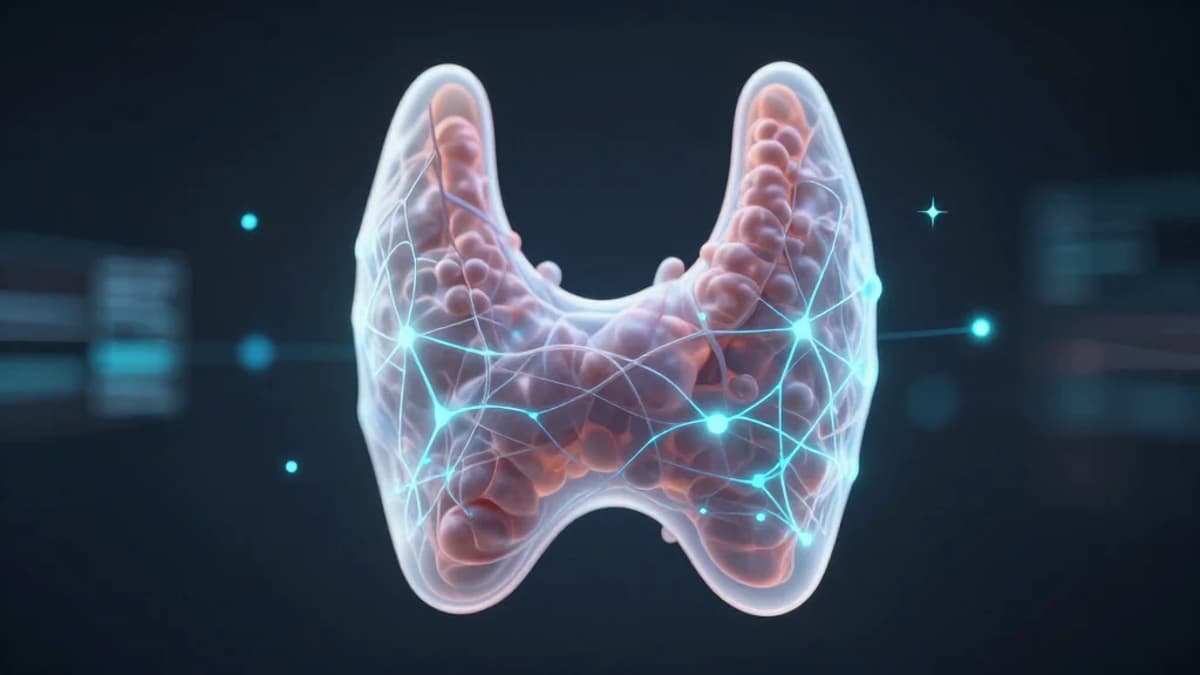
AI Classifies Thyroid Cancer Vs. Goiter Using Lab Data
•February 3, 2026
0
Why It Matters
Accurate AI‑driven differentiation reduces unnecessary thyroid surgeries and accelerates treatment decisions, reshaping endocrine care pathways. Broad adoption hinges on proven reliability and ethical data handling.
Key Takeaways
- •AI model distinguishes PTC from MNG with high accuracy
- •Study uses pre‑operative labs and cytology as inputs
- •Random Forest achieved best sensitivity and specificity
- •Interpretability highlights key diagnostic features for clinicians
- •Validation needed across diverse populations before clinical rollout
Pulse Analysis
Thyroid nodules present a diagnostic dilemma; distinguishing malignant papillary carcinoma from benign multinodular goiter often requires invasive procedures and expert interpretation of cytology. By leveraging routinely collected pre‑operative lab values and cytological findings, the recent BMC Endocrine Disorders study demonstrates how machine‑learning pipelines can ingest heterogeneous clinical data, cleanse it, and extract subtle patterns invisible to the human eye. This data‑centric approach aligns with the broader push toward precision medicine, where algorithms augment physician expertise rather than replace it.
Among the tested algorithms, the Random Forest ensemble emerged as the top performer, delivering superior sensitivity and specificity compared with Support Vector Machines and K‑Nearest Neighbors. Crucially, the model’s built‑in feature importance metrics identified a concise set of biomarkers—such as serum thyroglobulin, TSH levels, and specific cytology descriptors—that drive classification decisions. This transparency fosters clinician trust, enabling surgeons to confidently defer unnecessary operations for benign goiters while prioritizing early intervention for malignancies. The study’s cross‑validation framework also mitigates overfitting, suggesting the model could generalize to new patient cohorts with minimal performance loss.
Despite promising results, real‑world integration demands rigorous external validation across varied demographics, genetic backgrounds, and healthcare settings. Ethical considerations loom large: patient consent, data privacy, and algorithmic bias must be addressed to maintain public confidence. Ongoing collaborations between academic centers and industry partners can expand the training dataset, refine model robustness, and streamline regulatory pathways. As AI continues to mature, its role in endocrine oncology is poised to evolve from experimental prototypes to standard decision‑support tools, ultimately delivering faster, more accurate diagnoses and improving outcomes for thyroid patients worldwide.
AI Classifies Thyroid Cancer vs. Goiter Using Lab Data
0
Comments
Want to join the conversation?
Loading comments...