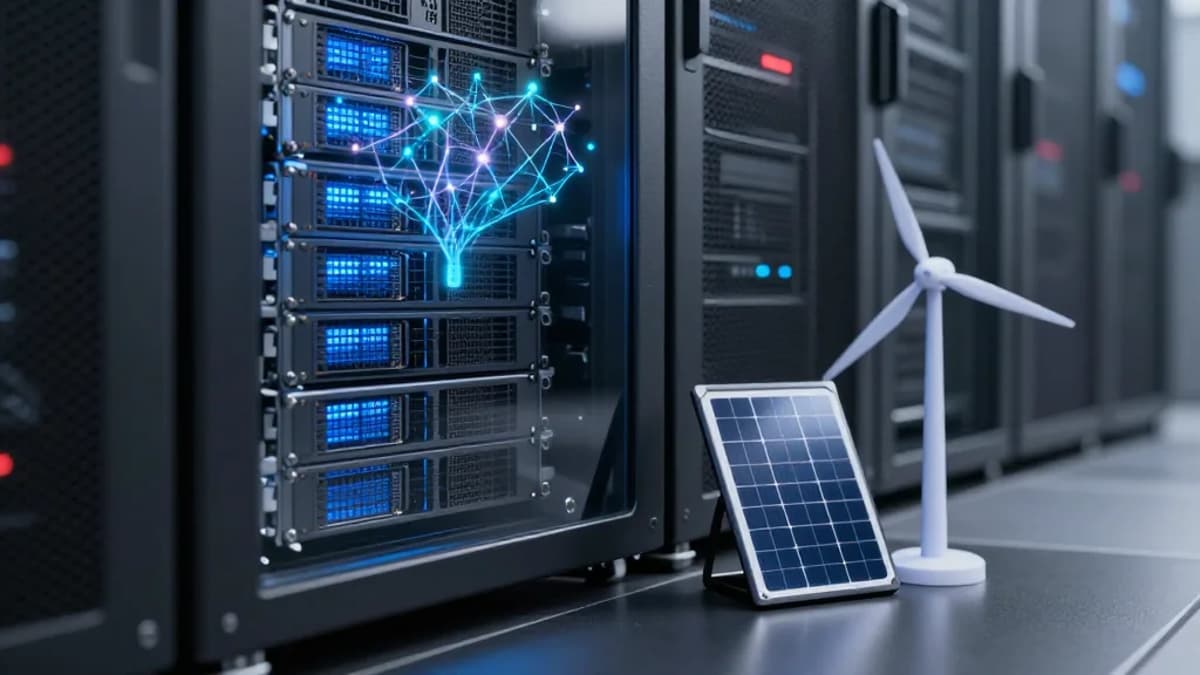
AI-Driven Evolution: Reshaping India's Data Center Infrastructure for a High-Density Future
•February 25, 2026
0
Why It Matters
The transition reshapes India’s digital infrastructure, influencing cost structures, grid stability and the nation’s competitiveness in the global AI economy. It also creates urgent demand for skilled talent and localized supply chains.
Key Takeaways
- •India aims >2 GW data center capacity by 2026
- •Liquid cooling becomes essential for high‑density AI racks
- •Edge compute reduces latency and ensures data sovereignty
- •Talent and supply‑chain gaps threaten infrastructure scaling
- •AI‑driven monitoring cuts operational complexity
Pulse Analysis
India’s data‑center market is accelerating toward more than 2 GW of capacity by the close of 2026, driven primarily by exploding AI workloads and cloud‑native services. Facilities in Mumbai, Chennai and Bengaluru are no longer simple storage warehouses; they are high‑velocity compute hubs packed with GPUs and ASICs that push rack densities beyond the limits of traditional air cooling. To keep temperatures in check, operators are turning to liquid‑cooling loops, rear‑door heat exchangers and other advanced thermal‑management technologies that can dissipate heat efficiently in the country’s hot climate.
The surge in AI processing power also raises the stakes for energy consumption and grid stability. Operators are adopting modular power architectures, high‑efficiency UPS systems and AI‑enabled energy‑management software that dynamically match supply to workload demand, thereby curbing operating costs and carbon footprints. Sustainability is becoming a competitive differentiator, with many enterprises tying data‑center performance to ESG targets. By integrating renewable sources, waste‑heat recovery and intelligent cooling controls, Indian facilities can meet regulatory expectations while preserving profitability.
Beyond the core campuses, edge deployments are reshaping how latency‑sensitive applications—such as autonomous manufacturing, tele‑medicine and 5G services—are delivered. Locating compute near data sources not only slashes response times but also keeps sensitive information within Indian jurisdiction, reinforcing data‑sovereignty mandates. However, rapid expansion strains the talent pipeline and exposes reliance on imported semiconductor and cooling components. Continued investment in local manufacturing, university‑industry partnerships, and AI‑driven monitoring platforms will be essential to sustain growth and cement India’s role as a global data‑center leader.
AI-driven evolution: Reshaping India's data center infrastructure for a high-density future
0
Comments
Want to join the conversation?
Loading comments...