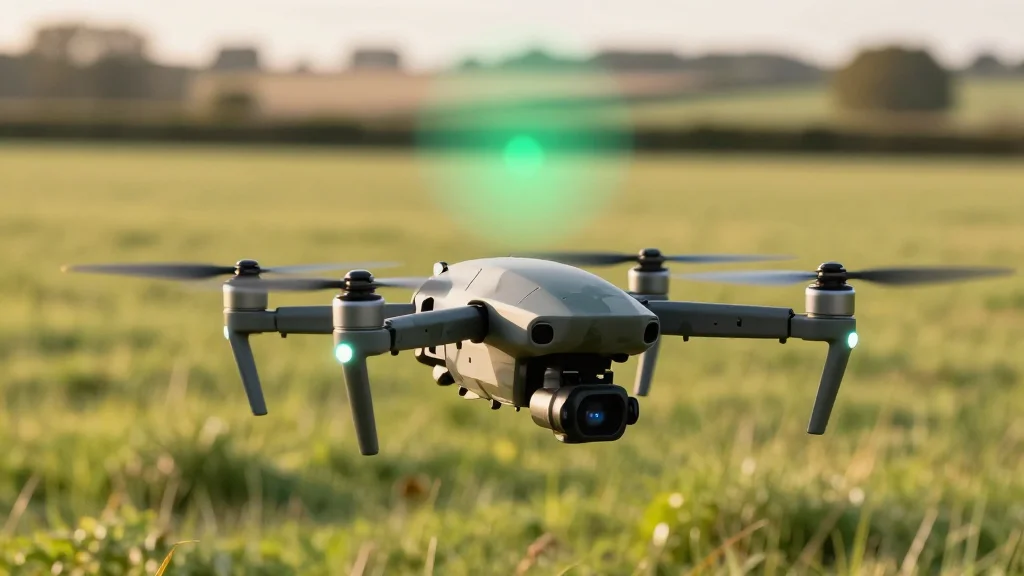
AI Drones Make Mine Clearing Faster and Safer
Why It Matters
The technology promises faster, safer explosive‑ordnance disposal, reducing casualties and accelerating reconstruction in mine‑ridden conflict zones, a critical need for both military and humanitarian operations.
Key Takeaways
- •British Army tested AI drones for mine detection in Essex
- •Project GARA integrates optical, thermal, IR, magnetometer sensors on quadcopters
- •AI models retrain instantly from operator‑uploaded images, improving detection
- •Three‑tier process: detect, prioritize, neutralize with robots or drones
- •Success could reduce EOD personnel exposure and accelerate clearance worldwide
Pulse Analysis
The legacy of decades‑long conflicts has left an alarming footprint of land‑mines and unexploded ordnance, with Ukraine now estimated to have 30 % of its territory contaminated—roughly 67,000 square miles. Traditional clearance relies on manually operated metal detectors and slow, risky excavation, often tying up thousands of engineers for years. As governments grapple with reconstruction costs and civilian safety, the demand for faster, less hazardous solutions has surged, prompting defense research agencies to explore autonomous platforms that can operate in hostile, cluttered environments.
Project Ground Area Reconnaissance and Assurance (GARA) brings together the British Army’s 33 Engineer Regiment, Dstl and commercial sensor firms to field quadcopter drones equipped with optical, thermal, long‑wave infrared and magnetometer arrays. The onboard data stream is processed by AI algorithms that classify munitions in real time and can be updated instantly when operators upload new threat images. This rapid‑retraining loop creates a dynamic reconnaissance layer, allowing the system to prioritize hazards and hand them off to ground robots or charge‑laying drones for neutralization, dramatically cutting human exposure.
The successful Essex trial signals a shift toward AI‑driven EOD capabilities that could be exported to NATO allies and humanitarian agencies working in post‑conflict zones. Faster clearance shortens the window for civilian casualties, accelerates infrastructure rebuilding, and reduces the long‑term economic burden of mine remediation. As sensor miniaturization and power‑efficiency improve, similar systems are expected to mount on smaller UAVs, expanding their reach into dense urban rubble and remote terrain. Defense contractors eye the emerging market, forecasting a multi‑billion‑dollar segment for autonomous ordnance‑neutralization platforms over the next decade.
AI drones make mine clearing faster and safer
Comments
Want to join the conversation?
Loading comments...