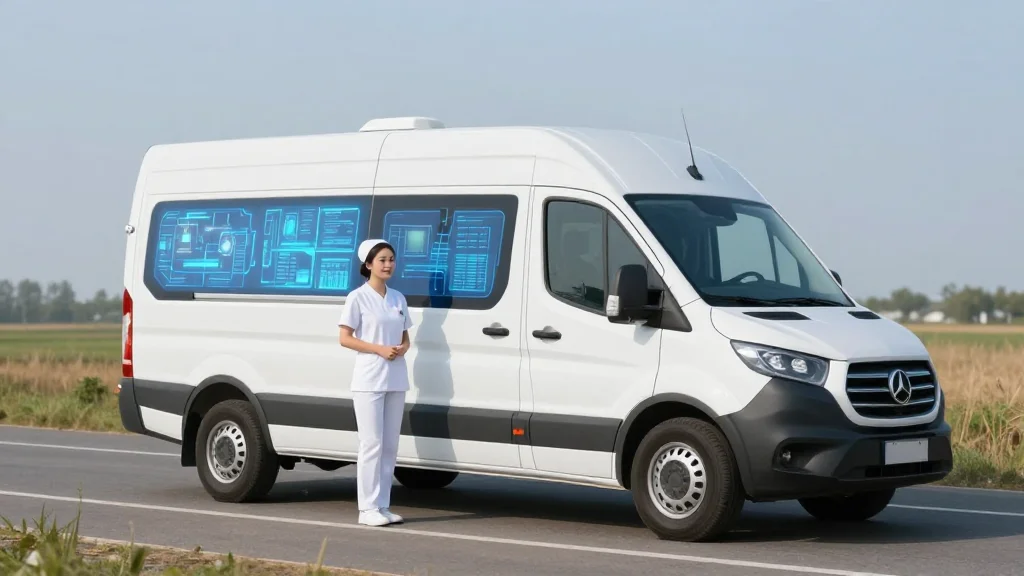
AI-Equipped Rigs Bring Hospital-Level Care to Rural Mich. Patients
Companies Mentioned
Why It Matters
By delivering specialist‑grade care directly to remote communities, VIGIL could mitigate the impact of rural hospital closures and reduce travel burdens, reshaping access to quality health services in America’s heartland.
Key Takeaways
- •ARPA‑H funds $24.6 M, five‑year VIGIL AI mobile clinic project.
- •Nine trucks to launch Dec. in Michigan, North Carolina, Utah.
- •AI guides nurses through ultrasounds, X‑rays, DVT scans without specialist.
- •Onboard workstation runs AI locally, avoiding reliance on rural 5G.
- •Project aims to offset hospital closures, improve rural health outcomes.
Pulse Analysis
Rural America faces a growing health‑care crisis as one‑third of small hospitals are on the brink of closure, forcing patients to travel hundreds of miles for specialist services. In Michigan, where 64 % of counties are classified as rural, roughly two million residents experience delayed diagnoses and poorer outcomes. The VIGIL platform, funded by the Advanced Research Projects Agency for Health (ARPA‑H), seeks to reverse this trend by delivering hospital‑level diagnostics directly to community sites such as parking lots or local clinics, thereby shrinking the geographic barrier that dictates health equity.
VIGIL is an ambulance‑sized, FedEx‑truck‑class vehicle equipped with a rugged workstation capable of running large language models and computer‑vision algorithms on 2‑4 kilowatts of power. The AI system projects colored guides onto the patient’s body, steering nurses or physician assistants through cardiac ultrasounds, deep‑vein thrombosis scans, and X‑ray positioning—procedures traditionally reserved for specialists. By integrating a digital twin for simulation‑based training and a VR‑enhanced interface, the platform ensures consistent performance even in regions lacking reliable 5G or Wi‑Fi, a critical advantage for remote deployments.
If the pilot—nine vehicles slated for deployment in Michigan, North Carolina and Utah this December—demonstrates clinical parity with hospital care, the model could reshape rural health delivery nationwide. Successful scaling would not only alleviate workforce shortages but also provide a template for other ARPA‑H initiatives targeting chronic disease management, chemotherapy, and point‑of‑care lab testing. However, adoption will hinge on seamless integration with existing health systems, community co‑design, and regulatory clearance, making stakeholder collaboration as essential as the underlying technology.
AI-equipped rigs bring hospital-level care to rural Mich. patients
Comments
Want to join the conversation?
Loading comments...