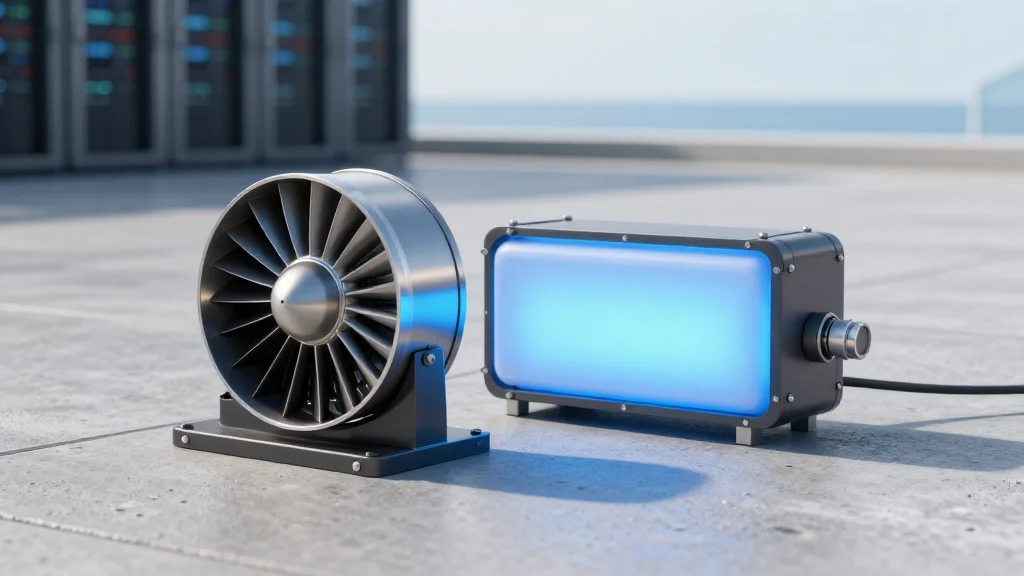
Panthalassa Raises $140M to Build Buoy‑based AI Data Centers
Participants
Why It Matters
On‑site power generation enables AI scaling but adds greenhouse‑gas emissions and regulatory risk, reshaping the economics of data‑center expansion.
Key Takeaways
- •Crusoe signs $1.25B deal with Boom Supersonic for 29 jet‑engine turbines
- •Oracle to purchase 2.8 GW of Bloom Energy fuel cells for data centers
- •Sea‑based buoy projects raise $140M to power offshore AI data centers
- •Meta and Overview Energy test space‑solar beaming to power AI workloads
- •On‑site gas turbines boost emissions, sparking new state regulatory actions
Pulse Analysis
The rapid expansion of generative‑AI models has turned data‑center power consumption into a strategic bottleneck for the tech giants that host them. Traditional utility interconnections are lagging behind the pace at which firms need megawatts, prompting a wave of “behind‑the‑meter” projects that generate electricity on site. Companies such as Crusoe and Oracle are now signing multi‑billion‑dollar contracts for dedicated turbines and fuel‑cell arrays, effectively treating power as a core infrastructure asset rather than a utility service. This shift reflects a broader re‑evaluation of energy procurement in the AI era.
To meet those needs, firms are experimenting with unconventional sources. Crusoe’s $1.25 billion agreement with Boom Supersonic will install 29 jet‑engine turbines across the United States, while Oracle’s 2.8 GW purchase from Bloom Energy adds solid‑oxide fuel cells to its power mix. At the frontier, sea‑based concepts such as Panthalassa’s $140 million buoy platform and DeepGreen’s underwater wave‑energy data center aim to harvest marine power, and Meta alongside Overview Energy is piloting space‑solar beaming via infrared lasers. Although many of these ideas remain in prototype stages, they illustrate the lengths companies will go to secure reliable compute capacity.
The immediate consequence of on‑site generation is a surge in localized emissions, as dozens of unpermitted gas turbines now sit outside data‑center sites like xAI’s Memphis complex. Environmental groups and state regulators are responding with moratoriums, interconnection fees, and stricter permitting rules, fearing that the short‑term power fix could lock in carbon‑intensive infrastructure for decades. As policymakers balance economic incentives with climate goals, the industry’s next challenge will be to transition these provisional power plants into cleaner alternatives—such as large‑scale geothermal, advanced battery storage, or truly viable marine and space energy systems—before the AI boom outpaces sustainable supply.
Deal Summary
AI‑focused startup Panthalassa announced a $140 million funding round to develop giant buoy‑like devices that house data centers and generate power from ocean waves. The capital will be used to build and deploy the marine‑energy data‑center platforms, marking a novel approach to powering AI workloads. The raise was disclosed in a June 2026 announcement.
Comments
Want to join the conversation?
Loading comments...