AI Governance: The Complete 2026 Guide for Leaders | ClearPoint Strategy Blog
Companies Mentioned

Why It Matters
Without explicit accountability, AI deployments expose firms to regulatory penalties, operational risk, and reputational damage, making robust governance essential for sustainable AI use.
Key Takeaways
- •Only 16.9% of measures have explicit owners, risking phantom‑owner governance
- •80% of Fortune 500 firms use AI agents; only 25% have mature frameworks
- •2026 AI laws (Texas, Colorado, EU) impose penalties to $200k per breach
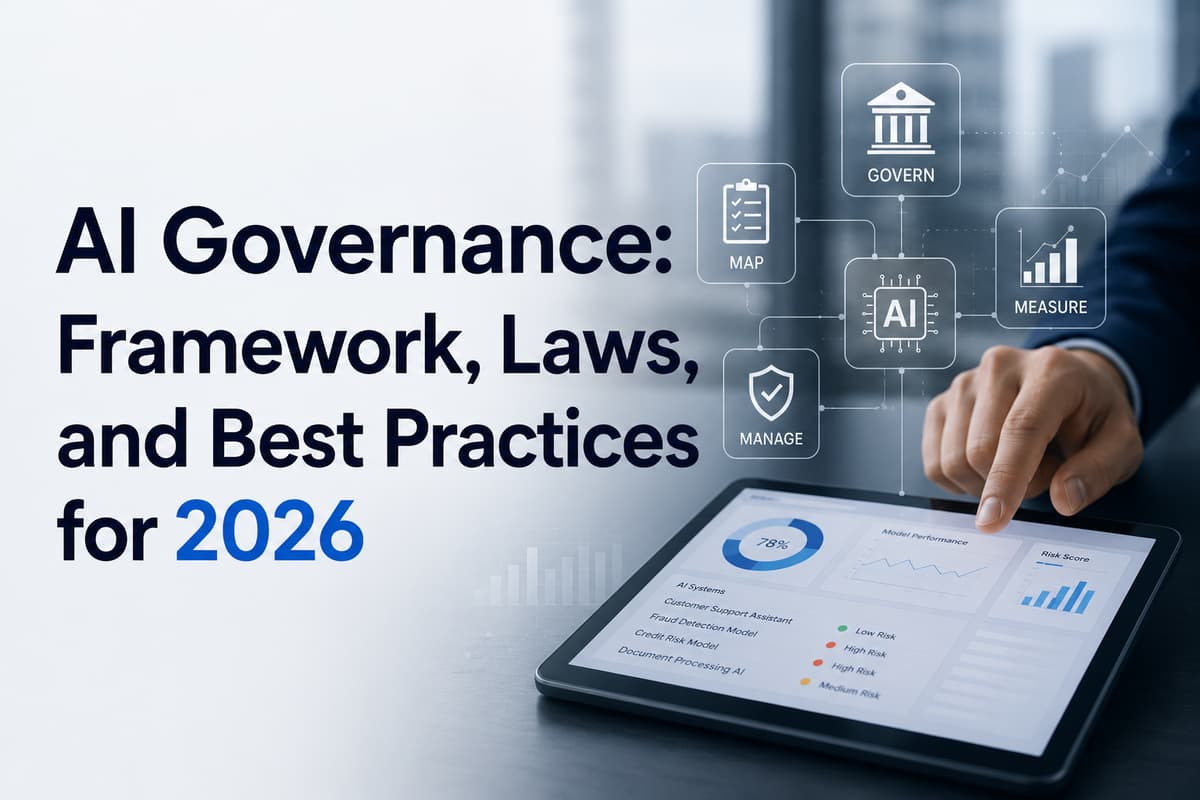
- •NIST AI RMF’s Govern‑Map‑Measure‑Manage is the de‑facto U.S. standard
Pulse Analysis
AI adoption has exploded across the enterprise, with 80% of Fortune 500 companies now running active AI agents. Yet the data shows a stark accountability deficit: fewer than one‑in‑six strategic measures are owned, and most KPIs sit untouched for months. This mismatch creates a "90 % maturity gap" where organizations reap AI benefits but lack the oversight to detect drift, bias, or unintended harms. Leaders who ignore the ownership problem risk inheriting phantom‑owner liabilities that can derail projects and invite regulator scrutiny.
The regulatory tide turned hard in 2026. Texas’ Responsible AI Governance Act, Colorado’s AI Act, and the fully applicable EU AI Act impose steep fines—up to $200,000 per violation—on entities that fail to demonstrate clear accountability, risk assessments, and remediation processes. The NIST AI Risk Management Framework, with its Govern‑Map‑Measure‑Manage functions, provides a unified language that aligns with all three statutes and the emerging ISO/IEC 42001 standard. Companies that map their AI inventory to the EU risk tiers, embed model cards, and institutionalize bias audits will meet the new legal bar while gaining a competitive edge.
Practically, firms can bridge the gap with a disciplined 90‑day rollout: charter an AI governance committee, ratify a concise board‑level policy, inventory every AI system, assign named owners, and integrate governance metrics into existing scorecards. Selecting software that automates discovery, risk classification, model‑card management, drift detection, and audit‑trail export accelerates compliance and reduces manual effort. By embedding explicit ownership and continuous monitoring, organizations transform AI from a siloed experiment into a governed asset that supports strategic objectives and withstands regulatory pressure.
AI Governance: The Complete 2026 Guide for Leaders | ClearPoint Strategy Blog
Comments
Want to join the conversation?
Loading comments...