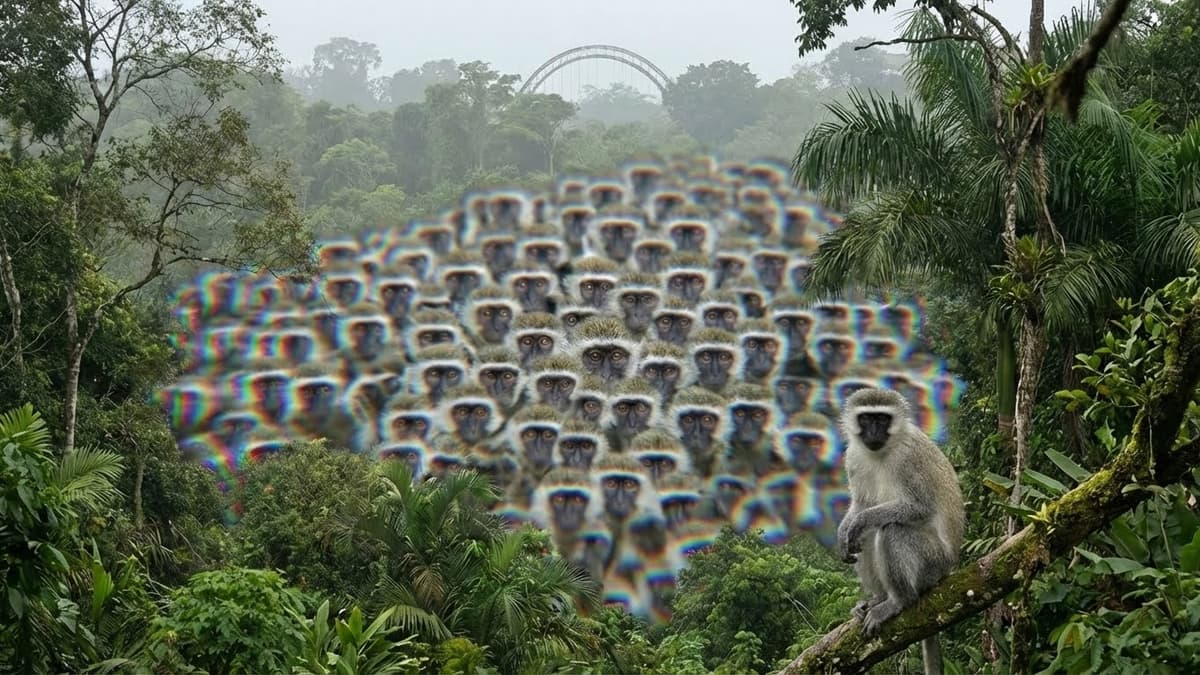
AI Images Complicate Search for Escaped Monkeys in St. Louis
•January 13, 2026
0
Why It Matters
Misinformation from synthetic media hampers emergency response and public safety, highlighting the need for verification tools.
Key Takeaways
- •Monkeys escaped near northern St. Louis park.
- •AI images claim false captures, spreading confusion.
- •Health department urges distance, warns aggression.
- •Ownership and escape cause remain unknown.
- •Incident underscores synthetic media risks for public safety.
Pulse Analysis
The sudden appearance of vervet monkeys in a northern St. Louis park has turned a routine wildlife incident into a citywide alert. Local officials mobilized animal control teams, but the lack of clear ownership and the unknown number of escaped primates complicate containment efforts. Residents are being asked to maintain a safe distance, as stressed monkeys can exhibit aggressive behavior that poses risks to both people and the animals themselves. This scenario underscores how urban wildlife management must adapt quickly to unexpected variables.
Compounding the challenge, AI‑generated images have proliferated across social platforms, depicting the monkeys in staged captures or exaggerated scenarios. These synthetic visuals blur the line between fact and fiction, making it harder for authorities to assess real‑time reports. Emergency responders now face an added layer of verification, sifting through user‑generated content to separate authentic sightings from fabricated ones. The episode illustrates a growing tension between rapid information sharing and the reliability of that information in crisis contexts.
Beyond the immediate search, the incident serves as a cautionary tale for municipalities confronting synthetic media threats. It highlights the urgency of investing in digital forensics tools, public education on media literacy, and clear communication channels that can quickly debunk false narratives. As AI image generators become more accessible, policymakers must consider regulatory frameworks that balance innovation with safeguards against misinformation, especially when public safety is at stake.
AI images complicate search for escaped monkeys in St. Louis
0
Comments
Want to join the conversation?
Loading comments...