AI Infrastructure: The Tradeoffs Behind These 12 Vendor Platforms
Key Takeaways
- •Layer2C maps 12 AI vendors' authority across eight infrastructure layers
- •Dell and VMware lack a productized reasoning‑plane (Layer 2C)
- •HPE offers the only on‑prem, productized Layer 2C solution
- •Cloud hyperscalers cede most authority, trading control for operational leverage
- •NVIDIA's GPU stack permeates every vendor, extending authority beyond hardware
Pulse Analysis
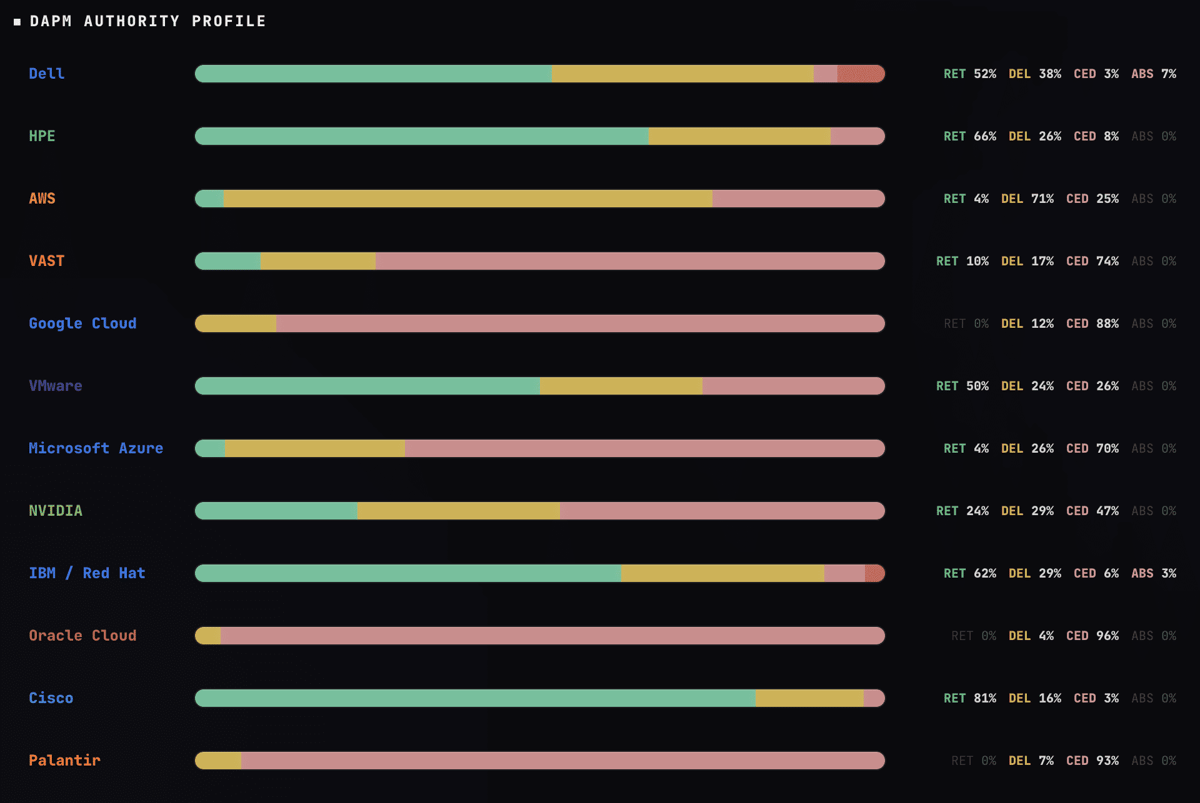
Enterprises chasing AI speed often overlook a hidden cost: who actually controls the infrastructure. The Layer2C site tackles this blind spot by marrying the 4+1 AI Infrastructure Framework with the Decision Authority Placement Model (DAPM). The combined instrument breaks the AI stack into eight layers—from compute fabric to the reasoning plane—then classifies each vendor’s decision authority as retained, delegated, ceded, or absent. By surfacing authority placement rather than raw capability, Layer2C gives architects a governance‑first lens that scales beyond pilot projects to enterprise‑wide deployments.
The first public assessment of twelve vendors uncovers striking patterns. Dell and VMware are completely absent at the reasoning‑plane, leaving enterprises to build their own governance layer. HPE stands out as the only on‑prem player with a productized Layer 2C offering, while VAST promises an ambitious closed‑loop governance system later this year. Among hyperscalers, Google Cloud delivers the most complete intelligence stack, IBM stakes a claim with watsonx.governance, and Microsoft leans on identity‑centric tooling. A pervasive reality is NVIDIA’s dominance: every on‑prem vendor depends on NVIDIA GPUs and associated software, extending NVIDIA’s influence far beyond hardware into orchestration and runtime layers.
For buyers, the insight is practical: choosing a cloud platform often means ceding authority across the stack, a trade‑off that should be explicit rather than assumed. Layer2C equips decision‑makers with a side‑by‑side, layer‑by‑layer view to spot accidental authority loss before contracts are signed, reducing future migration risk and governance gaps. Vendors, meanwhile, gain a clear roadmap to articulate where they preserve customer control and where they rely on partners. As AI workloads scale, the reasoning‑plane will become the decisive battleground, and tools like Layer2C will be essential for turning AI ambition into sustainable, governed enterprise value.
AI Infrastructure: The Tradeoffs Behind These 12 Vendor Platforms
Comments
Want to join the conversation?