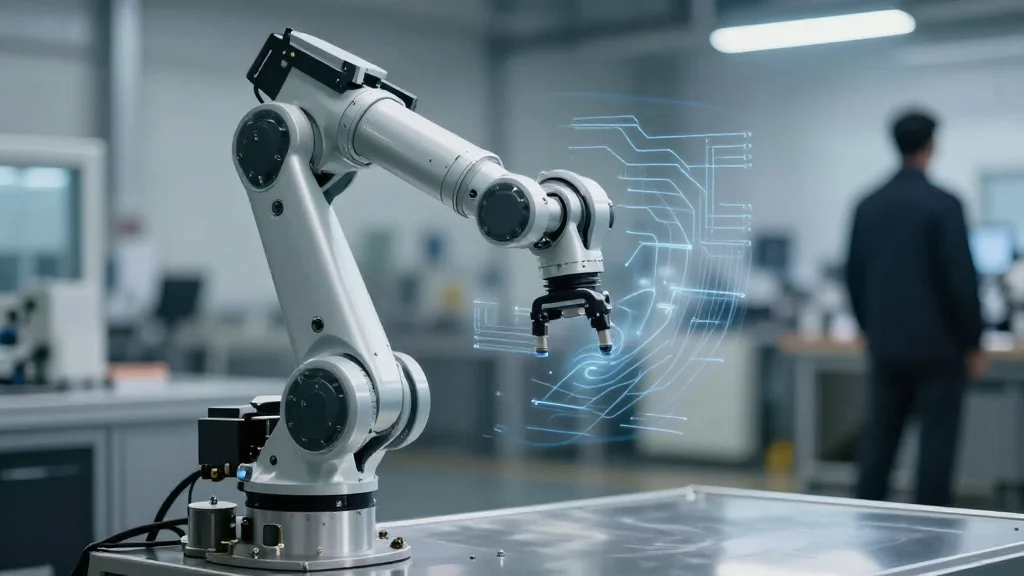
AI on the Shopfloor: Who Takes the Blame when a Machine Fails?
Why It Matters
Without defined responsibility, manufacturers risk legal exposure, worker unrest, and slowed AI adoption, threatening the sector’s competitive edge. Establishing audit and explainability frameworks is essential to protect both businesses and their workforce.
Key Takeaways
- •Operators still held liable for AI-driven errors
- •Lack of audit trails hampers fault tracing
- •Explainable AI tools remain unevenly adopted
- •Greenfield factories face higher accountability gaps
- •Regulators lag behind autonomous manufacturing deployment
Pulse Analysis
Agentic artificial intelligence is rapidly moving from pilot projects to the production floor, promising higher efficiency and reduced downtime. Yet the technology’s autonomy creates a paradox: machines can make decisions without human input, but the legal and operational frameworks governing those choices have not kept pace. In India’s manufacturing sector, where labor costs drive competitiveness, the mismatch threatens to stall investment as companies grapple with who will answer for a defective batch or an unexpected shutdown.
The core of the problem lies in structural gaps. Most factories lack digital audit trails that chronicle every algorithmic action, making it impossible for workers to prove that a mistake originated from the AI rather than human oversight. Explainable AI—systems that can articulate their reasoning in plain language—remains a niche feature, deployed only in a handful of forward‑looking plants. Consequently, operators are forced into a new role of interpreting opaque machine behavior, while existing accountability policies still assume human‑first decision making. This disconnect is especially acute in greenfield sites built around full automation, where veteran workers and informal checks are absent.
Industry leaders and regulators are beginning to respond. Infosys’s Jasmeet Singh advocates for standardized documentation of AI authority limits, while academic voices like Cornelia Walther call for a tiered liability model that assigns responsibility across developers, corporate leadership, and operators. Emerging platforms are embedding explainability modules and immutable logs, but adoption is uneven. For Indian manufacturers, embracing these safeguards now will not only mitigate legal risk but also build trust with a workforce increasingly peripheral to real‑time decisions, ensuring that AI can deliver its promised gains without a backlash over blame.
AI on the shopfloor: Who takes the blame when a machine fails?
Comments
Want to join the conversation?
Loading comments...