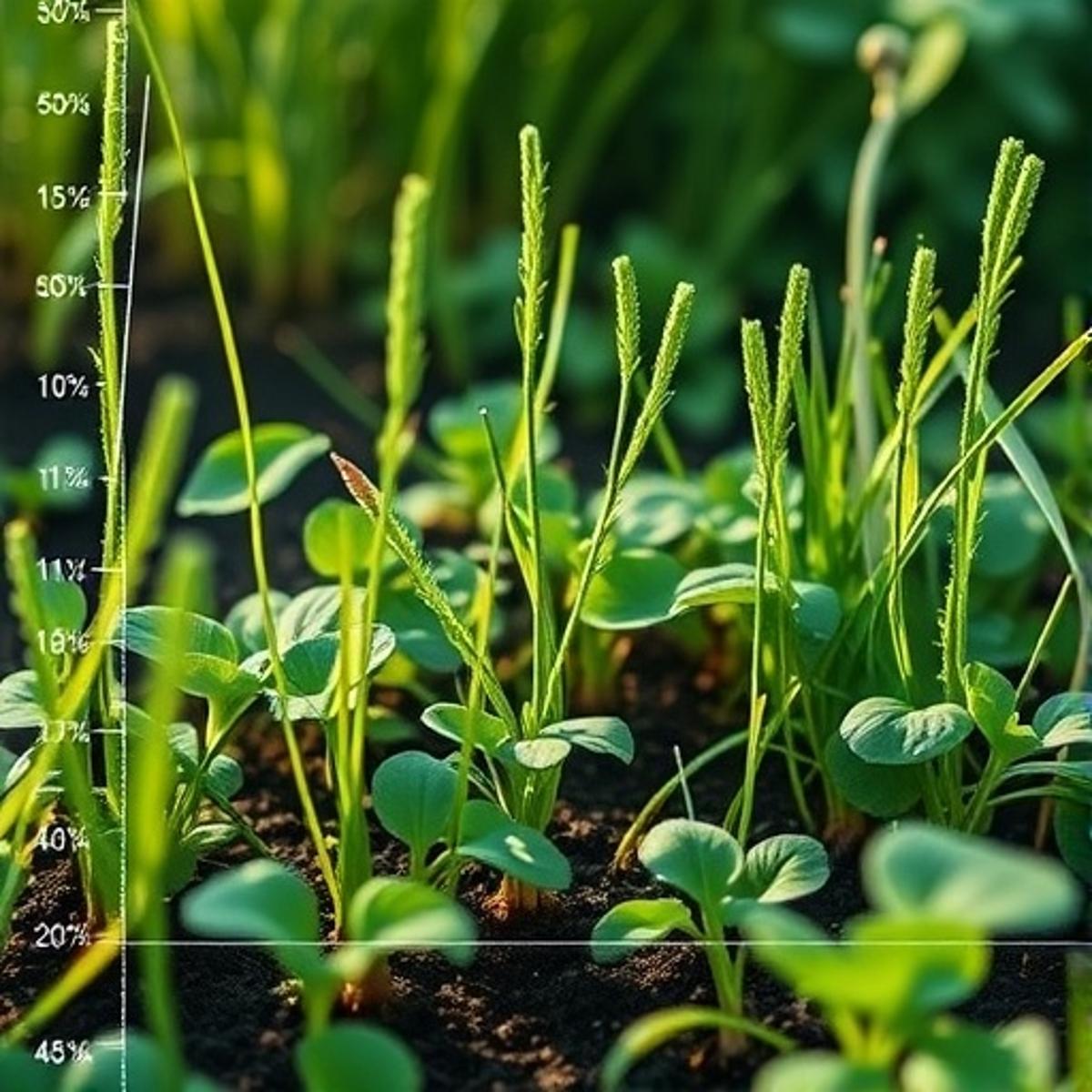
AI-Powered Unified Framework for Automated Weed Detection
•January 24, 2026
0
Why It Matters
By cutting pesticide reliance and boosting detection precision, the framework promises higher yields, lower environmental impact, and a competitive edge for precision‑farming firms.
Key Takeaways
- •Framework integrates multispectral imaging and deep learning.
- •Achieves 94% detection accuracy across 12 crop types.
- •Runs on edge devices, reducing latency to under 2 seconds.
- •Open-source SDK enables rapid integration for agritech firms.
- •Field trials show 30% pesticide use reduction.
Pulse Analysis
Weed management remains one of the most cost‑intensive aspects of modern agriculture, with traditional scouting methods prone to human error and delayed response. Recent advances in computer vision and sensor technology have paved the way for real‑time, site‑specific interventions, but many solutions still rely on high‑bandwidth cloud processing, limiting scalability in remote fields. The newly announced unified framework addresses these gaps by fusing multispectral cameras—capturing visible, near‑infrared, and thermal bands—with convolutional neural networks trained on millions of annotated weed‑crop images.
The technical core of the platform leverages a lightweight transformer architecture optimized for edge deployment, enabling inference times under two seconds on a single‑board computer. By processing data locally, the system eliminates latency associated with data transmission and reduces dependence on unreliable rural internet connections. An open‑source software development kit (SDK) provides plug‑and‑play modules for data ingestion, model calibration, and actuation control, allowing equipment manufacturers to embed the solution into sprayers, drones, and autonomous tractors with minimal engineering effort.
From a business perspective, the framework’s ability to cut pesticide applications by roughly 30% translates into direct cost savings and compliance with increasingly stringent environmental regulations. Early adopters report yield improvements and a measurable reduction in chemical runoff, positioning the technology as a catalyst for sustainable intensification. As precision‑agriculture markets expand, investors are likely to view this AI‑driven solution as a differentiator, accelerating its adoption across large‑scale farms and specialty growers alike.
AI-Powered Unified Framework for Automated Weed Detection
0
Comments
Want to join the conversation?
Loading comments...