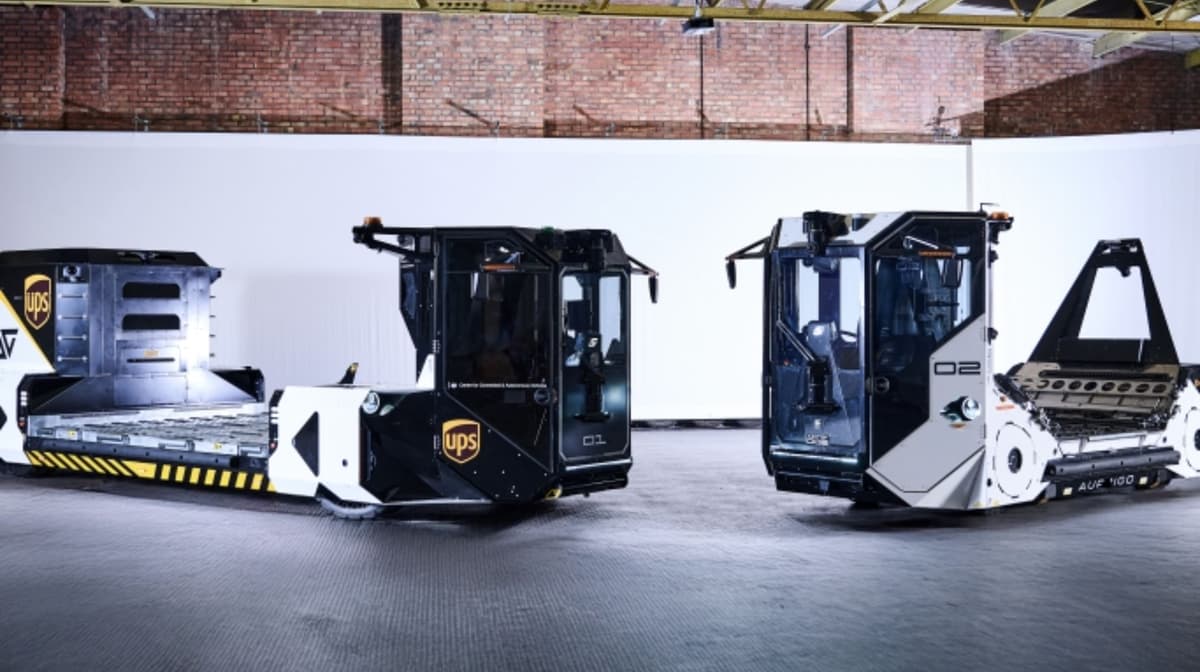
AI Research to Support Efficient Management of Autonomous Baggage Vehicles at Airports
•February 9, 2026
0
Why It Matters
Dynamic AI‑driven fleet management reduces operational bottlenecks, cuts emissions, and enables airports to scale autonomous handling without proportional labor costs.
Key Takeaways
- •Aston University collaborates with Aurrigo on airport AI
- •AI targets dynamic scheduling for baggage vehicle fleets
- •Improves efficiency, responsiveness, and sustainability
- •Reduces human decision bottlenecks in expanding operations
- •Supports scaling autonomous ground handling across airports
Pulse Analysis
The rise of autonomous ground vehicles at major hubs is reshaping airport logistics, yet the sheer volume of real‑time data—battery status, location, flight changes—creates a coordination nightmare for human operators. Traditional centralized dispatch systems struggle to keep pace, leading to idle vehicles, missed connections, and higher fuel consumption. Industry analysts predict that by 2030, over 30% of baggage handling will be robot‑driven, making intelligent orchestration a critical competitive edge.
Aston University’s collaboration with Aurrigo focuses on embedding reinforcement‑learning algorithms and predictive analytics into the fleet’s control layer. These models continuously ingest telemetry and flight‑schedule feeds, learning optimal routes and task priorities while accounting for constraints such as charging windows and gate reassignments. Early simulations suggest up to a 20% reduction in vehicle idle time and a 15% improvement in energy efficiency, directly translating into lower operating costs and a smaller carbon footprint for airports seeking sustainability certifications.
Beyond immediate operational gains, the AI platform could become a reusable framework for other autonomous airport services, from cargo tractors to passenger shuttles. By demonstrating measurable ROI and environmental benefits, the technology encourages broader adoption of autonomous systems, prompting airlines and airport authorities to invest in smarter infrastructure. In a market where on‑time performance and sustainability are increasingly tied to brand reputation, AI‑enabled fleet management positions early adopters as industry leaders and sets a new benchmark for intelligent airport operations.
AI research to support efficient management of autonomous baggage vehicles at airports
0
Comments
Want to join the conversation?
Loading comments...