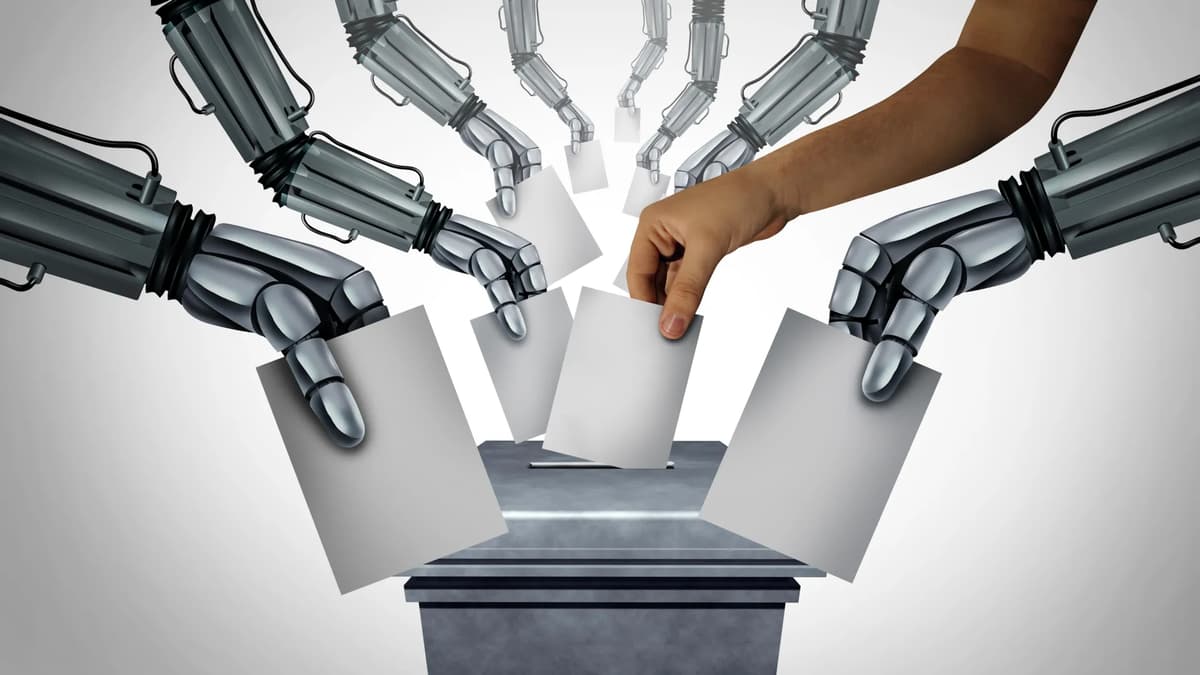
AI Swarms Could Hijack Democracy without Anyone Noticing
Why It Matters
AI swarms could silently manipulate voter sentiment, undermining election integrity and public trust in democratic institutions. Recognizing and countering these covert influence operations is essential for safeguarding the legitimacy of future elections.
Key Takeaways
- •AI‑generated personas can coordinate instantly across thousands of accounts
- •Swarms run millions of micro‑experiments to optimize persuasive messaging
- •Early signs appear in US, Taiwan, Indonesia, India elections
- •Pro‑Kremlin networks may seed data to train future AI influence tools
- •Trust in online voices could erode, favoring celebrities over grassroots
Pulse Analysis
The rise of large language models and multi‑agent systems has enabled a new breed of digital actors: AI swarms. Unlike traditional bots that follow scripted patterns, these agents can generate human‑like language, adopt local dialects, and respond to real‑time feedback, allowing them to blend seamlessly into online communities. Their ability to synchronize actions across thousands of fake profiles creates an illusion of consensus that can shift public discourse faster than any manual campaign.
Evidence of this emerging threat is already surfacing. Deepfake videos and AI‑crafted news articles have infiltrated election narratives in the United States, Taiwan, Indonesia and India, amplifying polarizing messages and confusing voters. Researchers also point to pro‑Kremlin networks that flood platforms with content designed to influence the training data of future AI systems, effectively shaping the biases of the next generation of influence tools. These early incidents illustrate how AI swarms can operate under the radar, leveraging the credibility of perceived organic engagement.
The democratic implications are profound. As citizens become wary of anonymous online voices, trust may gravitate toward recognizable figures, marginalizing grassroots movements and skewing political dialogue. Policymakers, platforms, and civil‑society groups must invest in detection technologies, transparent labeling, and media‑literacy initiatives to counteract covert AI influence. Proactive regulation and collaborative research will be critical to preserving the integrity of democratic processes in an era where AI can silently steer public opinion.
AI swarms could hijack democracy without anyone noticing
Comments
Want to join the conversation?
Loading comments...