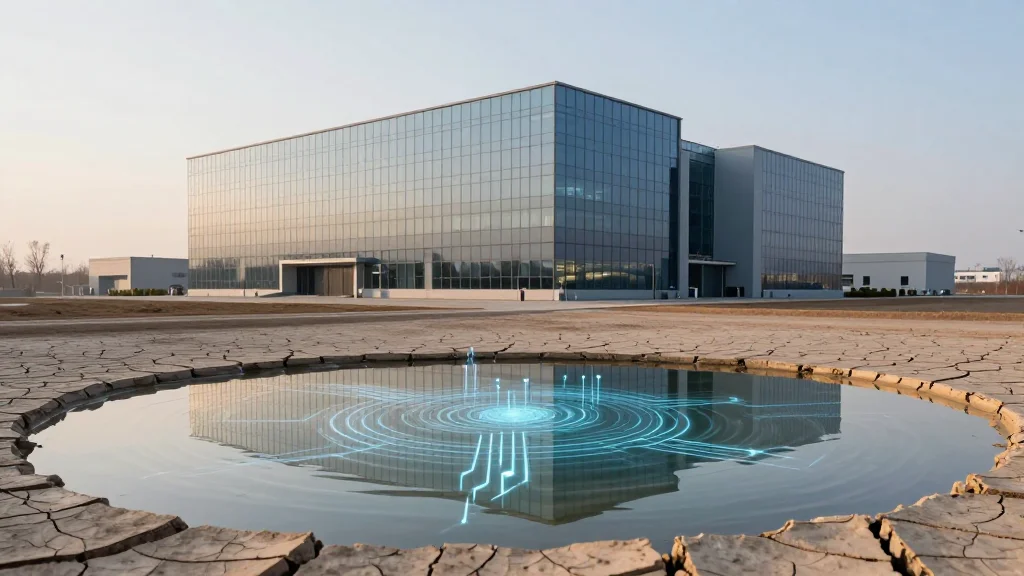
AI Water Usage Requires Governments to Rethink Their Approach to Water
Why It Matters
Unsustainable water use could stall AI deployment, trigger regulatory pushback, and expose economies to geopolitical supply‑chain shocks, making water management a critical component of digital‑economy policy.
Key Takeaways
- •AI data centres could add 100 new UK sites by 2030.
- •84% of proposed UK data centres sit in water‑stressed zones.
- •Water‑intensive semiconductor supply chain in Taiwan faces drought risk.
- •Advanced cooling and recycling cut AI water use but not fully.
- •Governments must fund public water services to sustain AI growth.
Pulse Analysis
The surge in artificial‑intelligence workloads has amplified data‑centre electricity consumption, and the heat generated must be dissipated—most often through evaporative cooling that draws heavily on local water supplies. Communities from Michigan to the United Kingdom are witnessing rising tensions as water‑intensive facilities compete with households and agriculture for scarce resources. This friction is feeding a broader backlash against AI, prompting regulators and investors to scrutinise the environmental footprint of digital infrastructure.
In the United Kingdom, the government’s AI agenda includes roughly $86 billion in public and private investment and the designation of five AI Growth Zones. Yet 84 % of the slated data‑centre locations sit in regions projected to be water‑stressed by 2040, prompting plans for the country’s first major reservoirs in three decades. While these projects aim to secure supply, critics argue that without stricter water‑use standards and transparent reporting, the digital‑economy push could exacerbate regional shortages and spark further public opposition.
Globally, the water challenge is intertwined with semiconductor supply chains, especially in Taiwan, which produces over 90 % of advanced chips using ultra‑pure water. Climate‑driven droughts and geopolitical tensions heighten the risk of supply disruptions that could reverberate across AI services worldwide. Companies are experimenting with closed‑loop cooling, water‑recycling systems, and dry‑cooling technologies, but these measures only partially offset demand. Coordinated action—combining public investment in water infrastructure, robust regulation, and industry‑wide adoption of circular cooling—will be essential to align AI growth with sustainable water stewardship.
AI water usage requires governments to rethink their approach to water
Comments
Want to join the conversation?
Loading comments...