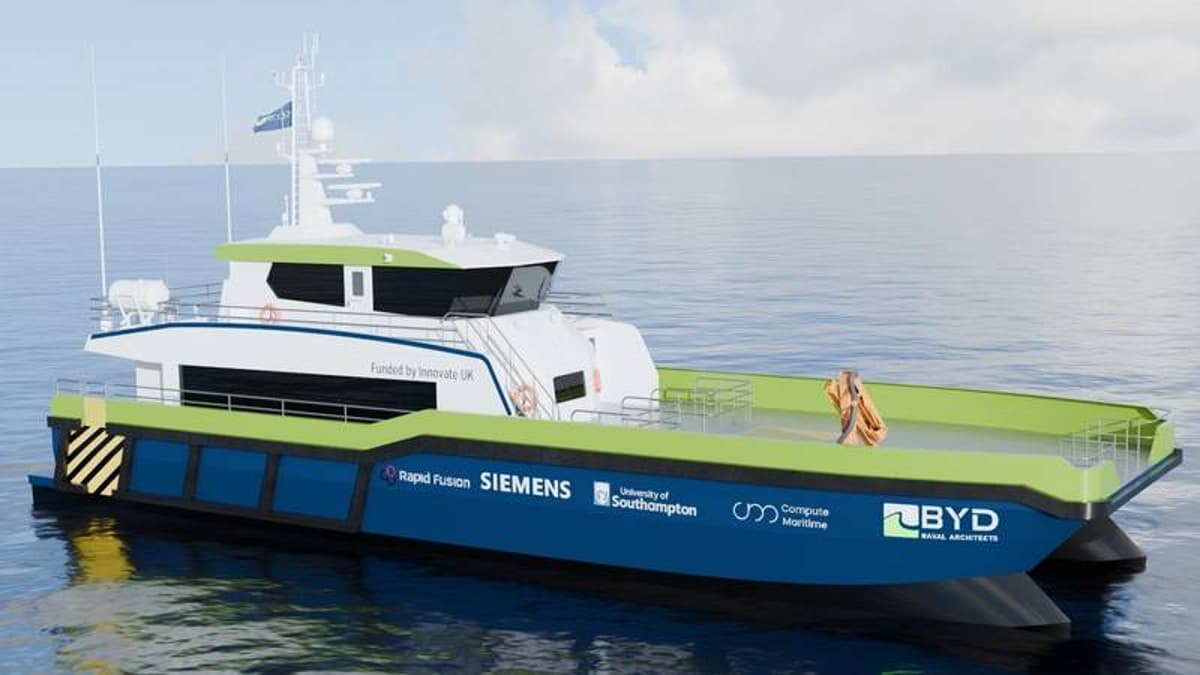
Al-Designed CTV Saves 100,000 Liters of Fuel, 258 Tons of CO2 a Year
Companies Mentioned
Why It Matters
The breakthrough shows how generative AI and 3‑D printing can materially lower operating costs while accelerating maritime decarbonisation, directly supporting the UK’s aggressive emissions targets for offshore wind support vessels.
Key Takeaways
- •AI‑optimized hull cuts power need by 6.3% at 25 knots
- •Hybrid propulsion yields 11.1% annual fuel reduction
- •Additive‑manufacturing toolchain streams printable component design
- •Daily battery surplus enables full 25‑knot service speed
- •Design ready for fast‑charging upgrades toward 95% lifetime emissions cut
Pulse Analysis
The GenDSOM initiative illustrates a turning point for maritime engineering, where generative AI meets large‑format additive manufacturing. Compute Maritime partnered with Siemens, HP, Rapid Fusion, BYD Naval Architects and the University of Southampton to embed production constraints directly into the NeuralShipper design loop. This seamless workflow eliminates post‑design re‑work, allowing complex hull geometries and hydrofoil components to be printed at scale, accelerating prototype cycles and reducing material waste.
Performance modeling of the new 32.5‑meter crew transfer vessel reveals tangible operational gains. By reshaping the hull, the AI reduces the power required to maintain a 25‑knot service speed by 6.3%, translating into an annual fuel saving of over 100,000 liters and a cut of 258 tons of CO₂. The diesel‑electric hybrid system further stabilises energy use, turning a typical daily battery deficit into a 106 kWh surplus, ensuring the vessel meets speed requirements without over‑discharging its storage.
Beyond immediate efficiency, the project aligns with the UK’s 2025 Maritime Decarbonisation Strategy, which seeks a 30% emissions drop by 2030 and 80% by 2040 for domestic shipping. The vessel’s design includes a fast‑charging inlet, positioning it to transition from diesel to full electric as offshore wind farms expand their sea‑based power infrastructure. This future‑proof approach demonstrates how AI‑driven design and additive manufacturing can create upgradeable platforms that deliver long‑term carbon reductions, setting a replicable template for the broader maritime sector.
Al-Designed CTV Saves 100,000 Liters of Fuel, 258 Tons of CO2 a Year
Comments
Want to join the conversation?
Loading comments...