Companies Mentioned


Why It Matters
AI Factories let organizations meet sovereign data requirements without sacrificing access to cutting‑edge AI hardware, reshaping the cloud‑on‑prem balance for high‑value workloads.
Key Takeaways
- •AWS AI Factories bring Nvidia GPUs to on‑prem sites
- •Enables compliance with data‑sovereignty and security regulations
- •Reduces AI deployment time to months, not years
- •Shifts CAPEX to OPEX with managed services
- •Competes with Microsoft Azure Local for sovereign AI
Pulse Analysis
The rise of data‑sovereignty mandates is driving a quiet reversal of the cloud‑first narrative that has dominated the past decade. Enterprises and government agencies face mounting pressure to keep sensitive datasets within national borders, prompting a search for solutions that blend the agility of cloud services with the control of on‑prem infrastructure. AWS’s AI Factories answer this call by installing a private, fully managed AI environment directly in a client’s data centre, effectively extending the AWS ecosystem to locations traditionally off‑limits to public cloud.
Technically, AI Factories combine Nvidia’s latest Grace Blackwell and Vera Rubin GPU architectures with Amazon’s proprietary Trainium 3 accelerators, delivering a heterogeneous compute fabric optimized for both training and inference. AWS retains responsibility for hardware provisioning, software updates, and security patches, while the customer supplies power, cooling and physical space. This shared‑responsibility model accelerates deployment timelines to a matter of months, dramatically reducing the multi‑year capital outlays typical of in‑house AI builds. By converting a large CAPEX project into an OPEX‑based managed service, organizations can scale AI capabilities more predictably and focus resources on model development rather than integration.
AWS is not alone in this sovereign AI push; Microsoft’s Azure Local offers a comparable on‑prem managed stack. The competition underscores a broader industry shift toward hybrid AI strategies, where cloud providers become service operators inside the customer’s fence. For enterprises, the availability of turnkey AI Factories could lower the barrier to adopting advanced models, spur innovation in regulated sectors, and potentially reshape long‑term cloud adoption curves as more workloads migrate to secure, localized environments.
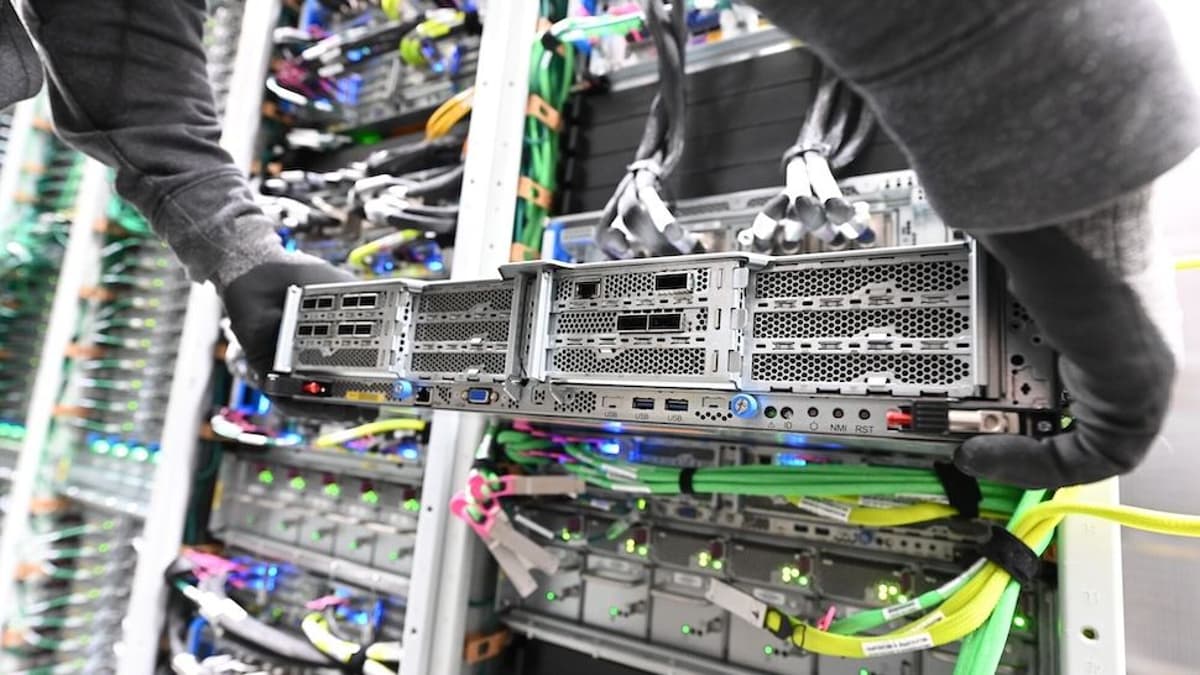
Amazon is testing out private on-premises 'AI Factories'
0
Comments
Want to join the conversation?
Loading comments...