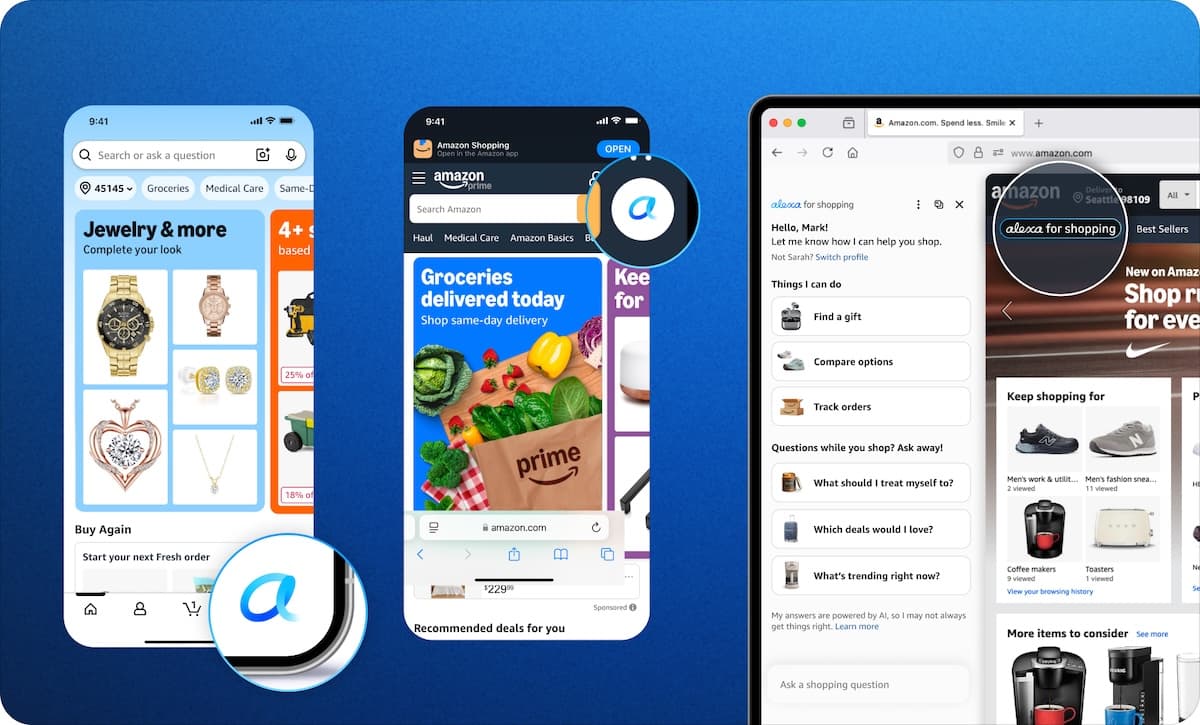
Amazon Launches an AI Shopping Assistant for the Search Bar, Powered by Alexa+

Why It Matters
The launch embeds generative AI deeper into Amazon’s retail ecosystem, giving the company a differentiated, data‑rich shopping experience that could reshape consumer expectations and pressure rivals to accelerate their own AI initiatives.
Key Takeaways
- •Alexa for Shopping replaces Rufus, unifying AI across Amazon devices.
- •Assistant offers voice, text, and visual interactions on mobile, desktop, Echo Show.
- •Features include price alerts, recurring orders, and cross‑store “Buy for Me.”
- •Personalized recommendations draw on purchase history and browsing habits.
- •Raises privacy concerns as AI accesses detailed shopper data.
Pulse Analysis
Amazon’s introduction of Alexa for Shopping marks a decisive step in the convergence of conversational AI and e‑commerce. By retiring Rufus and consolidating AI capabilities under the Alexa+ umbrella, Amazon leverages its massive data trove to deliver hyper‑personalized assistance across every touchpoint. The assistant’s multimodal interface—voice, text, and visual cards—mirrors the way shoppers naturally interact with devices, while features like price‑drop alerts and scheduled purchases streamline decision‑making, potentially increasing basket size and repeat orders.
Beyond the Amazon marketplace, the new "Buy for Me" function positions the assistant as a universal procurement agent. Consumers can delegate purchases on competing sites, effectively turning Alexa into a cross‑platform shopping concierge. This capability not only deepens user reliance on Amazon’s ecosystem but also raises strategic questions for rival retailers who must decide whether to block, integrate, or compete with such AI‑mediated transactions. The convenience factor may accelerate adoption, especially among time‑pressed shoppers who value automated reordering of essentials.
However, the rollout intensifies scrutiny over data privacy and AI autonomy. Alexa for Shopping draws on detailed purchase histories, browsing patterns, and even voice recordings to tailor suggestions, prompting concerns about consent and data security. Regulators and consumer‑advocacy groups are likely to monitor how Amazon safeguards this information, especially as the assistant expands its reach beyond the company’s own storefront. Balancing personalization with transparent data practices will be crucial for sustaining trust while capitalizing on the competitive edge AI offers in the retail sector.
Amazon launches an AI shopping assistant for the search bar, powered by Alexa+
Comments
Want to join the conversation?
Loading comments...