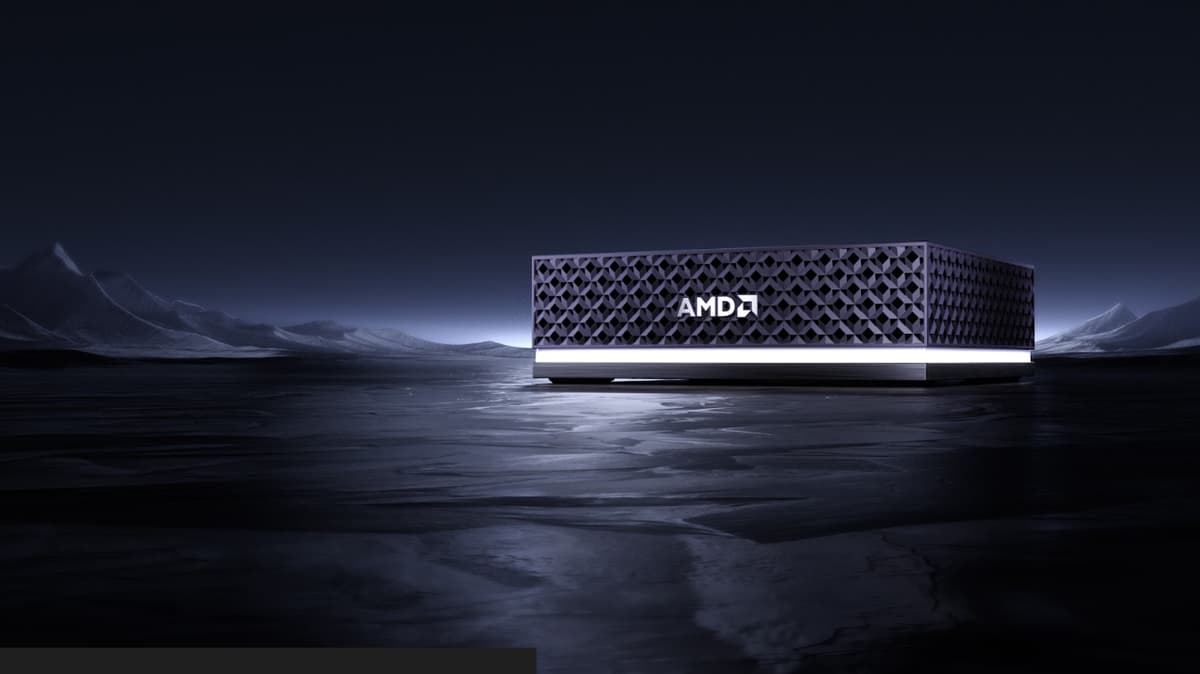
AMD Launches New Ryzen Processors and Ryzen AI Halo Dev Platform
Why It Matters
Local AI hardware reduces reliance on costly cloud inference and gives developers a native, high‑performance alternative to Nvidia’s CUDA ecosystem, accelerating the adoption of on‑device generative models.
Key Takeaways
- •Ryzen AI Halo pre‑orders start June 2026 at $3,999.
- •Platform offers up to 128 GB unified memory and 50 TOPS AI performance.
- •Next‑gen Halo with Ryzen AI Max PRO 400 launches Q3 2026, 192 GB.
- •55 TOPS NPU and Zen 5 CPU target agentic AI workloads.
- •AMD’s ROCm support challenges Nvidia’s CUDA dominance in edge AI.
Pulse Analysis
AMD’s Ryzen AI Halo marks a strategic push into the burgeoning market for on‑device artificial intelligence. By bundling a Zen 5‑based CPU, RDNA 3.5 graphics, and an XDNA 2 NPU, the platform delivers up to 50 TOPS of AI acceleration and 128 GB of unified memory, enough to run mid‑size generative models without cloud latency. The pricing at $3,999 positions it for professional developers and small enterprises that need predictable cost structures, especially as token‑heavy agentic workloads drive up per‑token cloud fees.
The upcoming Ryzen AI Max PRO 400 series raises the stakes with 192 GB of memory, 55 TOPS, and higher clock speeds, directly targeting the same segment Nvidia’s DGX Spark serves. AMD’s commitment to full ROCm compatibility across Windows and Linux differentiates it from Nvidia’s CUDA‑centric approach, allowing developers to stay within existing toolchains. Memory capacity is a decisive factor; the jump from 128 GB to 192 GB expands the model size envelope, enabling local inference of 300‑billion‑parameter LLMs that were previously cloud‑only.
For enterprises, the shift toward local AI hardware translates into lower operational expenditures and tighter data governance. As generative AI integrates into design, simulation, and engineering workflows, the ability to run large models on a single workstation can accelerate product cycles and reduce latency. AMD’s roadmap, with a Q3 2026 launch and OEM backing from ASUS, HP, and Lenovo, suggests a rapid scaling of supply. If performance benchmarks hold up against Nvidia, AMD could reshape the edge‑AI ecosystem, offering a viable, cost‑effective alternative for the next wave of AI‑driven applications.
AMD launches new Ryzen processors and Ryzen AI Halo dev platform
Comments
Want to join the conversation?
Loading comments...