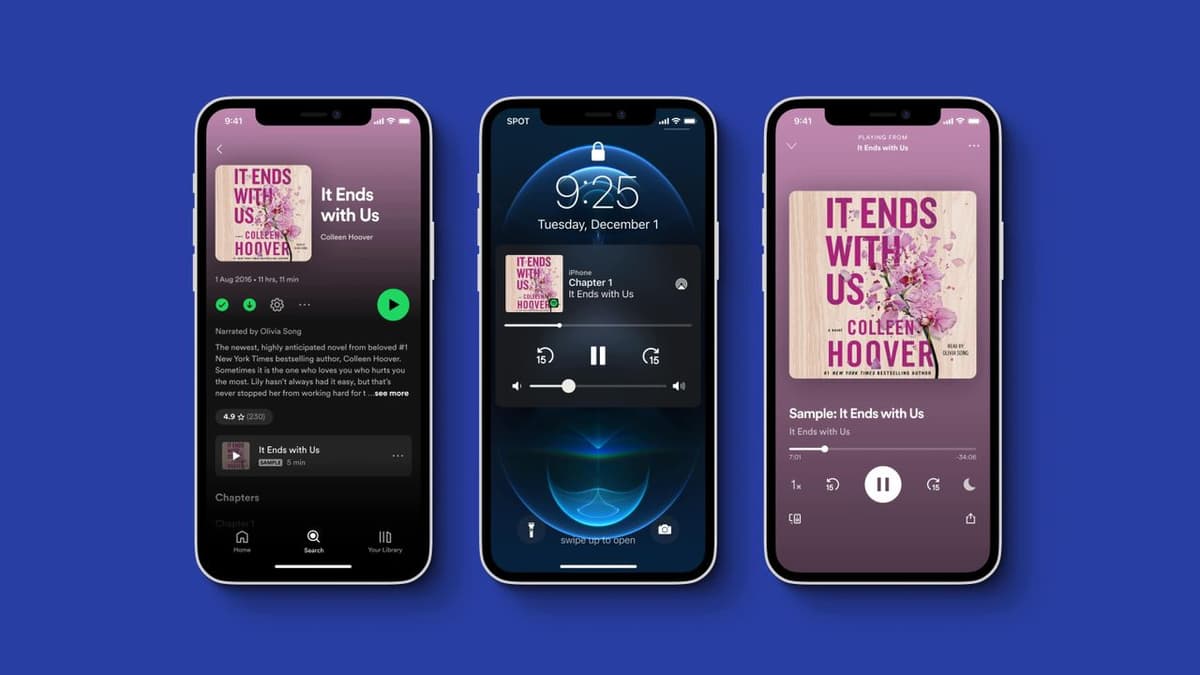
An Impressive Spotify Audiobook Upgrade Could Be on the Way, and as a Non-Reader, I’m Dying to Give It a Go
•January 20, 2026
0
Companies Mentioned


Why It Matters
This capability bridges the gap between print and audio, enhancing user convenience and potentially increasing audiobook adoption. It also gives Spotify a competitive edge in the growing audiobook market, pressuring incumbents like Audible.
Key Takeaways
- •Spotify tests Page Match to sync physical books with audiobooks.
- •Feature uses OCR to locate exact audiobook timestamp.
- •Available only in regions supporting Spotify audiobooks.
- •Could challenge Audible’s market dominance.
- •Early version may face scanning accuracy issues.
Pulse Analysis
The audiobook sector has exploded in recent years, driven by commuter listening habits and the rise of subscription platforms. Spotify, traditionally known for music streaming, has been expanding its audio library with Audiobooks+, AI‑generated recaps, and the Follow‑Along feature. Page Match represents the latest evolution, offering a seamless bridge between tactile reading and digital listening—a niche that competitors have largely ignored. By leveraging the same app ecosystem, Spotify can attract users who oscillate between print and audio, deepening engagement and increasing subscription value.
Technically, Page Match relies on optical character recognition to translate a photographed page into searchable text, then aligns that snippet with the audiobook's timestamp database. This bidirectional sync means readers can pick up a physical book where they left off in the audio version, and vice versa, eliminating the tedious manual searching that currently hampers mixed‑media consumption. Early testing suggests the OCR engine may stumble on stylized fonts or low‑light conditions, prompting Spotify to request alternate scans. Nonetheless, the underlying architecture showcases the company's investment in AI‑driven content mapping, a capability that could extend to other media formats.
Strategically, the feature could reshape competitive dynamics. Audible’s Whispersync already links Kindle e‑books to audio, but it does not support pure print. Spotify’s ability to match physical pages gives it a unique selling point, potentially drawing non‑digital readers into its subscription model. If the rollout proves smooth, Spotify may accelerate its push into the broader publishing ecosystem, forging partnerships with publishers for integrated metadata. In a market where user convenience drives loyalty, Page Match could be a decisive factor in capturing a larger share of the lucrative audiobook revenue stream.
An impressive Spotify audiobook upgrade could be on the way, and as a non-reader, I’m dying to give it a go
0
Comments
Want to join the conversation?
Loading comments...