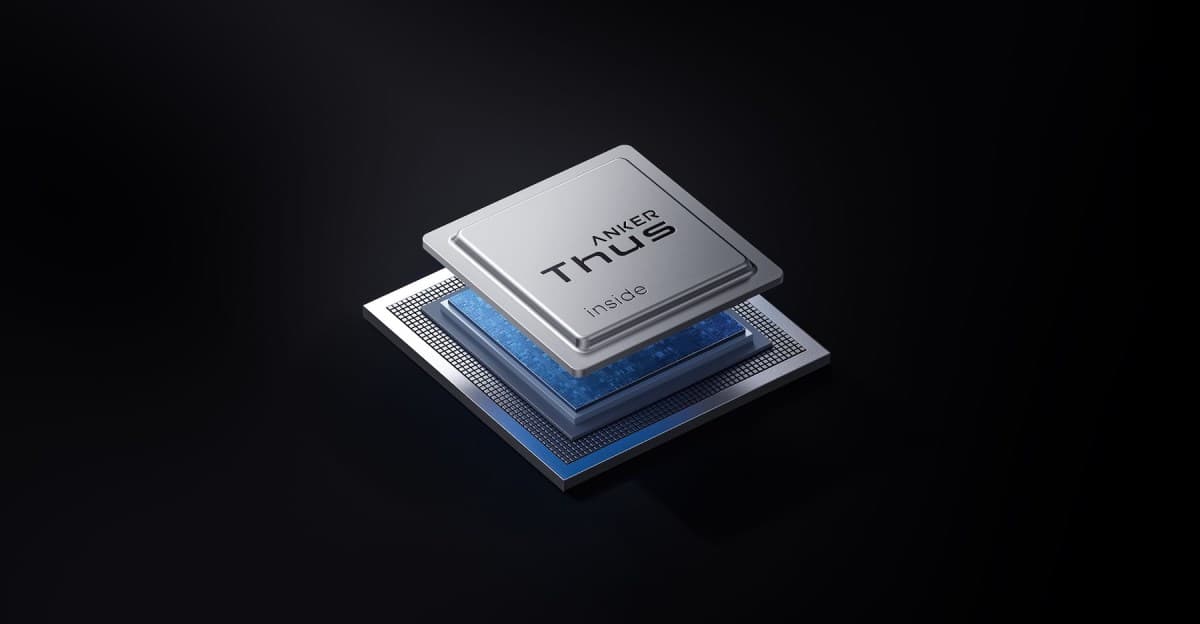
Anker Made Its Own Chip to Bring AI to All Its Products
Why It Matters
The chip gives Anker a differentiated hardware advantage in a crowded wearables market, potentially raising the performance bar for AI‑enhanced audio and expanding its ecosystem beyond Apple and Sony competitors.
Key Takeaways
- •Thus chip uses compute‑in‑memory, reducing power and latency.
- •Supports neural networks with several million parameters in earbuds.
- •Enables superior noise‑cancellation via eight microphones and bone sensors.
- •First Anker AI silicon, launching in Liberty 5 Pro series.
Pulse Analysis
The race to embed artificial intelligence in consumer electronics has accelerated as manufacturers seek to deliver real‑time features without draining battery life. Traditional AI accelerators store a model in one region of the silicon and shuttle data to a separate compute core, a process that consumes both power and time. Compute‑in‑memory (CIM) architectures collapse those two steps by performing arithmetic directly where the weights reside, cutting latency and energy use. While CIM has been explored in data‑center processors, Anker’s Thus chip marks the first commercial deployment of this approach in a wearable audio device.
Anker’s Thus processor packs a neural‑net engine capable of handling several million parameters, a scale previously reserved for smartphones or laptops. Coupled with eight MEMS microphones and dual bone‑conduction sensors, the upcoming Liberty 5 Pro Max and Liberty 5 Pro earbuds promise dramatically clearer voice calls and adaptive ambient‑sound suppression. Priced at $229.99 and $169.99, the devices aim to undercut Apple’s AirPods Pro 3 while offering a hardware advantage that software‑only solutions cannot match. Early benchmarks will be crucial, but the compute‑in‑memory design could give Anker a measurable edge in noisy environments.
The introduction of a proprietary AI chip signals a strategic shift for Anker, traditionally known for power banks and chargers, toward a vertically integrated ecosystem. By controlling both silicon and firmware, the company can roll out AI‑driven features across its broader portfolio of headphones, speakers, and smart home accessories without relying on third‑party processors. This move may pressure rivals to accelerate their own custom silicon programs, intensifying competition in the premium audio segment. For consumers, the promise is richer, more responsive experiences that blend seamlessly with everyday devices, setting a new baseline for AI‑enhanced sound.
Anker made its own chip to bring AI to all its products
Comments
Want to join the conversation?
Loading comments...