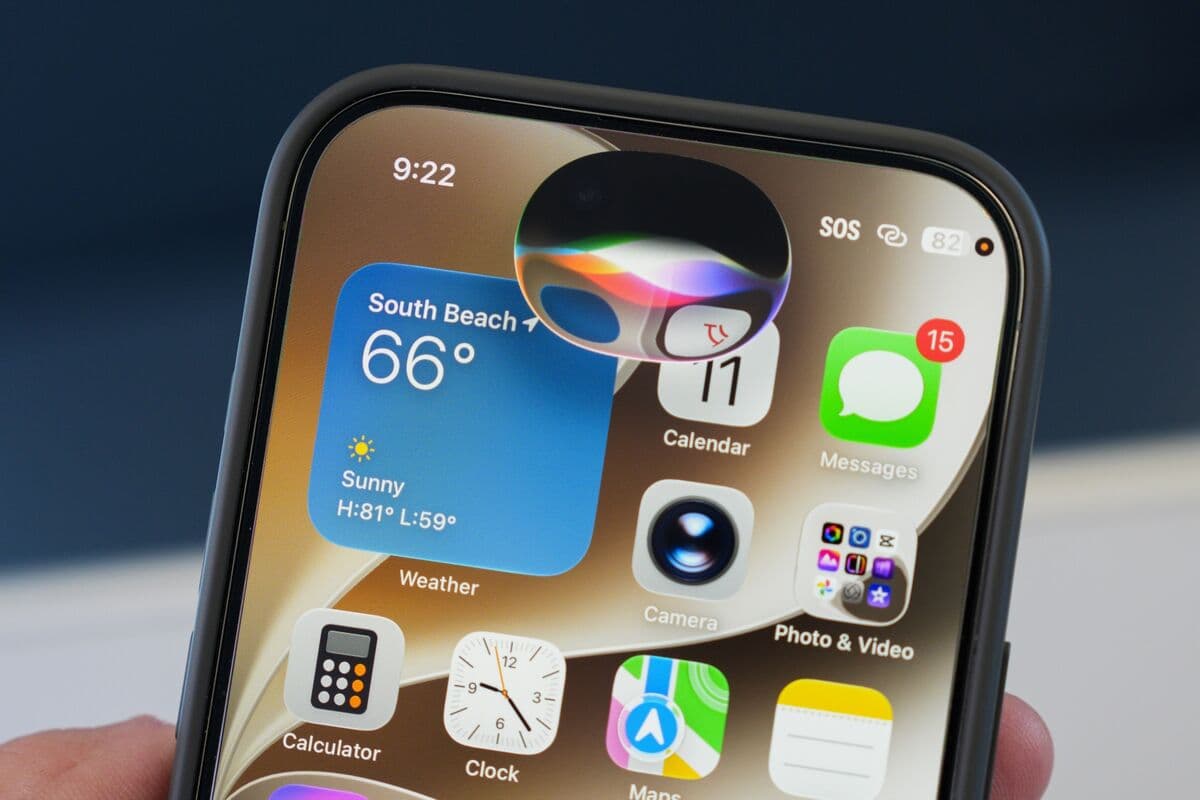
Apple’s New Siri Is Just Good Enough to Ease Its AI Crisis
Why It Matters
A stronger Siri helps Apple stay competitive with Google and Microsoft’s assistants, while the hinted hardware innovations could open fresh revenue streams and reshape user interaction. The moves signal Apple’s commitment to re‑establishing leadership in AI‑driven consumer tech.
Key Takeaways
- •Siri upgrade meets 2022 AI roadmap milestones
- •iOS 27 beta hints at foldable iPhone design
- •macOS 27 beta showcases touch‑screen MacBook prototype
- •Apple’s AI focus aims to close gap with rivals
Pulse Analysis
Apple’s AI narrative has long been defined by caution, but the latest Siri upgrade marks a decisive pivot. After years of criticism that its voice assistant lagged behind Google Assistant and Amazon Alexa, Apple finally integrated a more capable large‑language‑model backend, improving contextual understanding and multi‑turn conversations. This technical catch‑up aligns with the company’s broader AI strategy disclosed in a confidential "Power On" meeting, where executives agreed to prioritize generative AI across software and services. The upgrade, while not revolutionary, restores confidence among developers and consumers that Apple can deliver a competitive AI experience.
The beta releases of iOS 27 and macOS 27 add another layer of intrigue, showcasing prototypes of a foldable iPhone and a touch‑screen MacBook. These form factors, long rumored but never materialized, suggest Apple is preparing to diversify its hardware portfolio beyond the traditional slab design. A foldable iPhone could attract premium‑segment buyers seeking novelty, while a touch‑screen MacBook blurs the line between laptop and tablet, potentially expanding the market for creative professionals. If these concepts reach production, they would reinforce Apple’s reputation for setting design trends and could stimulate accessory ecosystems and new app experiences.
Strategically, the Siri improvement and hardware teasers work in tandem to signal Apple’s intent to integrate AI more deeply into its ecosystem. A more capable assistant can power smarter shortcuts, on‑device processing, and personalized services, enhancing the value proposition of iOS and macOS devices. Coupled with the anticipated hardware innovations, Apple is positioning itself to compete not just on hardware specs but on an AI‑first user experience. This holistic approach may attract developers to build AI‑enhanced apps, drive higher device upgrade cycles, and ultimately help Apple reclaim a leadership role in the rapidly evolving AI‑driven consumer market.
Apple’s New Siri Is Just Good Enough to Ease Its AI Crisis
Comments
Want to join the conversation?
Loading comments...