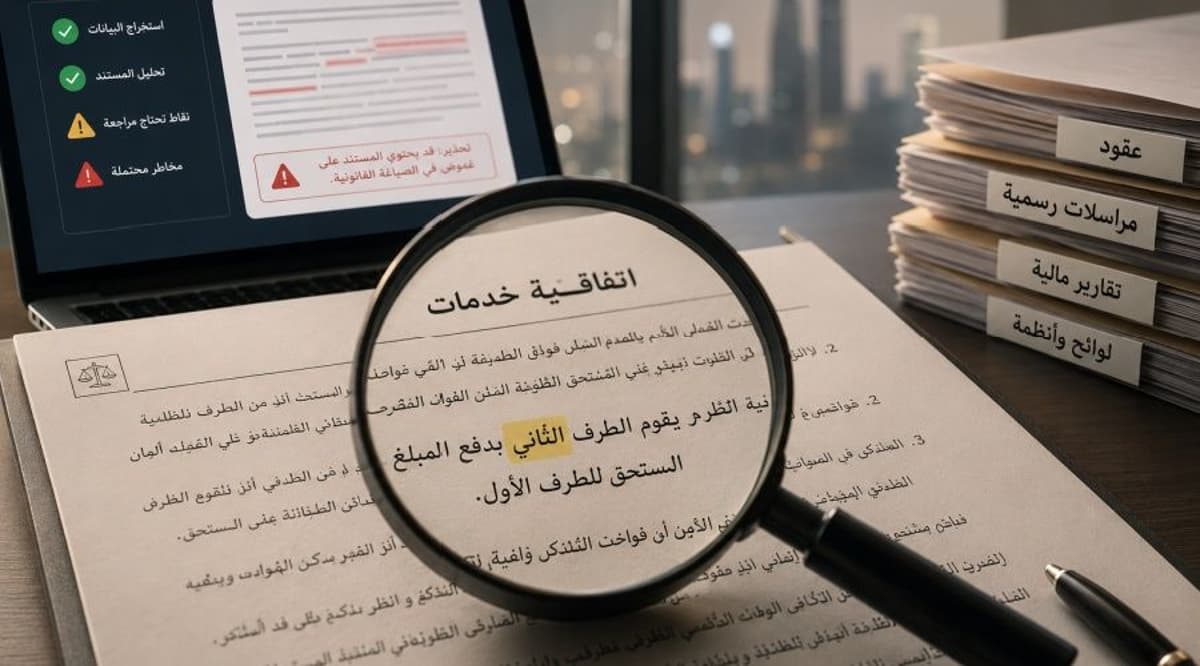
Arabic AI Has a Trust Problem, Not a Language Problem
Why It Matters
In high‑stakes environments, a single misinterpreted diacritic can alter liability or compliance, making AI trustworthiness a business imperative. Without reliable Arabic AI, the Gulf’s AI ambitions risk costly errors and slowed adoption.
Key Takeaways
- •Fluency ≠ accuracy: models often misread Arabic grammar despite sounding correct
- •OCR errors propagate, creating hallucinations in enterprise Arabic documents
- •Benchmarks show Arabic‑specific models outperform generic ones on legal tasks
- •Governance and human‑in‑the‑loop needed to flag model uncertainty
- •Saudi Arabia’s $100 bn AI plan hinges on trustworthy Arabic AI
Pulse Analysis
The rapid rollout of generative AI across the Gulf has created a false sense of security around Arabic language capabilities. While modern large language models can produce polished, native‑like prose, they frequently overlook the subtle role of diacritics and syntactic markers that determine subject‑object relationships. In sectors such as banking, healthcare, and law, a misread noun can shift contractual responsibility, exposing organizations to regulatory penalties and reputational damage. Understanding this fluency‑accuracy gap is the first step toward building AI systems that truly serve Arabic‑speaking enterprises.
Compounding the linguistic challenge is the quality of the underlying data. Decades of scanned contracts, handwritten forms, and mixed‑language PDFs introduce OCR errors that cascade into model hallucinations—confident but fabricated outputs. Studies like the ALPS benchmark and the 2025 Arabic NLP Conference highlight that hallucinations outpace factual errors, especially when models are forced to interpret ambiguous legal language. Enterprises that overlook the digitisation stage risk deploying AI that appears trustworthy while silently propagating mistakes, eroding confidence among decision‑makers.
The path forward lies in purpose‑built Arabic AI ecosystems. Specialized models trained on authentic, domain‑specific Arabic corpora outperform generic counterparts on presupposition and discourse analysis, delivering higher fidelity in contract summarisation and regulatory reporting. Coupled with robust Arabic‑first OCR pipelines, structured data workflows, and governance frameworks that enforce uncertainty detection, organizations can transform AI from a risky novelty into a competitive advantage. Saudi Arabia’s $100 bn Project Transcendence illustrates that national AI ambition must be matched with trustworthy, locally‑adapted technology to unlock real economic value.
Arabic AI has a trust problem, not a language problem
Comments
Want to join the conversation?
Loading comments...