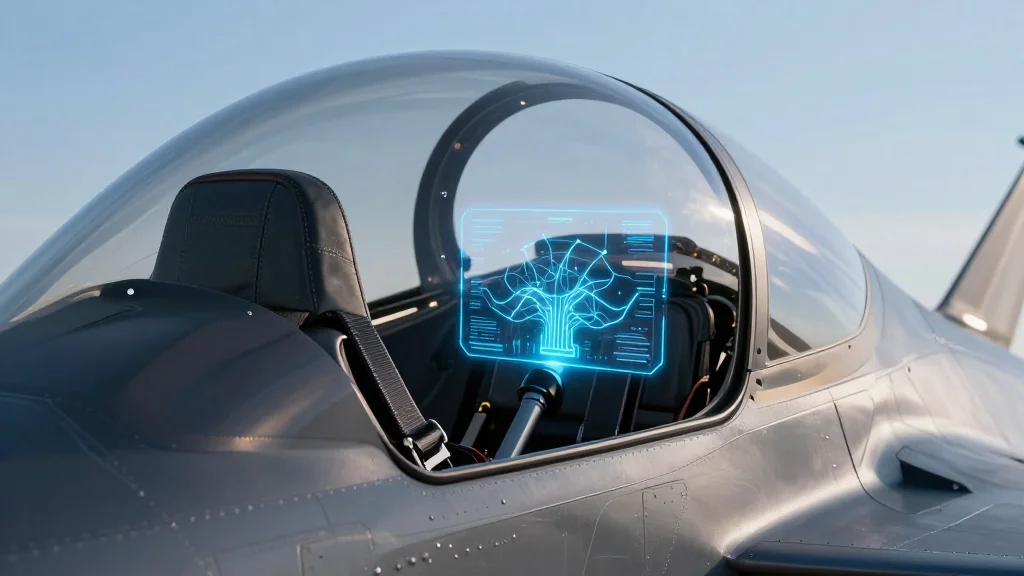
As Aerospace Prioritizes AI, Aviation Experts Ask, “What Problems Are We Trying to Solve?”
Why It Matters
AI that cuts decision cycles and validates outcomes can lower development costs and improve safety, giving firms a competitive edge in a tightly regulated market.
Key Takeaways
- •Lockheed Martin uses AI to retrain F‑35 ID algorithms between flights
- •Airbus links global engineering teams with AI‑driven digital threads
- •Boeing stresses AI must be tightly validated, not replace judgment
- •Northrop Grumman treats AI as an assistant, not an oracle
- •RT X targets AI for faster aircraft production and air‑traffic efficiency
Pulse Analysis
Aerospace executives agree that the industry’s biggest hurdle is not a shortage of AI tools, but an overwhelming complexity of sensors, software and mission scenarios. By embedding AI into the engineering workflow—Lockheed Martin’s Overwatch retraining combat identification models between sorties, or Airbus’s AI‑enabled digital thread that synchronizes dispersed design teams—companies can turn massive data archives into actionable insights. This shift from "hunting and pecking" to "faster‑validated decisions" promises to shorten development cycles, reduce costly rework, and keep safety certifications on track.
Government research labs are also reshaping the AI landscape. The Air Force Research Laboratory’s push for overlapping development tasks and risk‑aware AI adoption aims to accelerate technology transition from lab to field. Investments in modular UAS, hypersonics and affordable mass production illustrate how AI can streamline capability‑driven portfolios. By treating AI as a catalyst rather than a product, the AFRL hopes to compress the traditionally sequential acquisition timeline, delivering new capabilities faster while maintaining rigorous validation standards.
Commercial manufacturers see AI as a lever for scaling production and managing airspace congestion. RTX highlights AI‑driven software‑defined manufacturing to bring automotive‑level efficiency to low‑rate, high‑mix aerospace factories. Meanwhile, AI agents that assist pilots and air‑traffic controllers could enable denser traffic flows without compromising safety. The overarching message from the panel is clear: AI will not replace engineers, but it will empower them to solve the entrenched problems of complexity, cost, and speed, ultimately shaping the next generation of safer, more efficient aircraft.
As Aerospace Prioritizes AI, Aviation Experts Ask, “What Problems Are We Trying to Solve?”
Comments
Want to join the conversation?
Loading comments...