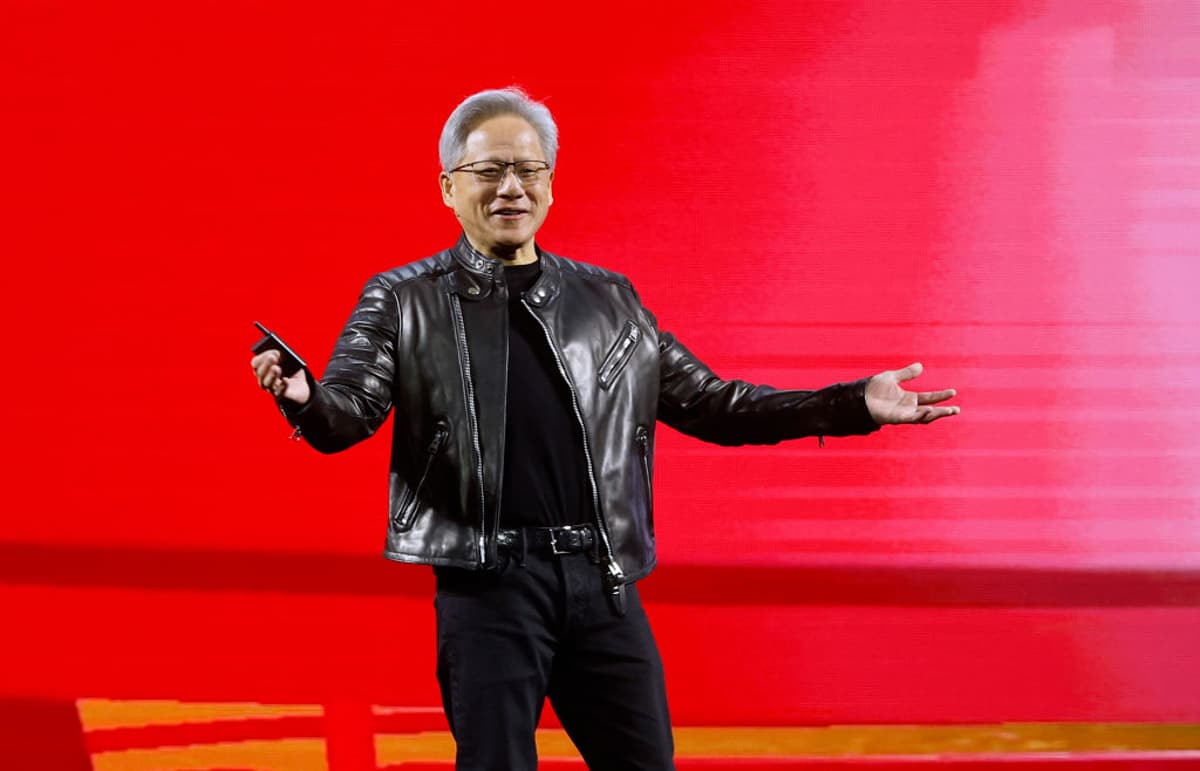
As Workers Worry About AI, Nvidia’s Jensen Huang Says AI Is ‘Creating an Enormous Number of Jobs’

Companies Mentioned
Why It Matters
Huang’s optimism shapes public perception and policy debates about AI’s labor impact, influencing how businesses and lawmakers prepare for workforce transitions.
Key Takeaways
- •Huang claims AI will generate more jobs than it displaces
- •AI hardware factories need skilled labor, boosting U.S. manufacturing
- •Huang warns fear may hinder AI adoption and economic benefits
- •Studies estimate up to 15% of U.S. jobs could vanish from AI
- •AI seen as U.S. re‑industrialization opportunity, per Nvidia CEO
Pulse Analysis
The conversation between Jensen Huang and MSNBC’s Becky Quick highlighted a growing clash between AI optimism and the so‑called "doom" narrative. Huang argued that AI’s ability to automate discrete tasks does not equate to whole‑job elimination; instead, it reshapes roles, creating new positions in development, maintenance, and oversight. This perspective counters recent academic forecasts that predict up to 15% of U.S. jobs could disappear, a figure that fuels anxiety among workers and policymakers alike. By emphasizing the distinction between task automation and job loss, Huang seeks to reframe the debate toward opportunity rather than fear.
Beyond rhetoric, the practical demand for AI hardware—GPUs, specialized chips, and data‑center infrastructure—has sparked a renaissance in U.S. manufacturing. New factories across the country are hiring engineers, technicians, and supply‑chain specialists, effectively turning AI into a catalyst for re‑industrialization. This shift aligns with broader economic strategies that aim to reduce reliance on overseas production and bolster domestic tech capabilities. However, the rapid expansion also underscores a skills gap; without targeted training programs and education pathways, the promised jobs may remain out of reach for many workers, perpetuating inequality.
Investors and corporate leaders are watching the narrative closely, as public sentiment can influence regulatory approaches and talent pipelines. Huang’s warning that fear could suppress AI adoption resonates with companies eager to leverage AI for productivity gains but wary of backlash. A balanced discourse—recognizing both displacement risks and job‑creation potential—will be essential for shaping policies that support reskilling, protect vulnerable workers, and sustain innovation. As AI continues to embed itself across industries, the United States stands at a crossroads where strategic investment in human capital could determine whether AI becomes a driver of inclusive growth or a source of deeper labor market disruption.
As workers worry about AI, Nvidia’s Jensen Huang says AI is ‘creating an enormous number of jobs’
Comments
Want to join the conversation?
Loading comments...