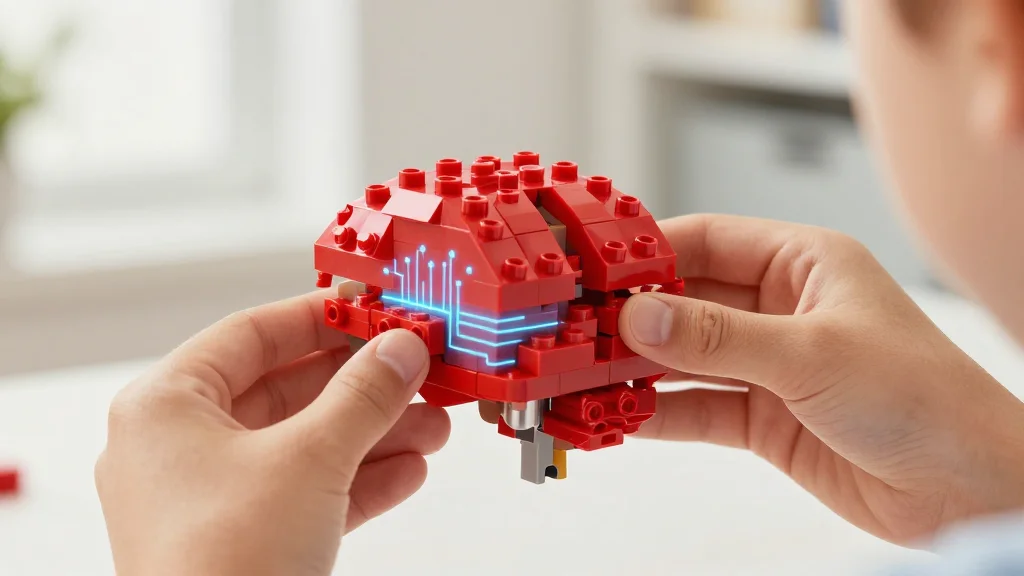
ASU+GSV 2026: Tactile Learning Tools Lay Foundation for AI Education
Why It Matters
Early tactile experiences lay a durable foundation for future AI and coding proficiency, reducing reliance on screen time. This strategy equips the next workforce with both technical and collaborative skills essential for an AI‑driven economy.
Key Takeaways
- •LEGO Education promotes hands‑on learning over early screen exposure
- •Tactile play builds foundational concepts for later AI and coding skills
- •Middle‑school projects emphasize collaboration to develop AI‑related soft skills
- •Less screen time nurtures curiosity, preparing students for AI‑driven careers
- •ASU+GSV summit highlights tactile tools as AI literacy foundation
Pulse Analysis
Artificial intelligence is quickly becoming a baseline competency for most professional roles, prompting educators to embed AI concepts early in curricula. While many schools rush to introduce coding on tablets, research shows that concrete, hands‑on experiences improve cognitive mapping of abstract systems. Tactile tools such as LEGO bricks let children visualize building blocks, literally and figuratively, fostering an intuitive grasp of modular design that later translates to understanding neural networks or large language models. This sensory approach also aligns with developmental psychology that younger learners absorb concepts best through play.
Jenny Nash, head of education impact at LEGO Education, used the 2026 ASU+GSV summit to champion a phased learning model. For kindergarteners, she recommends minimal screen exposure and maximized brick‑based construction to teach basic modeling principles. As students progress to middle school, the curriculum shifts toward collaborative, screen‑enabled projects that blend physical prototypes with digital simulations, sharpening communication, problem‑solving, and ethical reasoning—skills identified as critical for AI‑enabled occupations. LEGO’s kits already integrate coding modules, allowing a seamless transition from tactile to programmable experiences without overwhelming young learners.
The emphasis on tactile AI education signals a broader shift in edtech toward blended learning ecosystems that balance physical manipulatives with virtual analytics. Investors are increasingly funding platforms that combine LEGO‑style construction sets with AI‑driven assessment tools, anticipating demand from districts seeking to future‑proof their STEM pathways. As employers report shortages in candidates who can both code and collaborate, early exposure to hands‑on AI concepts may become a differentiator in college admissions and hiring pipelines. Policymakers, too, are watching these pilots, considering standards that recognize play‑based AI literacy as a core competency.
ASU+GSV 2026: Tactile Learning Tools Lay Foundation for AI Education
Comments
Want to join the conversation?
Loading comments...