ATLANT 3D and NUS Partner on AI-Driven Materials Discovery Foundry in Singapore
Why It Matters
The partnership accelerates atomic‑scale manufacturing combined with AI, giving researchers rapid access to novel material designs and positioning Singapore as a hub for next‑generation deep‑tech innovation.
Key Takeaways
- •ATLANT 3D's DALP tech powers NUS's AI-driven synthesis hub.
- •Partnership targets 2D materials, quantum devices, and photonics.
- •Foundry serves as a reference model for self‑driving labs.
- •Collaboration aligns with Singapore’s NRF AI for Science initiative.
- •Researchers gain atomic‑scale manufacturing integrated with AI workflows.
Pulse Analysis
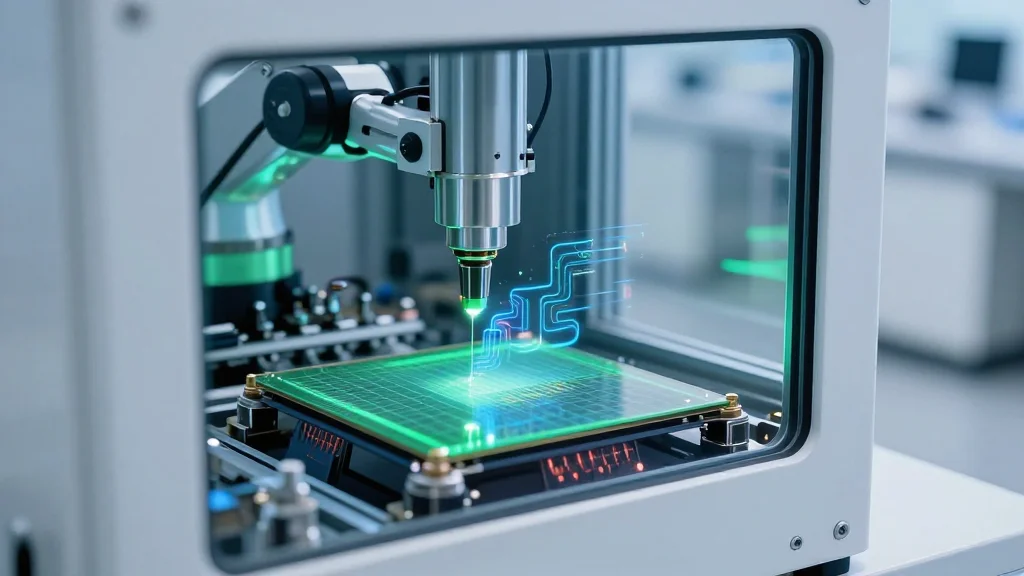
Singapore is intensifying its push into AI‑for‑science, and the new ATLANT 3D‑NUS foundry exemplifies that strategy. By embedding Direct Atomic Layer Processing and the NANOFABRICATOR platform into a robotic lab, the collaboration creates a closed‑loop system where AI algorithms propose material compositions, the hardware fabricates them atom by atom, and real‑time analytics evaluate performance. This seamless integration reduces the traditional trial‑and‑error cycle, enabling scientists to explore vast compositional spaces in weeks rather than years, and it dovetails with national funding aimed at building autonomous research infrastructure.
The foundry’s focus on 2D materials, nanoelectronics, quantum substrates, catalytic surfaces, and photonic structures addresses some of the most promising frontiers in next‑generation technology. Atomic‑scale precision ensures that device‑relevant structures can be produced directly, eliminating the gap between material synthesis and functional testing. Researchers across participating programmes will tap into a shared data lake, feeding experimental results back into machine‑learning models that continuously refine predictive accuracy. This feedback loop not only speeds discovery but also cultivates a reproducible knowledge base that can be leveraged by industry partners seeking to commercialize breakthrough materials.
Beyond the immediate scientific gains, the initiative serves as a blueprint for self‑driving laboratories worldwide. By demonstrating a scalable, AI‑enabled workflow that couples fabrication with analytics, the Singapore model could inspire similar ecosystems in other innovation hubs. The partnership also strengthens Singapore’s position in the global semiconductor and quantum supply chains, offering a competitive edge to firms that rely on rapid material prototyping. As more institutions adopt autonomous labs, the pace of materials innovation is set to accelerate, reshaping how products are designed, manufactured, and brought to market.
ATLANT 3D and NUS Partner on AI-Driven Materials Discovery Foundry in Singapore
Comments
Want to join the conversation?
Loading comments...