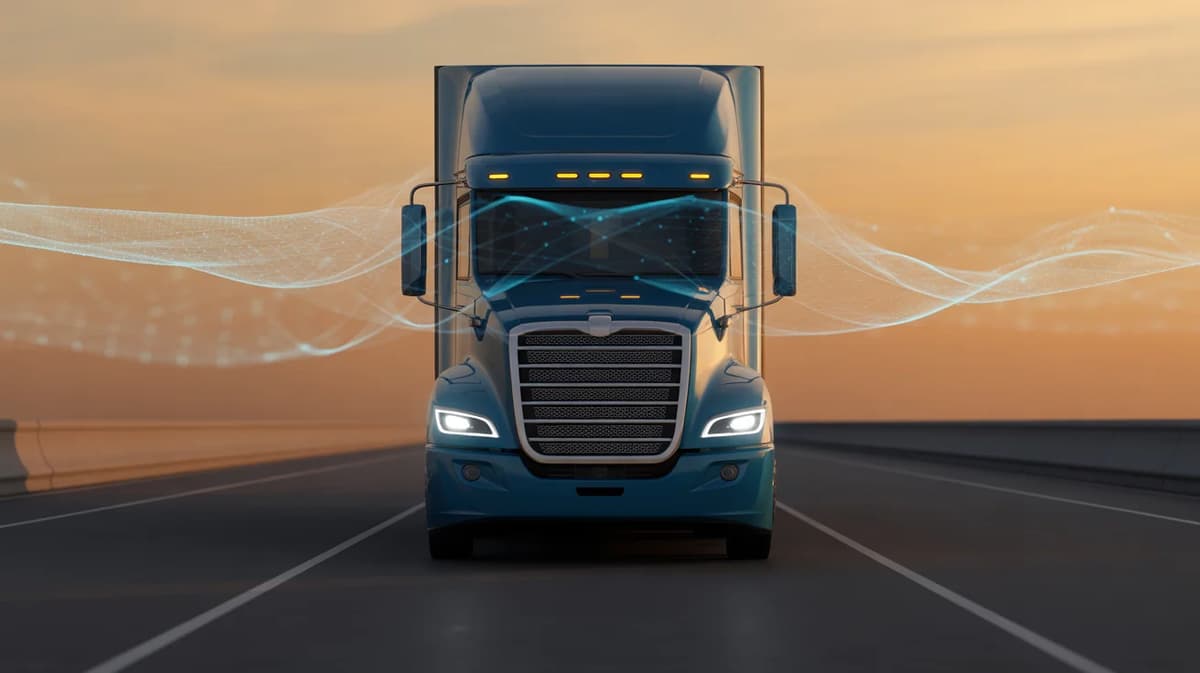
Aurora Will Have ‘Hundreds’ of Driverless Trucks on the Road by the End of 2026, CEO Says
•December 10, 2025
0
Companies Mentioned


Why It Matters
The rollout will dramatically increase freight efficiency and safety on highways, while testing the balance between automation benefits and labor‑market resistance. Aurora’s progress signals that large‑scale autonomous trucking is moving from pilot projects toward commercial reality.
Key Takeaways
- •Aurora targets hundreds of driverless trucks by end‑2026.
- •Five fully autonomous trucks operate on Texas routes.
- •Safety‑driver cabs are optics, not technology regression.
- •$1.6 billion cash runway supports scaling through 2027.
- •Union opposition may shape regulatory rollout.
Pulse Analysis
The autonomous trucking sector has long been touted as the first mass‑market use case for self‑driving technology, yet many startups have faltered under technical and funding pressures. Aurora’s measured approach—delaying its 2024 launch to refine scalability—contrasts with peers that have exited or cut back deployments. By focusing on highway corridors where regulatory frameworks are clearer, Aurora leverages its existing five‑truck fleet to demonstrate reliability, logging 100,000 driverless miles and perfect on‑time delivery for major logistics partners. This performance builds credibility that investors and shippers increasingly demand.
Technically, Aurora is investing in next‑generation perception stacks that double lidar range from roughly 150 to 300 meters, a critical upgrade for high‑speed freeway operation. Longer detection horizons reduce reaction times for sudden obstacles, a safety advantage highlighted by a recent near‑miss incident involving a police officer. The company’s two‑fleet model—fully autonomous versus development trucks with safety drivers—allows rapid iteration while maintaining public confidence. By eliminating driver‑hour limits, autonomous rigs can run up to 20 hours daily, unlocking productivity gains unattainable with human crews.
From a business perspective, Aurora’s $1.6 billion cash cushion positions it to weather the capital‑intensive rollout through 2027, even as it seeks additional funding for hardware scaling. However, labor unions such as the Teamsters are lobbying for stricter state regulations, potentially slowing deployment in key markets. The company’s partnership with an energy producer to haul fracking sand illustrates a strategic focus on high‑volume, low‑margin freight where cost savings are most compelling. If Aurora can navigate regulatory hurdles and sustain its safety record, the anticipated fleet expansion could reshape long‑haul logistics, pressure traditional carriers, and accelerate broader acceptance of autonomous freight solutions.
Aurora will have ‘hundreds’ of driverless trucks on the road by the end of 2026, CEO says
0
Comments
Want to join the conversation?
Loading comments...