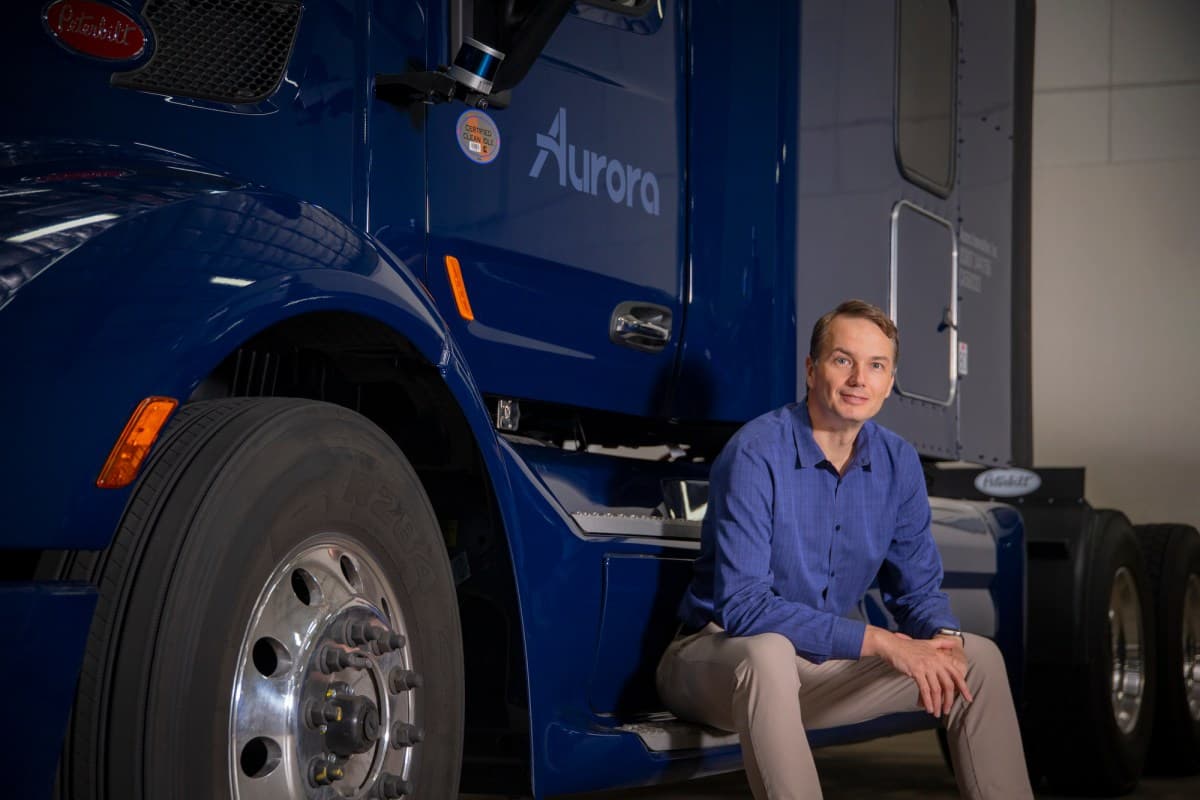
Aurora’s Chris Urmson on Why Self-Driving Trucks Are Finally Ready to Scale

Companies Mentioned
Why It Matters
Scaling autonomous trucks could reshape freight logistics, delivering cost savings and faster delivery while proving the safety case for broader vehicle autonomy.
Key Takeaways
- •Aurora began commercial driverless trucking in April 2025.
- •Scaling fleet to hundreds of trucks in 2026.
- •Long‑haul trucking offers clearer ROI than robotaxis.
- •Urmson promotes “verifiable AI” over end‑to‑end black boxes.
- •Safety triangle solved with common‑sense redundancy measures.
Pulse Analysis
The freight sector has long been a proving ground for autonomous technology, but only now does the economics line up. Aurora’s decision to start commercial operations last spring gave it real‑world data on route variability, weather impacts, and driver‑less handoffs. By committing to a fleet‑wide rollout this year, the company signals confidence that sensor suites, high‑definition maps, and predictive control algorithms have matured enough to handle the rigors of interstate trucking, a market worth over $800 billion annually in the United States.
Urmson’s advocacy for "verifiable AI" marks a strategic pivot from the black‑box models popular in large language‑model research. In autonomous trucks, every perception and planning decision must be auditable, allowing regulators and shippers to certify safety in a transparent manner. Aurora’s architecture now layers deterministic rule‑based modules beneath machine‑learning components, creating redundancy that addresses the classic safety triangle of perception, decision, and actuation. This hybrid approach reduces liability risk and aligns with emerging industry standards that demand explainable autonomy.
The ripple effect of a scaled driverless truck fleet extends beyond cost reduction. Shippers can expect tighter delivery windows, lower insurance premiums, and reduced driver turnover—a chronic pain point in logistics. Aurora’s roadmap, which includes expanding into regional distribution and partnering with major carriers, positions it to capture a sizable share of the autonomous freight market before competitors solidify their own deployments. As the technology proves itself on highways, investors and policymakers will likely accelerate supportive regulations, paving the way for broader autonomous vehicle adoption across sectors.
Aurora’s Chris Urmson on why self-driving trucks are finally ready to scale
Comments
Want to join the conversation?
Loading comments...