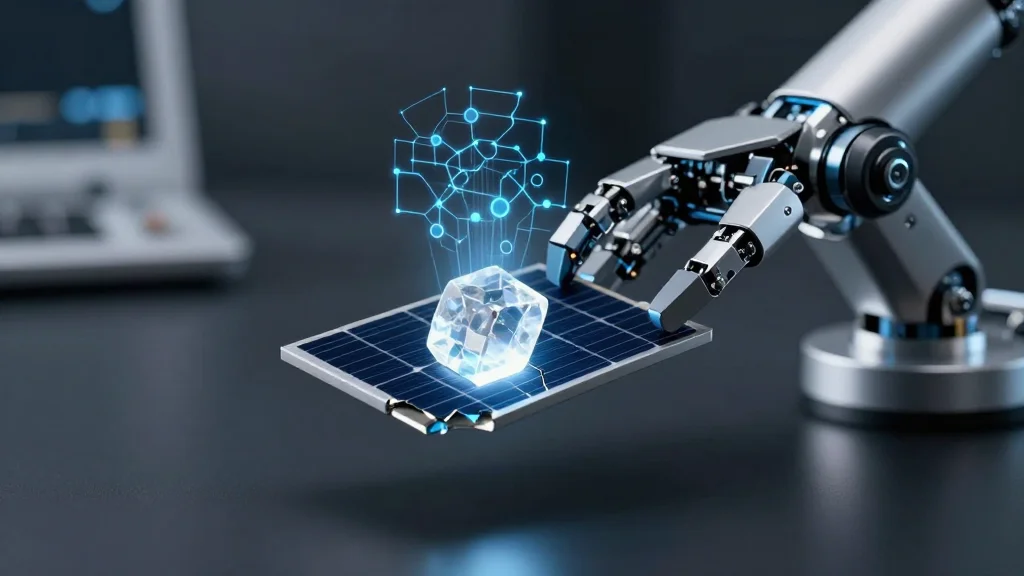
Aussie Researchers Harness AI to Help Unlock “Cheap, Scalable, Non-Toxic” Solar Recycling
Why It Matters
Efficient, low‑cost silicon recycling will lower the total cost of solar adoption and reduce hazardous waste, supporting Australia’s renewable‑energy goals and creating new supply chains for high‑purity materials.
Key Takeaways
- •AI predicts solvents, cutting discovery time from years to months.
- •University of New England leads solar silicon recycling research.
- •Projected panel waste could reach 91,000 tonnes annually by 2030.
- •$24.7 million federal pilot aims to shape national recycling plan.
- •Goal: local, non‑toxic, scalable silicon extraction for economic viability.
Pulse Analysis
The rapid adoption of rooftop solar in Australia—over 4.3 million installations—has created a looming waste challenge. By 2030, the first wave of panels will generate roughly 91,000 tonnes of end‑of‑life material, straining existing recycling capacity and inflating logistics costs. Traditional recycling relies on energy‑intensive, toxic chemicals, making large‑scale recovery of high‑purity silicon economically unattractive. Policymakers therefore face pressure to develop a sustainable, cost‑effective pathway that can keep pace with the expanding renewable‑energy footprint.
The University of New England’s Institute for Strategic AI tackles this bottleneck with a three‑pronged AI suite—predictive, generative and agentic models—that screens thousands of solvent candidates in silico. Once promising formulations are identified, a robotic laboratory executes rapid experiments, feeding results back to the algorithms for refinement. This closed‑loop system compresses a process that once required years and thousands of manual tests into weeks, dramatically lowering R&D spend and accelerating the path toward a non‑toxic, scalable silicon‑extraction solvent.
Successful solvent development could transform the economics of solar panel recycling, turning waste into a source of high‑value silicon for new modules and other tech applications. The Australian government’s $24.7 million pilot program, designed to inform a national stewardship framework, signals strong policy backing for such innovations. Industry partners stand to gain from localized recycling hubs that reduce transport emissions and create jobs in renewable‑energy zones. As AI‑driven chemistry matures, the model may be exported to other markets grappling with similar photovoltaic waste streams.
Aussie researchers harness AI to help unlock “cheap, scalable, non-toxic” solar recycling
Comments
Want to join the conversation?
Loading comments...