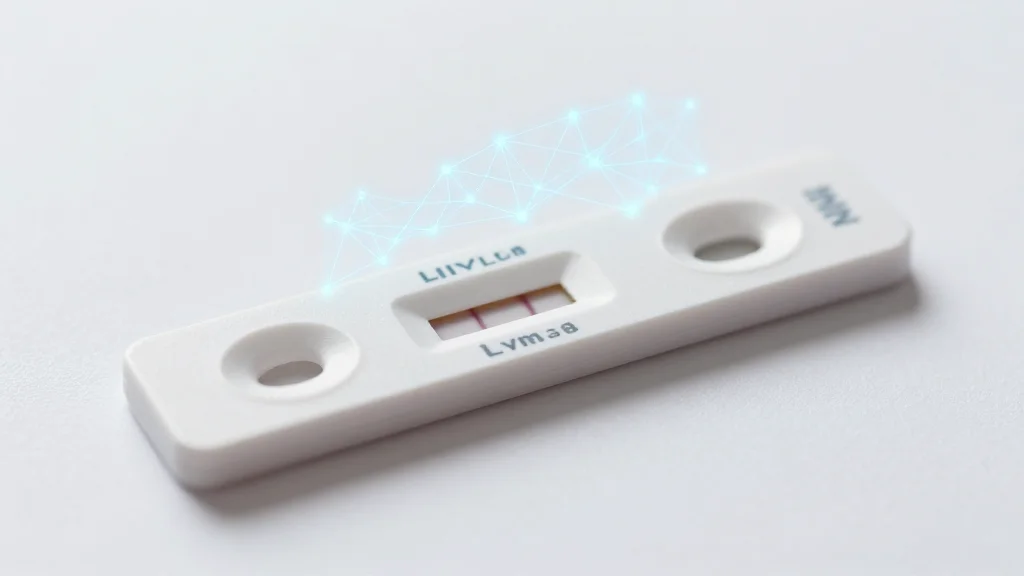
Autonomous AI Screening Flags Unreliable Lyme Test Results, Boosting Sensitivity to 95.7%
Why It Matters
Higher sensitivity reduces missed Lyme infections and demonstrates that AI‑driven diagnostics can be both accurate and trustworthy, accelerating their clinical adoption.
Key Takeaways
- •Monte Carlo dropout provides autonomous uncertainty scores for each test
- •Unreliable predictions flagged, improving sensitivity from 88.2% to 95.7%
- •Specificity remains perfect at 100% despite sensitivity gain
- •Framework validated on CDC and Lyme Disease Biobank samples
- •Approach applicable to any AI‑driven point‑of‑care diagnostic
Pulse Analysis
The rise of AI‑powered point‑of‑care sensors promises faster, on‑site diagnostics, but clinicians have been wary of algorithmic hallucinations that can produce false results. Monte Carlo dropout offers a lightweight solution: by randomly deactivating neurons during inference, it generates a distribution of predictions that quantifies uncertainty without adding hardware or memory overhead. This autonomous reliability check transforms a black‑box model into a transparent decision aid, addressing a core barrier to widespread adoption in decentralized health settings.
In a blinded study of a vertical‑flow paper assay for Lyme disease, the uncertainty‑quantification pipeline boosted diagnostic sensitivity from 88.2% to 95.7% while maintaining perfect specificity. The improvement means fewer patients will suffer delayed treatment, which can lead to chronic joint, cardiac, or neurological complications. Validation across the U.S. CDC and the Lyme Disease Biobank confirms the method’s robustness across diverse sample sets, reinforcing confidence among clinicians and regulators that AI‑enhanced tests can meet stringent performance standards.
Beyond Lyme disease, the framework is readily transferable to any rapid test that relies on neural‑network inference—ranging from COVID‑19 antigen screens to cardiovascular biomarker panels. By automatically discarding low‑confidence readings, manufacturers can market AI‑driven diagnostics with stronger safety claims, potentially easing regulatory pathways and opening new revenue streams in the $10 billion point‑of‑care market. Future research will likely explore hybrid uncertainty models and integration with electronic health records, further cementing AI’s role in delivering accurate, accessible diagnostics at the bedside.
Autonomous AI screening flags unreliable Lyme test results, boosting sensitivity to 95.7%
Comments
Want to join the conversation?
Loading comments...