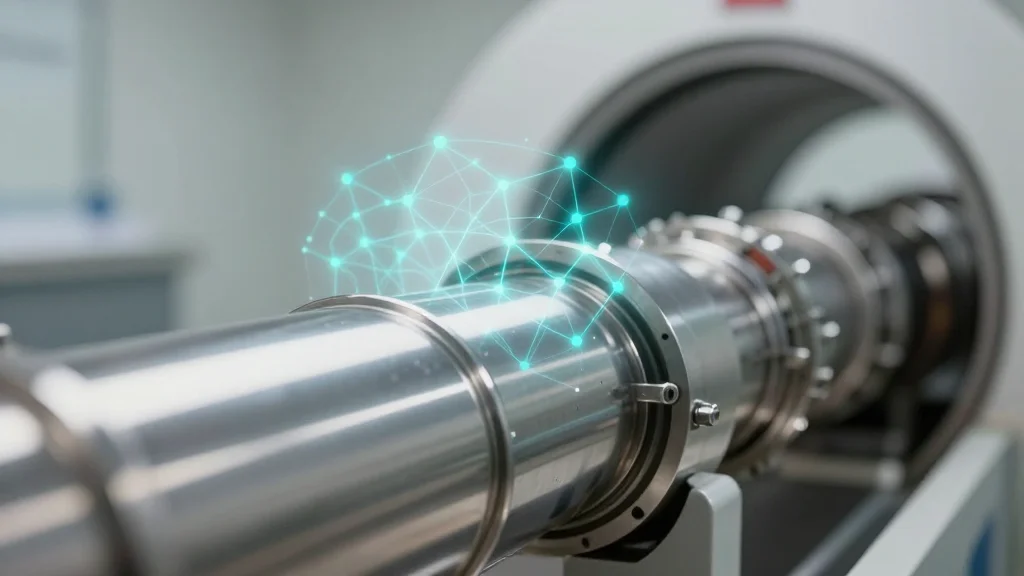
Brookhaven’s Electron-Ion Collider Embeds AI Across Accelerator and Detector Systems
Key Takeaways
- •EIC is the first collider built with AI integrated from design stage
- •AI tools tune tens of thousands of accelerator parameters automatically
- •Digital twins enable real‑time virtual testing without interrupting operations
- •AI‑assisted detector design cuts simulation time dramatically, reducing compute costs
- •Real‑time AI filters 100 Gbps data streams, improving event reconstruction speed
Pulse Analysis
The U.S. Department of Energy’s Electron‑Ion Collider (EIC) at Brookhaven National Laboratory marks a watershed in high‑energy physics by embedding artificial intelligence across every subsystem. Unlike legacy facilities such as RHIC or CERN’s LHC, where AI was retrofitted years after construction, the EIC’s 2.4‑mile ring and its ePIC detector are being engineered with machine‑learning models from the outset. This AI‑first approach promises faster design cycles, tighter performance margins, and a research platform that can adapt in real time as scientific goals evolve.
On the accelerator side, AI‑driven control systems are already learning to adjust tens of thousands of magnet and RF parameters that keep particle beams stable. By ingesting decades of RHIC operational data, the BeamAI team has created self‑tuning algorithms that match expert human operators, while a digital twin mirrors the machine’s state for risk‑free testing. Continuous, automated optimization reduces downtime, improves safety through predictive fault detection, and lowers the cost of commissioning the collider when it comes online in the mid‑2030s.
The detector frontier benefits equally from AI. Projects like AID2E use deep learning to predict how geometric tweaks affect particle identification, slashing the need for millions of costly Geant4 simulations. In the data‑acquisition chain, neural networks filter and prioritize up to 100 gigabits per second of raw collisions, enabling near‑real‑time event reconstruction that was previously impossible. Beyond the EIC, these tools set a template for future user facilities, where AI‑enhanced design, operation, and analysis become the norm rather than the exception.
Brookhaven’s Electron-Ion Collider Embeds AI Across Accelerator and Detector Systems
Comments
Want to join the conversation?