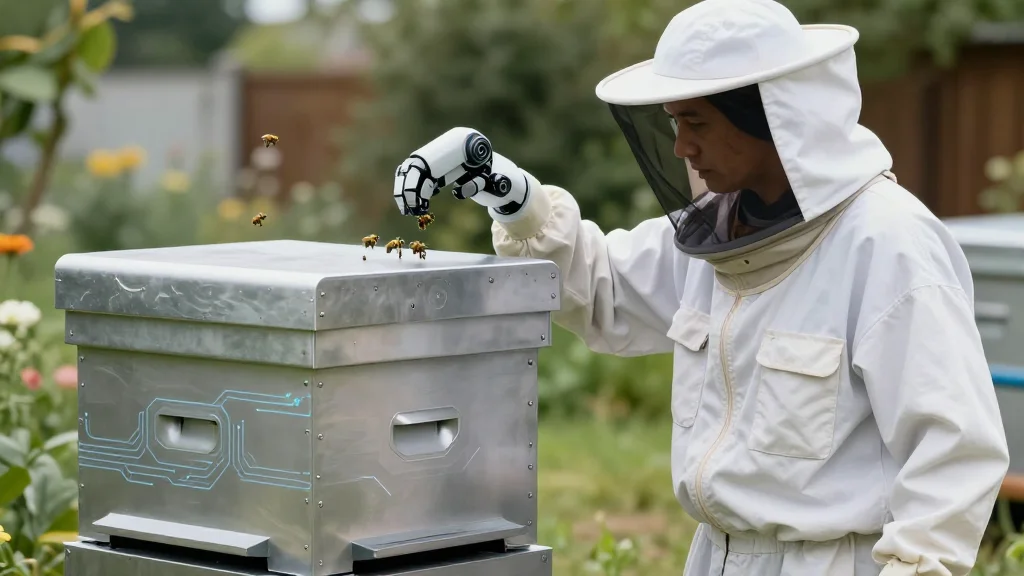
Career Cure for AI Phobia: Be a Beekeeper, Not a Worker Bee
Why It Matters
Understanding how to re‑engineer roles around AI helps workers retain relevance and enables firms to harness automation without massive layoffs, reshaping the future of work.
Key Takeaways
- •AI will reshape tasks more than eliminate whole jobs
- •Gai urges employees to map tasks and automate 30‑50% now
- •Replaceable tasks become AI agents; human work focuses on creativity
- •Upskilling in uniquely human skills future‑proofs careers
- •Managers must guide AI adoption to align with strategic goals
Pulse Analysis
Across industries, the narrative around artificial intelligence is shifting from fear of mass layoffs to a focus on task augmentation. Recent surveys show that 63% of executives expect AI to change job functions rather than replace them outright, echoing Gai’s observation that the technology is here to stay. By treating AI as a collaborative partner, organizations can unlock productivity gains while preserving the human element that drives innovation and customer empathy. This perspective aligns with broader digital‑transformation strategies that prioritize agility over wholesale workforce reduction.
Gai’s "beekeeper" metaphor offers a concrete roadmap for employees navigating this transition. She recommends a systematic audit of daily responsibilities, grouping similar activities, and pinpointing those that AI can already execute—such as generating marketing copy, designing banner visuals, or forecasting conversion rates. Once identified, workers can deploy generative AI tools, custom agents, or even simple Markdown‑based scripts to automate the routine 30‑50% of their workload. The freed capacity then shifts toward higher‑order tasks: strategic planning, nuanced problem‑solving, and creative storytelling—areas where machines still lag behind human intuition.
For managers, the beekeeping model demands proactive governance. Leaders must supply the right AI platforms, define ethical guardrails, and champion continuous learning programs that sharpen uniquely human competencies. By aligning AI deployment with business objectives, companies can avoid the pitfalls of unchecked automation while fostering a culture of innovation. Ultimately, employees who master the balance between overseeing AI agents and honing irreplaceable skills will be the most resilient in an increasingly AI‑driven economy.
Career cure for AI phobia: Be a beekeeper, not a worker bee
Comments
Want to join the conversation?
Loading comments...