Companies Mentioned
Why It Matters
By turning centuries‑old manuscripts into readable data, Scribe A.I. speeds genealogical research and lowers barriers for hobbyists, while signaling a broader shift toward AI‑enhanced historical scholarship across the industry.
Key Takeaways
- •MyHeritage launched Scribe A.I. to translate historic handwritten letters
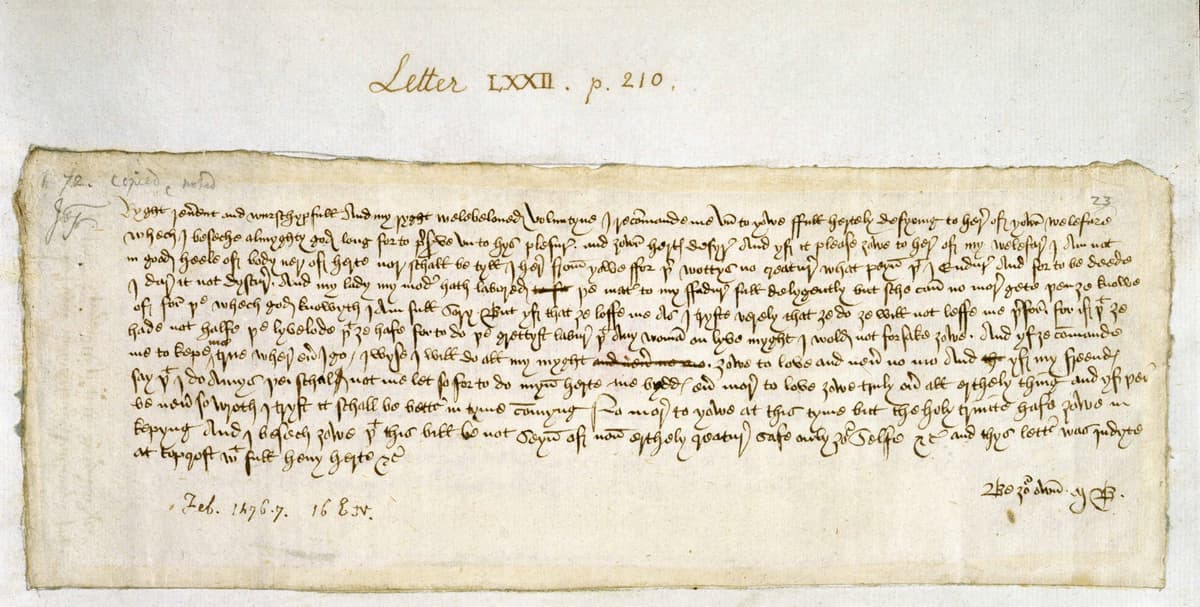
- •First success: 1477 English Valentine from Margery Brews to John Paston
- •Tool outputs transcript, context, key details, and research suggestions automatically
- •AI deciphering speeds analysis of Paston letters and other archives
- •Similar AI models decode Gilgamesh, Dead Sea Scrolls, Herculaneum scrolls
Pulse Analysis
The genealogy market is witnessing a convergence of DNA testing and artificial intelligence, and MyHeritage’s Scribe A.I. exemplifies that trend. By ingesting a scanned image of a 15th‑century love letter, the system identifies individual characters, interprets Middle English phonetics, and delivers a clean, annotated transcript. For everyday users, this means a once‑daunting task—decoding a medieval script—can be completed in minutes, opening personal family archives to a broader audience and enhancing the value proposition of subscription‑based genealogy platforms.
Beyond personal family trees, AI‑driven transcription is reshaping academic research on primary sources. Projects such as the Vesuvius Challenge, AI analyses of the Epic of Gilgamesh, and machine‑learning dating of the Dead Sea Scrolls illustrate how deep‑learning models accelerate the extraction of textual data from fragile or illegible artifacts. By automating routine transcription, scholars can redirect effort toward interpretation, comparative studies, and interdisciplinary insights, dramatically shortening the time from discovery to publication.
For the commercial sector, tools like Scribe A.I. create a competitive edge against rivals such as 23andMe, which focus primarily on health‑related DNA testing. Offering AI‑enhanced document services diversifies revenue streams and deepens user engagement, positioning MyHeritage as a one‑stop hub for both genetic and documentary heritage. However, the technology also raises questions about data privacy, algorithmic bias in language models, and the need for rigorous scholarly oversight. As AI continues to democratize access to historical texts, the industry must balance innovation with responsible stewardship of cultural heritage.
Centuries-Old Love Letter Deciphered With Help From A.I.
Comments
Want to join the conversation?
Loading comments...