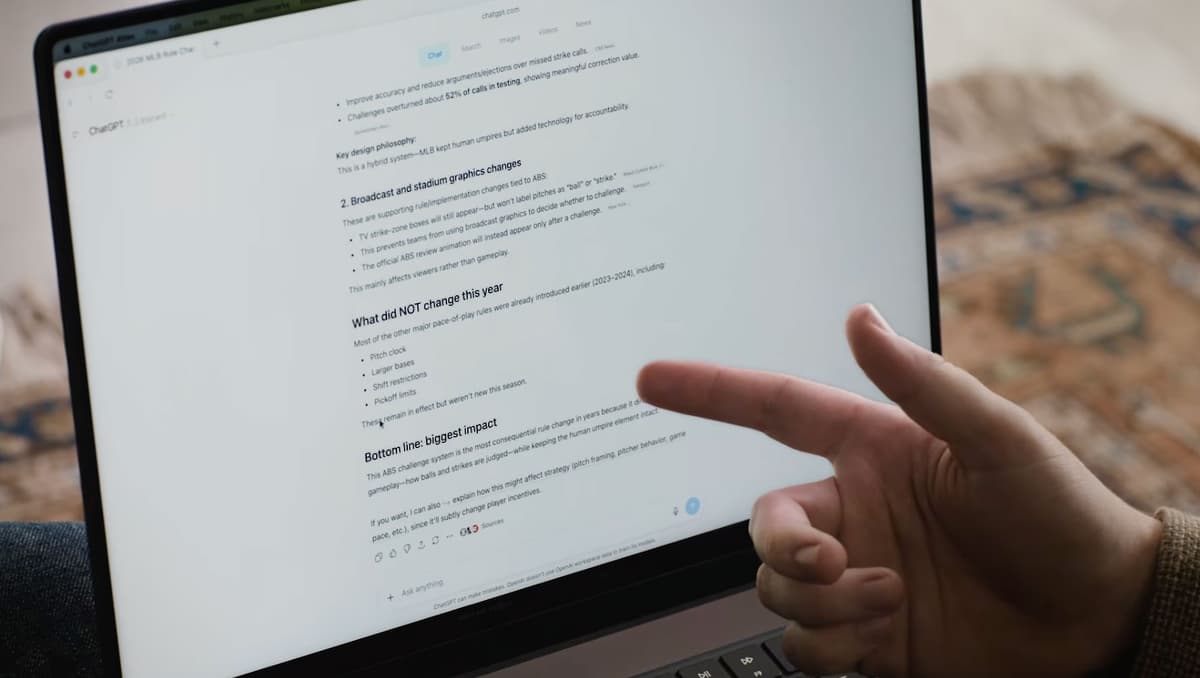
ChatGPT's GPT-5.3 Instant May Show Fewer Links In Web Search Results
•March 4, 2026
0
Why It Matters
Fewer links could shrink referral traffic for publishers and force SEO tactics to prioritize concise, answerable content. The change reshapes how users discover information and how search platforms compete with AI assistants.
Key Takeaways
- •GPT‑5.3 Instant reduces displayed web links.
- •Answers prioritize relevance over exhaustive source lists.
- •Potential drop in click‑through rates for publishers.
- •Model blends web data with internal knowledge.
- •SEO strategies may shift toward featured snippets.
Pulse Analysis
OpenAI’s GPT‑5.3 Instant marks a notable evolution in conversational AI, moving beyond the traditional search‑engine paradigm of presenting long lists of hyperlinks. By integrating real‑time web results with its own pretrained knowledge, the model delivers succinct, context‑aware answers that feel less robotic. This design choice reflects a broader industry trend toward reducing information overload and improving conversational flow, positioning OpenAI as a direct competitor to both classic search engines and emerging generative search tools.
The reduction in visible links carries immediate implications for the digital publishing ecosystem. Historically, search results have been a primary source of referral traffic; fewer outbound links mean fewer click‑throughs, potentially eroding revenue streams for news sites, blogs, and e‑commerce platforms. Publishers may see a dip in organic visibility as AI assistants prioritize synthesized answers over source attribution. At the same time, users benefit from quicker, more relevant information, which could accelerate the shift toward AI‑first content consumption and reshape user expectations around search fidelity.
For SEO professionals, the GPT‑5.3 shift underscores the urgency of optimizing for answerability. Structured data, clear headings, and concise, fact‑driven snippets become critical assets as AI models favor content that can be directly extracted and presented. Investing in schema markup, FAQ pages, and authoritative, well‑cited content can improve the likelihood of being featured in AI‑generated responses. While the link economy may contract, the opportunity to capture prime placement in AI answers offers a new frontier for visibility and brand authority. Adaptation now will determine who thrives in the emerging AI‑centric search landscape.
ChatGPT's GPT-5.3 Instant May Show Fewer Links In Web Search Results
0
Comments
Want to join the conversation?
Loading comments...