China Calls for Integration of AI, Advanced Manufacturing Amid Economic Headwinds
Companies Mentioned
Why It Matters
Accelerating AI‑driven manufacturing could cushion China’s economic slowdown and add up to 0.3 percentage points to GDP by 2030, while bolstering its competitive edge in the global tech race.
Key Takeaways
- •Premier Li calls for AI across entire manufacturing value chain
- •Government to expand real‑world AI testing in state‑owned enterprises
- •AI‑plus initiative targets industry‑specific large language models
- •Over ¥1.2 trillion AI market aims to boost GDP by 0.3%
- •Humanoid robot adoption goal set for factories by 2030
Pulse Analysis
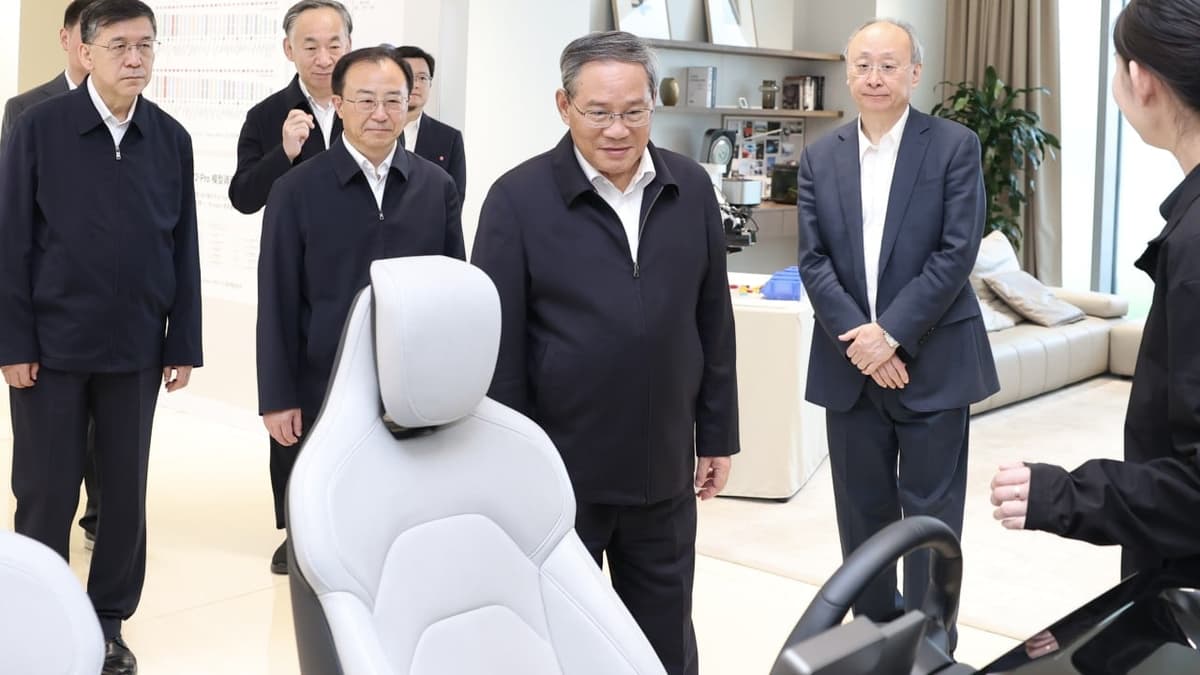
China’s latest policy push reflects a strategic pivot toward technology‑led growth as traditional engines, such as real estate and heavy industry, lose steam. By positioning AI and advanced manufacturing at the heart of the 15th five‑year plan, Beijing signals that future competitiveness will hinge on digital‑enabled production. The Premier’s on‑site visits to an EV factory and a robot hub underscore a hands‑on approach, aiming to translate laboratory breakthroughs into factory‑floor efficiencies that can quickly scale across the nation’s vast industrial base.
The integration agenda covers the full manufacturing lifecycle: AI‑enhanced research and development shortens design cycles, while intelligent robotics and computer‑vision improve precision in assembly lines and quality control. Industry‑specific large language models and AI agents are expected to streamline after‑sales support and supply‑chain coordination, reducing downtime and waste. To accelerate adoption, the state plans targeted subsidies, equipment‑upgrade programmes, and tax incentives for firms that pilot first‑of‑its‑kind solutions, especially state‑owned enterprises that can serve as testbeds for broader rollout.
Analysts see these measures as a hedge against external headwinds, including trade tensions with the United States and Europe. A Goldman Sachs forecast suggests generative AI could lift China’s potential GDP growth by 0.2‑0.3 percentage points by 2030, translating into billions of dollars of added output. Moreover, widespread AI‑powered robotics could reshape global supply chains, offering lower‑cost, higher‑quality production that challenges traditional manufacturing hubs. For investors and multinational firms, monitoring China’s AI‑manufacturing rollout will be crucial to gauge shifts in competitive dynamics and emerging market opportunities.
China calls for integration of AI, advanced manufacturing amid economic headwinds
Comments
Want to join the conversation?
Loading comments...