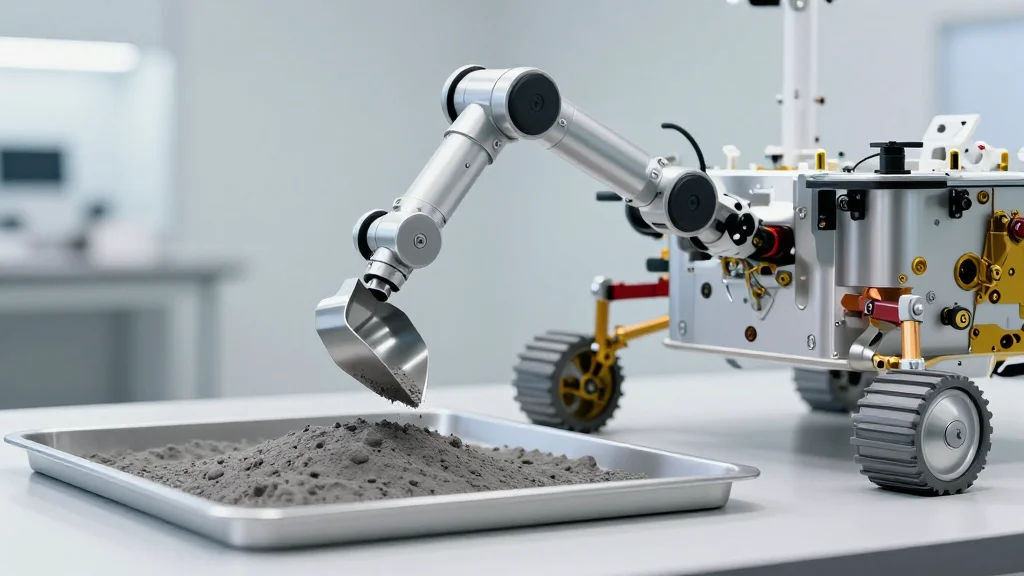
China Reveals AI-Powered Lunar Robot for 2029 Moon Mission

Companies Mentioned
Why It Matters
The robot demonstrates China’s advancing autonomy and durability capabilities, crucial for building sustainable lunar infrastructure and competing with NASA’s Artemis program. Its success could accelerate commercial and scientific activities on the Moon’s resource‑rich south pole.
Key Takeaways
- •AI rover weighs ~100 kg, operates near lunar south pole
- •Semi‑autonomous AI guides robot across rugged, shadowed terrain
- •Designed for two‑year lunar stay, surviving extreme temperature swings
- •Supports Chang’e‑8 payloads, aiding future Moon base infrastructure
- •Highlights China's push toward crewed lunar landing by 2030
Pulse Analysis
China’s latest lunar robot marks a turning point in extraterrestrial automation, blending humanoid dexterity with rugged rover mobility. While NASA’s Artemis program emphasizes crewed missions, Beijing is investing in semi‑autonomous systems that can operate independently for years. The robot’s AI can identify and trace objects, allowing it to devise task strategies on the fly—a capability essential for handling the heterogeneous payloads contributed by international partners. By integrating dual arms on a four‑wheel platform, the machine can lift and position scientific instruments, effectively acting as a lunar porter that reduces reliance on human EVA time.
Technical resilience is at the heart of the design. The robot must endure temperature extremes from +120 °C to –180 °C and survive more than 24 lunar nights, each lasting roughly 330 hours. A fluid‑circulated thermal management system and advanced insulating materials protect internal components, while solar panels provide continuous power during the brief daylight periods. The AI‑driven navigation system maps the treacherous south‑pole terrain, which includes permanently shadowed craters that may harbor water ice—an essential resource for future habitats. By operating semi‑autonomously, the robot can negotiate non‑cooperative objects, a scenario likely when integrating equipment from multiple space agencies.
Strategically, the robot underscores China’s ambition to establish a sustainable presence on the Moon ahead of a crewed landing by 2030. Successful deployment will validate technologies that private firms could later commercialize for lunar logistics, mining, and construction. It also pressures the United States and its commercial partners to accelerate autonomous solutions for Artemis, potentially reshaping the competitive landscape of off‑world infrastructure development.
China Reveals AI-Powered Lunar Robot for 2029 Moon Mission
Comments
Want to join the conversation?
Loading comments...