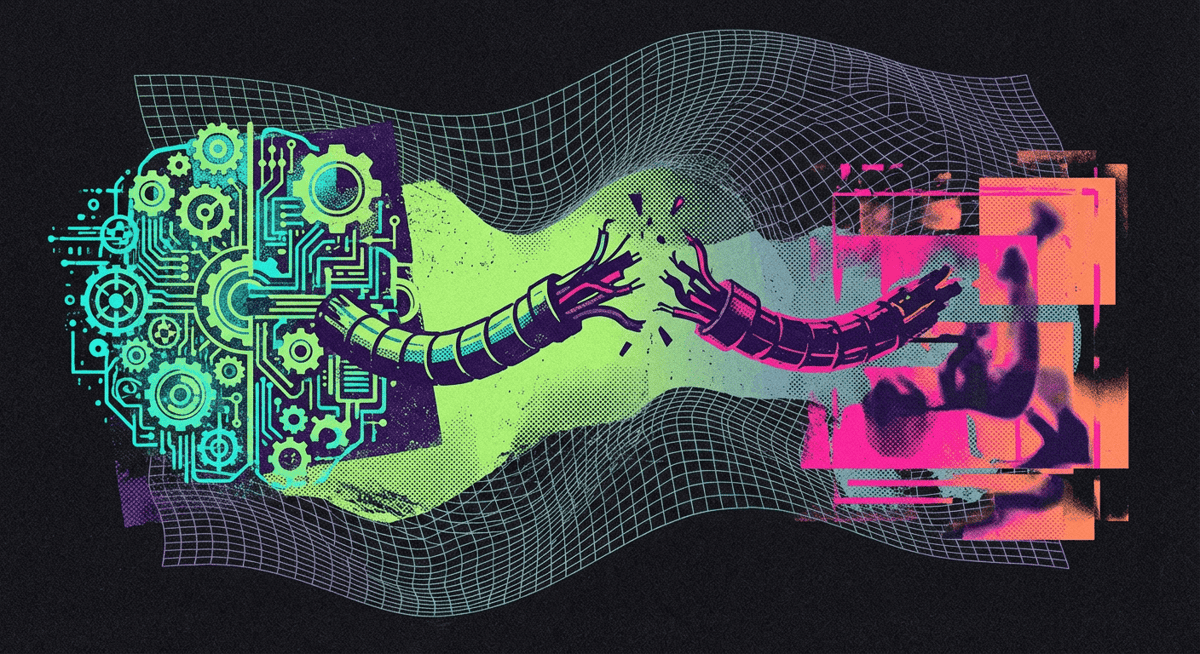
Chinese Researchers Diagnose AI Image Models with Aphasia-Like Disorder, Develop Self-Healing Framework
•January 11, 2026
0
Companies Mentioned

Why It Matters
UniCorn demonstrates that internal self‑play can substantially close the understanding‑generation gap in multimodal AI without costly external supervision, accelerating reliable image generation for commercial applications.
Key Takeaways
- •UniCorn uses self‑play to bridge understanding‑generation gap.
- •Training adds only seven hours on eight H800 GPUs.
- •UniCycle benchmark measures text‑to‑image‑to‑text consistency.
- •UniCorn outperforms GPT‑4o on DPG complex scene task.
- •Negation and precise counting remain challenging weaknesses.
Pulse Analysis
Multimodal models have excelled at both interpreting and creating visual content, yet a persistent inconsistency—where a model’s description of an image does not match its own generated output—has limited their reliability. Researchers at the University of Science and Technology of China coined the term “Conduction Aphasia” to describe this disconnect, drawing a parallel to a neurological disorder where comprehension outpaces expressive ability. By framing the problem as a cycle of self‑evaluation, they set the stage for a novel solution that aligns perception and production within a single architecture.
UniCorn tackles the issue by partitioning a single multimodal model into three collaborative roles: a Proposer that crafts diverse textual prompts, a Solver that produces multiple image candidates, and a Judge that scores each output with detailed reasoning. The interactions are repurposed into four training formats, enabling the model to learn generation, description, evaluation, and refinement simultaneously. Remarkably, the entire fine‑tuning process completes in roughly seven hours on eight Nvidia H800 GPUs, delivering substantial performance gains without relying on external datasets or larger teacher models.
Evaluation on the newly introduced UniCycle benchmark—where a model must generate an image, answer questions about it, and have those answers verified against the original prompt—shows UniCorn achieving a ten‑point lift over its baseline. It also eclipses GPT‑4o on the DPG benchmark for complex scene synthesis. While the framework still struggles with negation and precise counting, its self‑play approach proves more effective than external supervision, hinting at a scalable path toward more coherent and trustworthy multimodal AI systems.
Chinese researchers diagnose AI image models with aphasia-like disorder, develop self-healing framework
0
Comments
Want to join the conversation?
Loading comments...