Cisco Introduces Model Provenance Kit to Strengthen AI Supply Chain Security
Why It Matters
Without reliable model provenance, enterprises face hidden vulnerabilities, licensing risks, and compliance gaps that can be exploited in AI supply‑chain attacks. Cisco’s solution gives security teams a concrete method to trace and trust model dependencies, a prerequisite for safe AI deployment in high‑stakes environments.
Key Takeaways
- •Cisco's kit fingerprints model weights to verify lineage
- •Weight-level provenance reduces false positives from architecture similarity
- •Open-source kit enables security teams to map model dependencies
- •Framework aligns with OWASP and MITRE AI supply‑chain guidelines
- •Essential for regulated AI use in finance, healthcare, and defense
Pulse Analysis
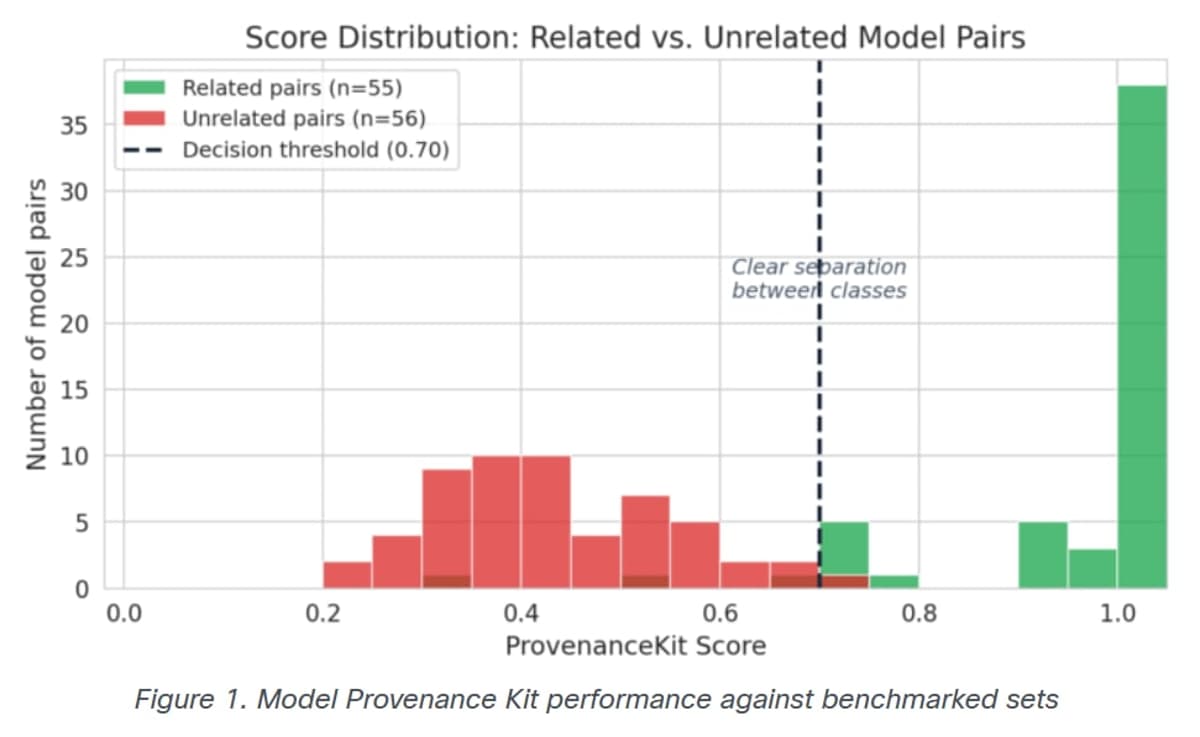
The rapid adoption of third‑party and open‑source AI models has outpaced the industry’s ability to track their origins. As models are fine‑tuned, compressed, or merged, hidden vulnerabilities and licensing obligations can propagate unnoticed, creating a new attack surface for supply‑chain threats. Cisco’s Model Provenance Kit addresses this blind spot by generating cryptographic fingerprints of model weights, allowing organizations to confirm whether a given model is a direct descendant of a trusted base. This weight‑level focus sidesteps the unreliability of metadata and naming conventions, delivering a tamper‑resistant audit trail that aligns with emerging AI security best practices.
Beyond the fingerprinting engine, Cisco introduced the Model Provenance Constitution, a formal taxonomy that delineates legitimate derivation pathways—such as fine‑tuning, knowledge distillation, quantization, and pruning—and explicitly excludes superficial cues like shared architecture or similar benchmark scores. By codifying these rules, the framework reduces false positives that can overwhelm security teams and clarifies licensing obligations. The open‑source nature of the kit encourages community contributions and integration with existing CI/CD pipelines, enabling continuous verification as models evolve throughout their lifecycle.
Industry bodies such as OWASP and MITRE have highlighted AI supply‑chain compromise as a top threat, and regulatory frameworks like NIST’s AI RMF are beginning to require provenance documentation. Cisco’s offering provides a practical pathway for enterprises to meet these expectations, especially in regulated domains like finance, healthcare, and defense where model accountability is non‑negotiable. Early adopters can leverage the kit to build zero‑trust AI environments, improve incident response readiness, and establish a defensible audit record for auditors and regulators. As AI models become more modular and reusable, provenance will likely evolve from a niche control to a core component of enterprise security architectures.
Cisco Introduces Model Provenance Kit to Strengthen AI Supply Chain Security
Comments
Want to join the conversation?
Loading comments...