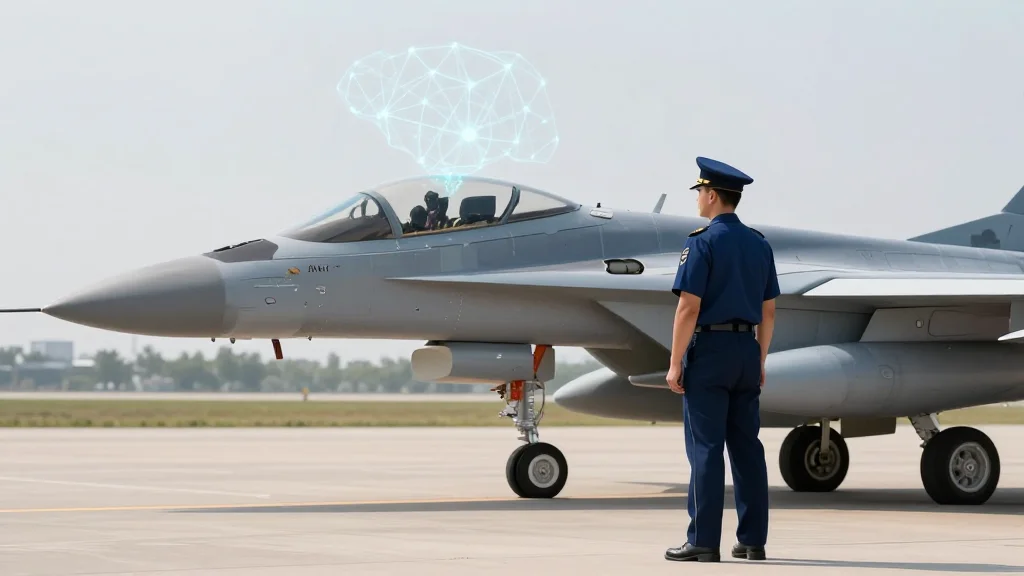
DAF Launches Plan to Bolster AI Workforce
Why It Matters
A skilled AI workforce is essential for the Air Force to maintain operational superiority and counter rapid advances by peer competitors.
Key Takeaways
- •Streamlined hiring removes bottlenecks for critical AI positions.
- •Dual‑track career model lets experts stay technical, not managerial.
- •Mandatory AI literacy expands baseline competence across all ranks.
- •Mission Matching Strategy aligns talent with high‑impact defense projects.
- •Plan targets industry‑speed talent pipeline to safeguard national security.
Pulse Analysis
The United States is locked in a strategic race to embed artificial intelligence into every facet of defense, and the Air Force has moved to cement its lead. The newly approved Total Force AI Talent Development plan translates the Department of War’s overarching AI Strategy into concrete personnel actions. By treating AI expertise as a force multiplier, the service acknowledges that data‑driven decision‑making, autonomous systems, and predictive analytics are no longer optional add‑ons but core war‑fighting capabilities. This shift mirrors similar initiatives in the Army and Navy, yet the Air Force’s focus on speed and scalability sets it apart.
The plan tackles three pillars: recruitment, retention, and training. Hiring bottlenecks are being eliminated through streamlined accession processes and competitive financial incentives, while the “Mission Matching Strategy” pairs new hires with high‑impact projects such as hypersonic weapons and cloud‑based ISR. Retention is bolstered by a dual‑track career model that lets technical specialists advance without moving into command roles, a rare concession in a traditionally hierarchical service. Finally, mandatory AI literacy for all personnel shifts training from checkbox courses to validated skill assessments, ensuring every airman can contribute to AI‑enabled missions.
From an industry perspective, the Air Force’s aggressive talent agenda could reshape the civilian AI labor market. By promising salaries and career paths comparable to private‑sector firms, the service hopes to stem the outflow of engineers to Silicon Valley and attract mid‑career talent from the Reserve and Guard. Successful execution will accelerate fielding of autonomous drones, predictive maintenance, and real‑time threat analysis, directly enhancing national security. If the plan delivers on its promise of “industry‑speed” staffing, it may become a blueprint for other branches seeking to modernize their digital warfighting forces.
DAF launches plan to bolster AI workforce
Comments
Want to join the conversation?
Loading comments...