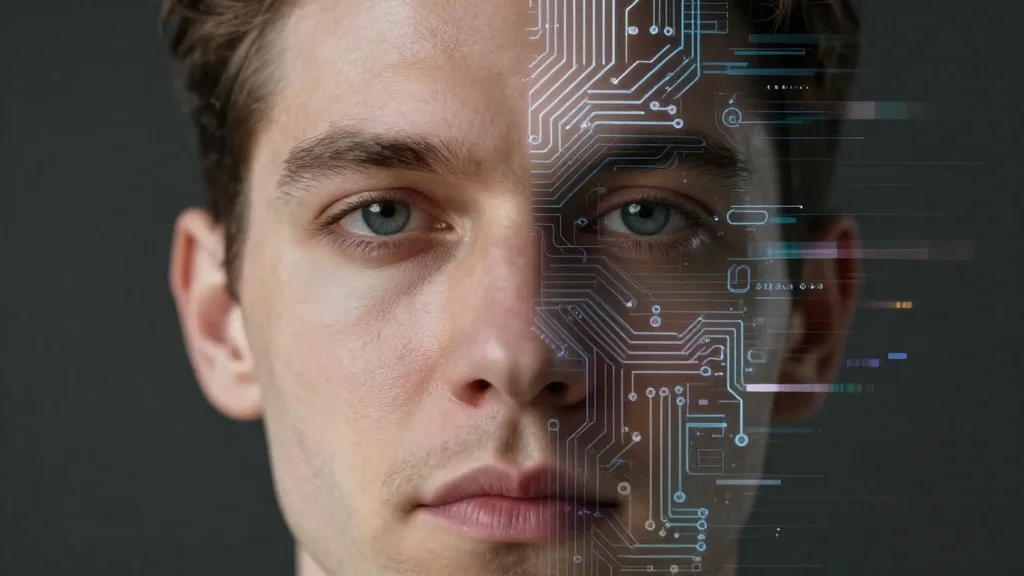
Deepfake Detection Is Losing Ground to Generative Models
Companies Mentioned
Why It Matters
Relying solely on media forensics leaves enterprises vulnerable to increasingly convincing synthetic attacks; integrating interaction‑based checks restores a practical line of defense.
Key Takeaways
- •Traditional detectors miss diffusion‑generated deepfakes
- •Communication‑layer analysis adds context‑based detection signals
- •Procedural controls caught high‑value deepfake fraud cases
- •Benchmark scores no longer reflect real‑world efficacy
- •Vector Institute calls the gap a "Generalization Illusion"
Pulse Analysis
The deepfake arms race has entered a new phase. Early detectors capitalized on obvious glitches—pixel mismatches, frequency fingerprints, or missing physiological cues—features that generative adversarial networks (GANs) struggled to conceal. Modern diffusion models synthesize entire frames, preserving temporal coherence and even replicating subtle biometric signals such as eye‑blink patterns. Consequently, the five technical assumptions that underpinned forensic tools have eroded, creating a "Generalization Illusion" where laboratory metrics stay impressive while field deployments falter. This divergence forces security teams to look beyond pure media analysis.
In response, the Vector Institute suggests a paradigm shift: evaluate the interaction itself. Drawing from linguistics and social psychology, the proposed framework asks whether a request aligns with the speaker’s authority, whether conversational flow exhibits natural variance, and whether pressure tactics are unusually dense. These questions mirror tactics used in phishing and business‑email compromise, extending them to real‑time audiovisual exchanges. While still experimental, this communication‑layer offers a human‑centric signal that survives compression, re‑encoding, and other distribution hurdles that cripple traditional forensic cues. Implementing such analysis will likely require AI‑driven dialogue modeling and integration with existing security orchestration platforms.
Practically, organizations have found that low‑tech procedural controls remain the most effective barrier. Callback verification on known numbers, out‑of‑band confirmations for large transfers, and challenge questions have stopped incidents ranging from a €220,000 (≈$236,000) voice‑cloning fraud in the UK to a $25.5 million deepfake video conference at Arup. These measures target the interaction channel—something attackers cannot fully synthesize—providing a scalable, cost‑effective complement to technical detection. As generative models continue to improve, a layered defense that blends media forensics, communication analysis, and robust procedures will be essential for safeguarding corporate assets.
Deepfake detection is losing ground to generative models
Comments
Want to join the conversation?
Loading comments...